Safari Weather Guide: What to Expect, Month by Month, Region by Region
Weather is one of the first questions every guest asks us, and one of the hardest to answer in a single sentence, since Africa's climates vary enormously from region to region. This guide breaks things down by destination so you can see, at a glance, what to expect and what to pack.
A quick note before you dive in: weather patterns shift somewhat year to year, so treat these as reliable guidelines rather than guarantees. Altitude also matters more than month alone. A camp on the Ngorongoro Crater rim or in the Laikipia highlands will run colder at night than a camp in a low-lying valley, regardless of season.
Kenya
January to March: Dry, warm, best game viewing. Days 75-85°F, nights 45-55°F. Pack layers, with a light fleece for sunrise drives.
April to May: Long rains, lush and quiet. Days 70-80°F, nights 55-60°F. Pack a rain jacket and waterproof shoes.
June to October: Peak dry season; Migration in the Mara July to September. Days 75-85°F, nights 45-50°F. Pack a warm layer for cold mornings.
November: Short rains, brief afternoon storms. Days 75-82°F, nights 55-60°F. Pack a light rain layer.
December: Dry, warm, busy holiday season. Days 78-85°F, nights 50-55°F. Standard Safari layers.
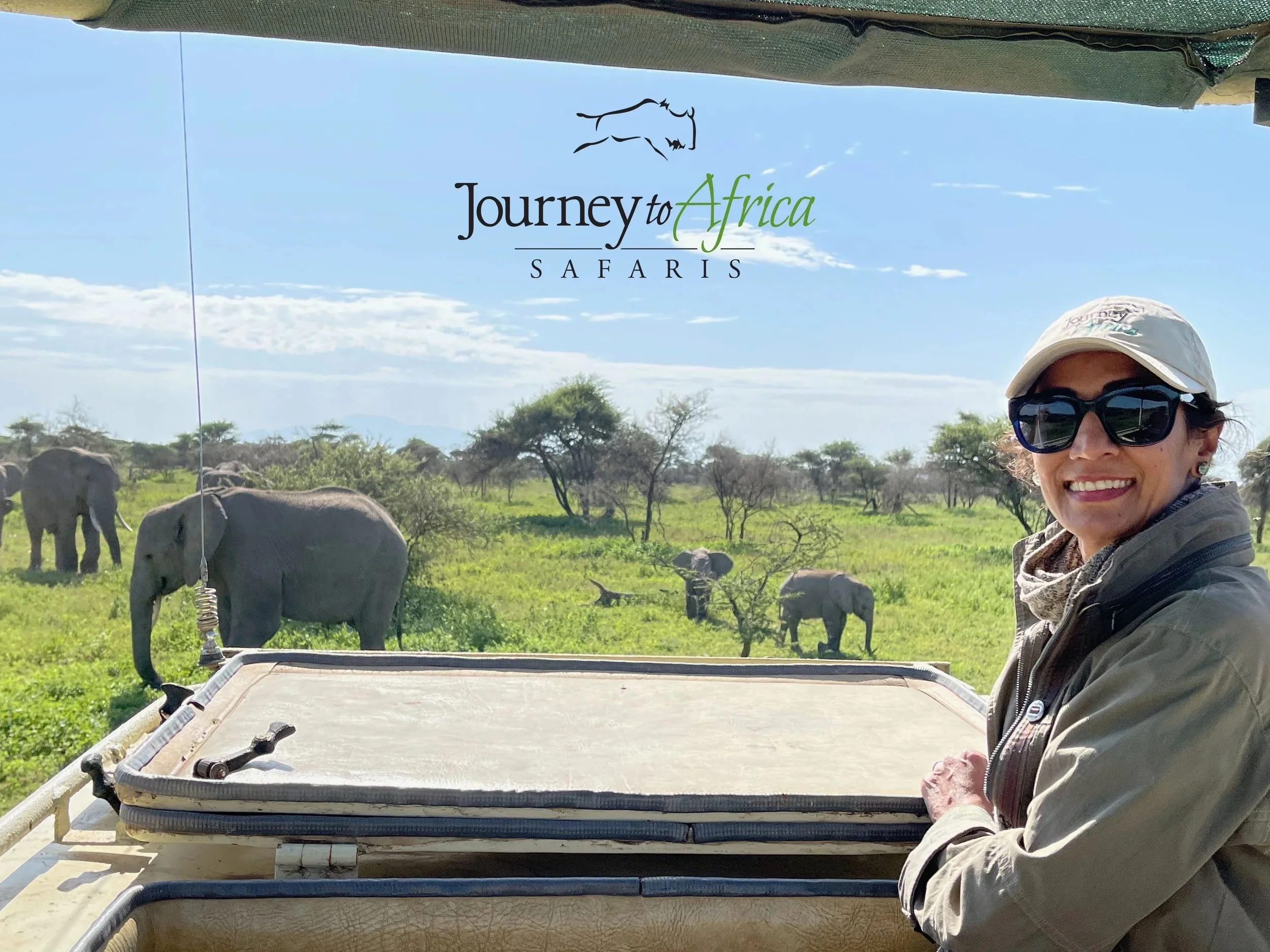
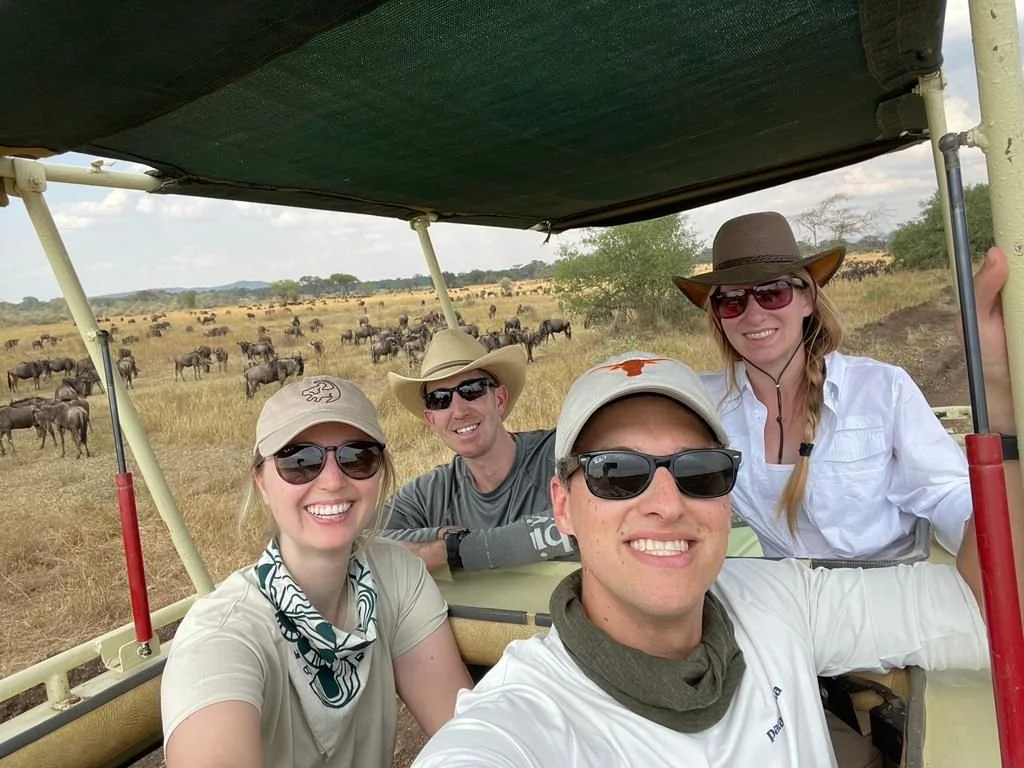
Journey to Africa guests on Safari in the Serengeti in July - layers and sun protection!
Tanzania
January to March: Dry, warm; calving season on the southern plains of the Serengeti. Days 75-85°F, nights 45-55°F. Pack layers, warmer for the Ngorongoro Highlands.
April to May: ‘Green season’ and the wettest months, especially in the north. Days 70-80°F, nights 55-60°F. Pack a rain jacket and waterproof shoes. Still a magical time to be on Safari in Tanzania - fewer crowds, lower rates, amazing birding and stunning green landscapes.
June to October: Dry season; Migration in the Northern Serengeti. Days 75-85°F, nights 40-50°F. Pack a warm layer, essential at Ngorongoro, where nights can drop into the high 30s and 40s.
November: Short rains, quick green-up. Days 75-82°F, nights 55-60°F. Pack a light rain layer.
December: Dry, warm; herds move south. Days 78-85°F, nights 50-55°F. Standard Safari layers.
Coastal Kenya and Tanzania (Zanzibar, Lamu, Diani)
January to March: Hot, dry, and generally the best beach weather. Days 85-92°F, nights 75-78°F. Pack light fabrics and strong sun protection.
April to early June: Long rains, most pronounced on the coast. Days 82-88°F, nights 74-78°F. Pack a rain layer; many properties close.
Late June to October: Dry, breezy ‘kusi’ winds. Days 82-88°F, nights 72-76°F. Pack light layers and a windbreaker for boat trips.
November: Short rains, brief showers that typically clear up quickly. Days 84-90°F, nights 74-78°F. Pack a light rain layer.
December: Warm, humid, calm seas with the ‘kaskazi’ winds. Days 85-90°F, nights 75-78°F. Pack light fabrics and sun protection.
Botswana
January to March: Green season, afternoon storms, dispersed wildlife but stunning. Days 85-95°F, nights 65-70°F. Pack light layers and a rain jacket.
April to May: Rains ease, Delta floodwaters arrive from the Angola Highlands. Days 80-88°F, nights 55-65°F. Pack light layers for the day and a warm layer for evenings.
June to August: Peak dry season and winter; the Delta is at its fullest. Days 70-75°F, nights 32-40°F. Pack a heavy jacket, hat, and gloves for dawn starts and open vehicles.
September to October: Hottest, driest time; wildlife gathers at waterholes. Days 95-105°F+, nights 60-70°F. Pack light, breathable clothing and strong sun protection.
November to December: Build-up to the rains, heat and humidity rising. Days 88-95°F, nights 68-75°F. Pack light layers and a rain jacket.
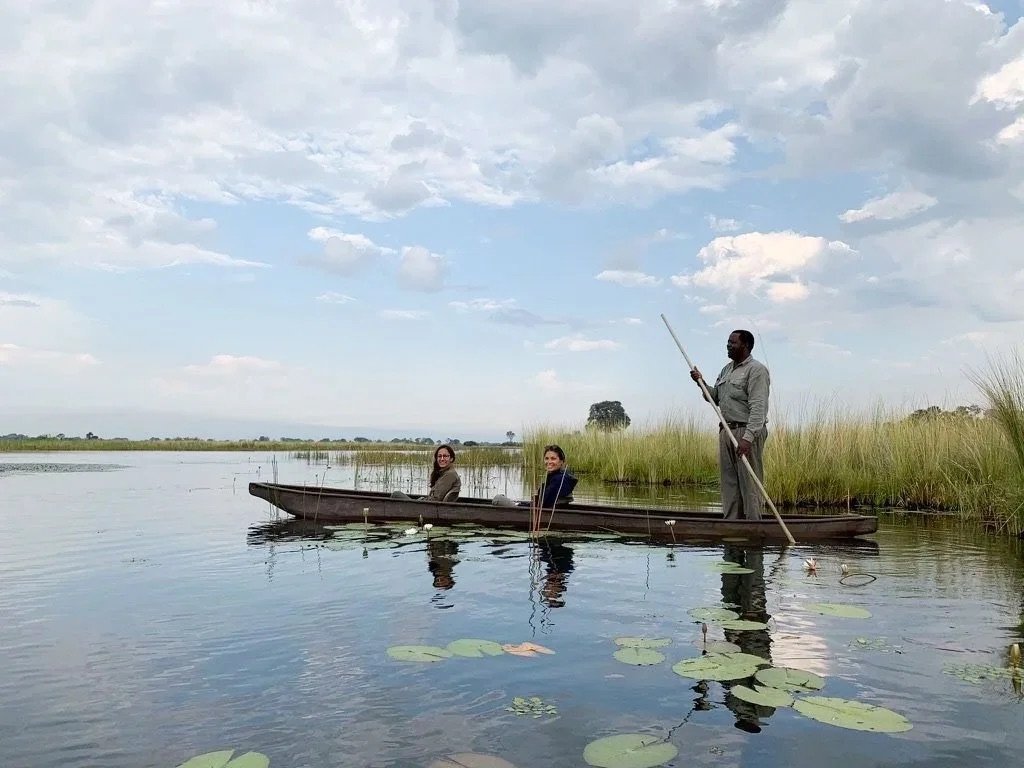
Mefi in the Delta in November! Green season. Stunning!
Zambia and Victoria Falls
January to March: Rainy season, most camps are closed; Falls near peak flow. Days 80-88°F, nights 68-72°F. Pack a rain jacket, plus a poncho at the Falls.
April to June: Rains ease, camps reopen; Falls at peak to high water. Days 78-85°F, nights 55-65°F. Pack a warm layer for mornings and a poncho at the Falls.
July to October: Prime dry season; Falls water drops to its lowest by October. Days 78-90°F, nights 40-55°F. Pack a warm layer for early walks, shifting to light clothing by September and October, when daytime highs often exceed 100°F.
November to December: First rains, rising heat; Falls water rising again. Days 85-92°F, nights 65-72°F. Pack light layers and a rain jacket.
Mefi having a dip at Devils Pool!
Cape Town and South Africa (Kruger and Eastern Cape)
January to March: Cape Town enjoys peak summer, hot and dry, while Kruger sees its rainy season, hot and green. Kruger days 85-92°F, nights 65-70°F. Pack light clothing and a rain layer for the Safari leg.
April to May: Cape Town's mild, quiet autumn; Kruger drying out with improving game viewing. Kruger days 78-85°F, nights 55-62°F. Pack light layers.
June to August: Cape Town's cool, rainy winter, also whale watching season; Kruger's peak dry season and best game viewing. Kruger days 70-75°F, nights 32-40°F. Pack a warm layer for cold Safari mornings.
September to October: Cape Town's mild spring with wildflowers; Kruger region stays dry and hot with excellent game viewing. Kruger days 82-90°F, nights 50-58°F. Pack light layers, and warmer layers for early drives.
November to December: Cape Town's warm, busy summer; Kruger's first rains and rising humidity. Kruger days 85-92°F, nights 62-68°F. Pack light clothing and a rain layer.
Journey to Africa guests Dr Hendricks & Vicki in Cape Town in August 2025
Uganda and Rwanda: Gorilla and Chimpanzee Trekking
January to February: Short dry spell, one of the best trekking windows. Days 70-78°F, nights 50-58°F.
March to May: Long rains, muddiest trails, quieter. Days 68-75°F, nights 55-60°F.
June to September: Primary dry season, most popular; book permits early. Days 72-78°F, nights 50-58°F.
October to November: Short rains, wetter but manageable. Days 70-76°F, nights 52-58°F.
December: Brief drier window, increasingly popular for holiday travel. Days 70-78°F, nights 50-58°F.
*Rain gear matters more than temperature here. Pack a waterproof jacket, waterproof trousers or gaiters, sturdy waterproof boots, and gardening-style gloves for pushing through nettles, regardless of season.