
Safari FAQs
Planning a Safari brings up a lot of questions — and we love that. Every question is the start of a great conversation, and no two answers are ever quite the same because no two trips are. Here are the ones we get asked most often. If yours isn't here, just get in touch.
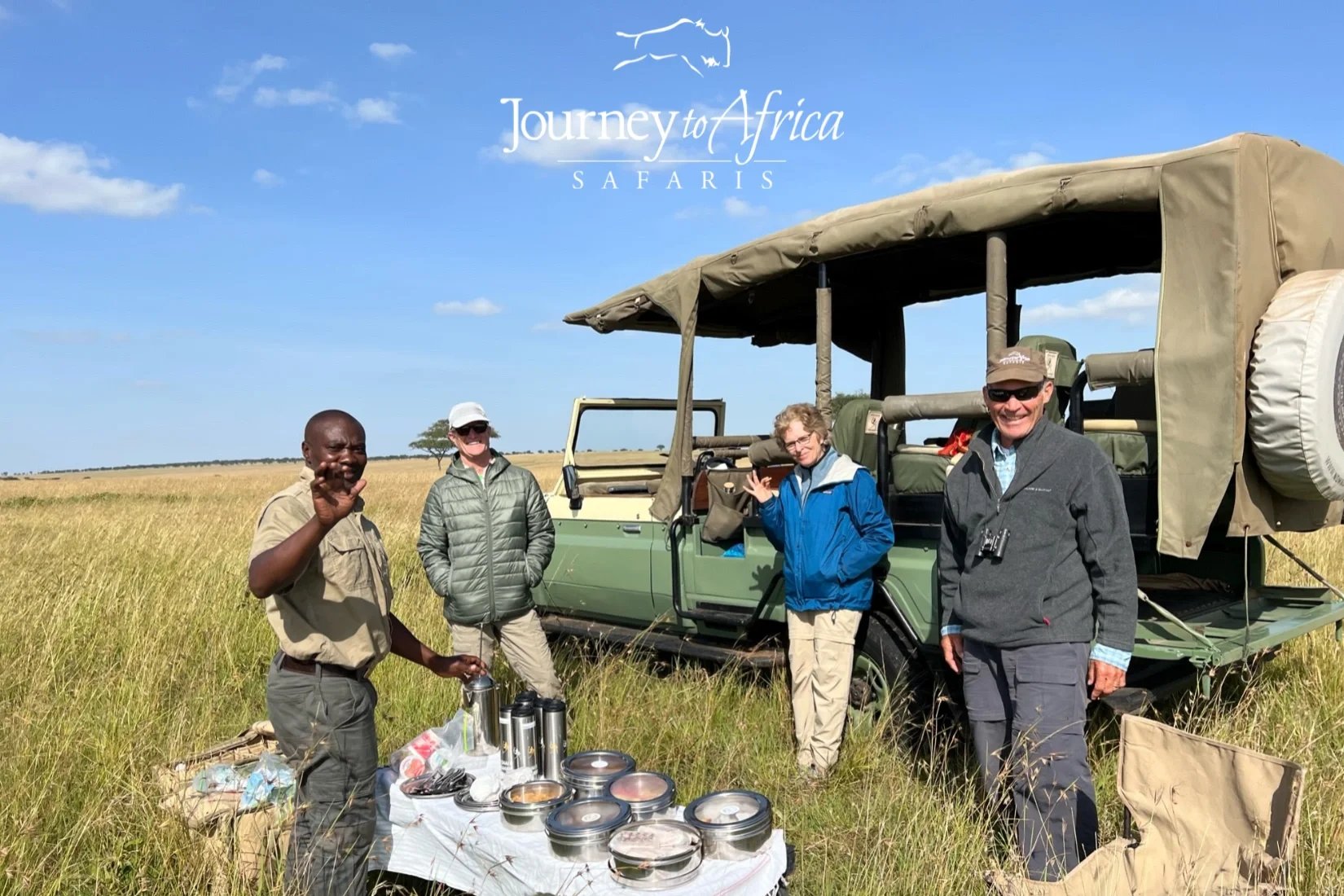
Our Journey to Africa Guests, Lori, Greg, Debbie and Tom on Safari in the Serengeti with Safari guide Mzee Amos.
Best time of Year to go on Safari?
Any time! If you're in the right place. Africa doesn't have an off season — it has different seasons, each with their own magic. The dry season (broadly June to October across East and Southern Africa) delivers classic game viewing as wildlife concentrates around water. The green season brings fewer crowds, lower rates, baby animals and extraordinary birdlife. The Great Migration is year-round but the Mara River crossings happen late July to October. We'll match your travel dates to the right destination every time.
Where should I go on Safari in Africa?
It depends on what you want to experience, when you can travel, your budget for the trip and how many times you've been before. Tanzania and Kenya are our home ground — the Northern Circuit, the Masai Mara, the Serengeti — and between the two of us we've spent our whole lives here. But we also design extraordinary Safaris in Botswana, Zambia, Rwanda, Uganda and beyond. Tell us what excites you and we'll tell you honestly where to go.
How long should I go on Safari for?
A minimum of nine - ten nights is our recommendation — and ideally two to three weeks if you can manage it. There's a Swahili saying: haraka haraka haina baraka — hurry hurry has no blessing. Rushing a Safari means missing the depth of it. We aim for at least two to three nights in each area so you have time to settle in, slow down, and really see what's around you. This is the kind of Safari that delivers extraordinary moments.
Is it safe to go on Safari in Africa?
Our partners on the ground are experienced, professional, and look after our guests exceptionally well. From hygiene standards to wildlife protocol, guest safety is always a top priority. We stay closely informed about conditions across all the regions we operate in. We wouldn't send you somewhere we wouldn't go ourselves. Having said that, it is important to remember that you are going into wilderness areas, with free roaming wildlife and unfenced properties so common sense, and listening to the teams on the ground and your guides is important and will keep you safe.
Can I combine multiple countries in one Safari?
Absolutely — and some of the best itineraries do exactly that. Kenya and Tanzania pair naturally. Zambia and Botswana sit beautifully together. Rwanda and Uganda are an obvious combination for a primate-focused trip. Victoria Falls in Zimbabwe or Zambia is an easy add-on to a Southern Africa Safari. We'll design the routing so the travel feels seamless rather than exhausting.
What is the difference between a national park and a private conservancy?
National parks are government-protected areas open to all operators, which can mean more vehicles at popular sightings. Private conservancies are leased by individual camps or groups of camps, meaning fewer vehicles, more flexibility (you can go off-road, do night drives, walking Safaris), and a more exclusive experience overall. Many of the camps we work with sit within or adjacent to private conservancies — and the difference in feel is significant.
How much does an African Safari cost?
Our Safaris typically start at around $900 per person per night, all-inclusive. A full Safari — bush flights, lodges, guides, park fees, internal transfers — usually falls between $10,000 and $30,000 per person depending on destination, duration, time of year and the style of camps. We're always upfront about cost from the very first conversation, and we'll work within your budget to put together the best possible trip. If you tell us your budget, we'll tell you honestly what it can achieve.
What is included in a Journey to Africa Safari?
Every Safari we design is different, but as a general rule inclusions cover: all accommodation, all meals (full board), most drinks (house wines, beers and soft drinks at most camps), laundry, game drives, park and conservancy fees, internal flights between camps, airport transfers, and a dedicated guide (s) for the duration. Exclusions typically include international flights (although we do have a flights coordinator we can connect you with), visas, tips and gratuities, and travel insurance. We send a detailed inclusions list with every quote.
How do I book a Safari with Journey to Africa?
Start by getting in touch — by email, phone, or the contact form on our website. We'll have a conversation about what you're looking for, then put together a tailored proposal with suggested itinerary, camps and pricing. Nothing is booked until you're happy with the plan and ready to confirm. We hold rooms on your behalf while you consider so you're not losing availability while you decide.
How far in advance should I book?
For peak season travel (July to October for the Migration; December to January for the holidays), we recommend booking twelve to eighteen months ahead. The best camps have very limited beds and fill up fast. For shoulder or green season travel, six to twelve months is usually sufficient — but earlier is always better. If you have a specific trip in mind, get in touch sooner rather than later and we'll tell you what's still available. We often put together some incredible last minute Safaris that come together perfectly!
What is a typical Safari day like?
Most Safari days follow a similar rhythm: an early wake-up (usually around 6am) for the morning game drive when the animals are most active, followed by a late breakfast back at camp. Midday is for resting, reading, or a dip in the pool — the heat of the day is when the bush goes quiet. Late afternoon brings another game drive as the light turns golden, followed by sundowners in the bush and dinner under the stars. It's a rhythm that gets into your blood very quickly.
What animals will I see on Safari?
That depends on where you go and when — which is exactly why the planning matters. Tanzania and Kenya offer the chance to see the Big Five (lion, leopard, elephant, buffalo, rhino) plus the Great Migration, cheetah, wild dog, giraffe and much more. Botswana delivers exceptional elephant and predator sightings. Zambia is famous for its leopard and wild dog. Uganda and Rwanda offer Mountain Gorilla and chimpanzee trekking. We'll be honest with you about what's realistic to expect, and we'll position you in the right place for the best possible sightings. Our biggest piece of advice is to go without expectations or a ‘list’ of what you want to see. Instead, go with an open mind and curiosity and see what unfolds - this is when Safari magic reveals itself.
Will there be other vehicles at sightings?
In the main national parks, yes — there can be other vehicles at popular sightings, particularly in the Masai Mara or Serengeti during peak season or in the Ngorongoro Crater which is a small park with a lot of visitors. Our guides are good at getting you to more remote spots in the busier parks. This is one of the reasons we love the private conservancies too: they typically limit the number of vehicles at any one sighting, which makes the experience far more intimate. We factor this into how we design every itinerary. If you’re looking for a Safari without the crowds, we always take this into account and can take you to more raw, remote and wild corners of the countries we love.
Can children go on Safari?
Absolutely — and we love planning family Safaris. Most camps accept children aged six and above, some from three or four. A few camps have specific family programmes, dedicated family vehicles, and activities designed for younger guests. The key is matching the right camps to the right ages. Tell us how old your children are and we'll build something they'll talk about for the rest of their lives. We both grew up in Tanzania and Kenya and our childhood memories of being on Safari is what shaped Journey to Africa and our love of wildlife.
Is Safari suitable for older or less mobile travelers?
Yes — Safari is genuinely accessible for a wide range of mobility levels. Game drives are seated and comfortable, the camps we work with are well set up for guests with mobility considerations, and we can tailor the pace of the trip accordingly. Just let us know upfront and we'll design something that works.
Do I need vaccinations for an African Safari?
Requirements vary by country, but we always recommend consulting a travel health clinic or your doctor at least six to eight weeks before departure. Yellow fever vaccination is required for entry to some countries (Uganda, Rwanda, and parts of East Africa if arriving from certain countries). Malaria prophylaxis is recommended for most Safari destinations. We'll flag the specifics for your itinerary, but please always verify with a medical professional.
Do I need a visa?
Most of our guests are US, Canadian or UK passport holders. Tanzania, Kenya, Zambia, Botswana, Rwanda and Uganda all require visas — most are available on arrival or via e-visa online, and the process is straightforward. We'll include visa guidance in your pre-departure information.
What should I pack for a Safari?
The essentials: neutral coloured clothing, layers for cool mornings and evenings, comfortable walking shoes, a hat, high SPF sunscreen, insect repellent, a good camera, and binoculars. Most camps offer laundry, so you don't need to overpack. For camps accessed by small aircraft, luggage is typically restricted to 33lb/15kg in a soft-sided bag. We have a detailed packing guide here to help.
What currency should I bring?
US dollars are widely accepted across East and Southern Africa and are the most practical currency to travel with. In South Africa, they prefer the local currency. We recommend bringing a mix of smaller denominations for tips and any additional purchases. Credit cards are accepted at most camps and lodges, but cash is useful for local markets, tips and smaller purchases.
Will I have WiFi on Safari?
Most camps offer some form of WiFi, though connectivity varies — particularly in remote areas. The general philosophy of Safari is to be present, and most guests find they disconnect naturally and gratefully. We'd encourage you to embrace it.
What about medical emergencies in the bush?
All of the camps and operators we work with have emergency protocols in place, and most Safari areas are covered by flying doctor services and emergency evacuation providers. We strongly recommend comprehensive travel insurance that includes medical evacuation. We'll share insurance guidance with every booking.
How is Journey to Africa different from other Safari companies?
We're small, boutique, and genuinely personal. Mefi founded JTA over twenty-five years ago and both of us grew up in East Africa — Tanzania and Kenya are not just destinations we sell, they're home. We know these places well - and our connections run deep. Every itinerary is designed from scratch. You'll always speak to one of us directly. And we stay in touch before, during and after your trip because we genuinely care how it goes and we want you to leave Africa with a passion for it’s people, wildlife and landscapes.
What happens if something goes wrong on my Safari?
We're contactable throughout your trip and work closely with our partners on the ground. If something isn't right — a camp issue, a change in plans, anything at all — we sort it. You won't be left navigating a problem alone and we are with you every step of the way. Our ground teams have 24 hour emergency lines, and between the two of us we cover a lot of timezones. Your Safari has a dedicated team behind the scenes making sure everything operates smoothly. You can sit back and relax and we will take care of every detail.
How does Safari tourism benefit conservation and communities?
Directly. Revenue from our Safari tourism funds anti-poaching operations, wildlife monitoring, habitat protection and community programmes across Africa. The places we work with are selected in part for their conservation credentials — they contribute a percentage of every booking to the wildlife and communities around them, and Journey to Africa makes monthly contributions to our conservation partners. When you go on Safari with us, you're actively contributing to the protection of the places you're visiting. More on our values.
Is Safari ethical?
Done well, yes — absolutely. Responsible Safari tourism is one of the most powerful tools for wildlife conservation in Africa. The key is choosing the right operators, the right camps, and travelling with a company that holds its partners to a genuine standard. That's what we've spent twenty-five years doing.
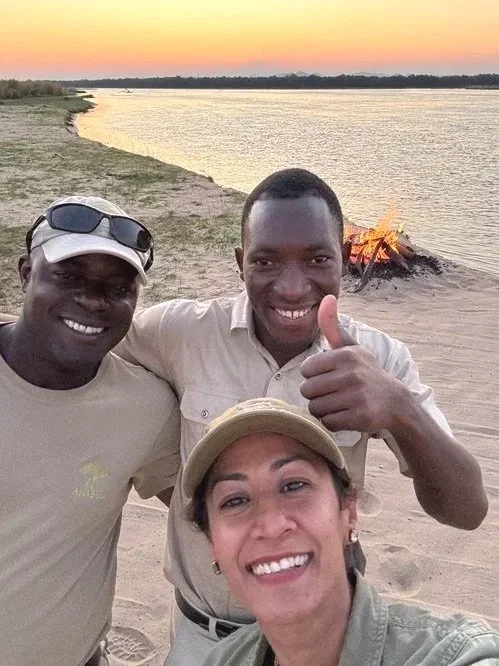
We love our guides! Mefi on Safari in Zambia.
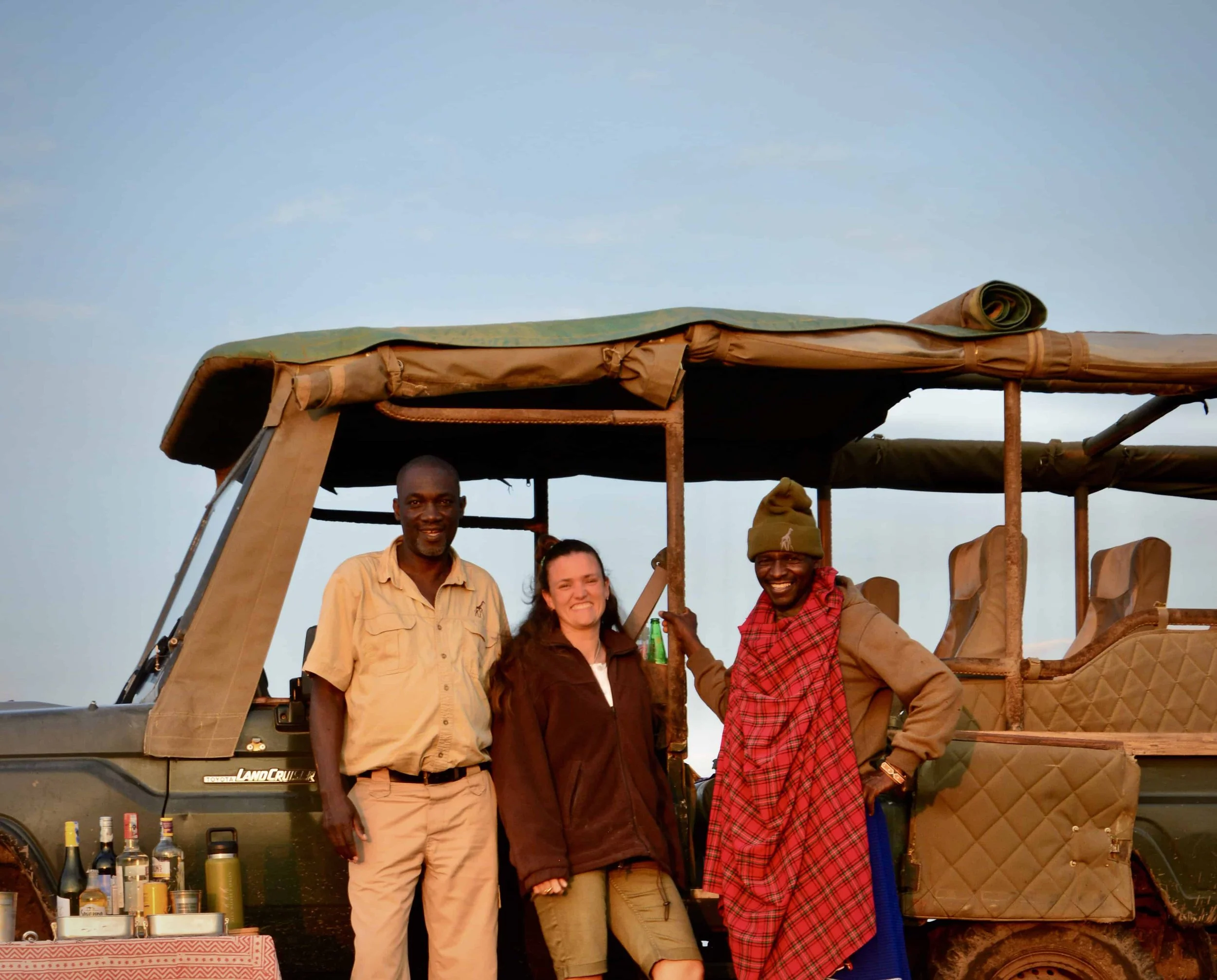
Georgie on Safari in the Masai Mara, Kenya
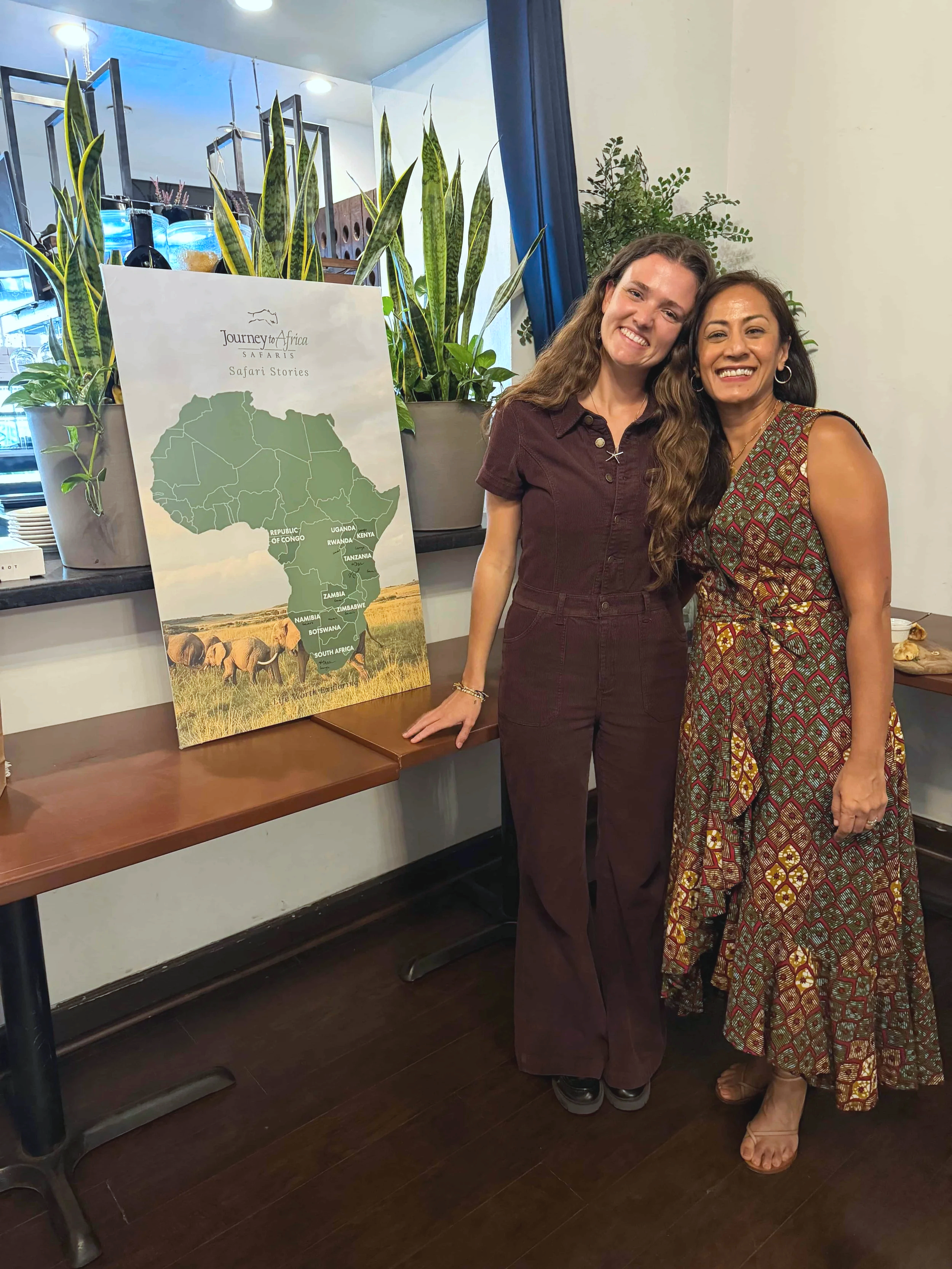
Our first Houston event - if you’re Houston-based, or in London, UK then we would love to meet you in person!