G-9N5RQ3V541

Safari Information

The Holiday Gift Guide that keeps on Giving!

It's that time of year! Whether you want to extend a hand to the organizations you have visited on your Journey To Africa Safari or find a new one that touches you.

We have hand-selected organizations that we know will be worth a Support, Shop, or Donate … there is something for everyone. We know your hard earned money will go a long way at these worthy organizations.


At the heart of Shanga's message is “Be kind and recycle" - an ethos that is adopted by the Journey To Africa team throughout the company that continues to support conservation, community, and social consciousness - helping to empower people and places.

Shanga is a successful social enterprise that employs the people of Tanzania with disabilities helping to support families, whilst creating a broad range of products. Perhaps the perfect Christmas gift waits from Shanga. Oh, and if you have been on Safari with us, you will recognize their glassware - the places we recommend use their products.
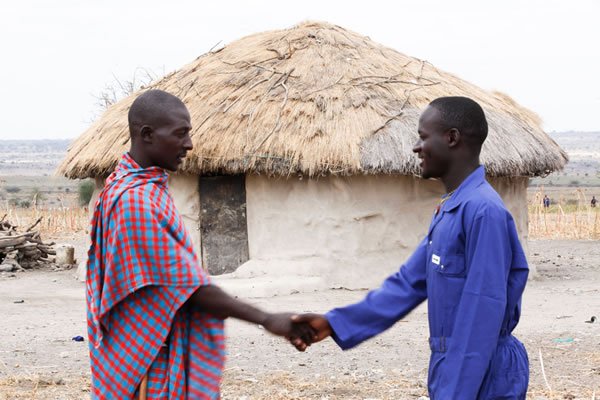

If you want to support community-based conservation initiatives then look no further. Honeyguide Foundation helps to support sustainable practices in local conservation by empowering the people on the ground. They want the local communities to take ownership across three dimensions: financial, environmental, and social. Do read up more on how they work with the local communities.

Damian Bell and Ole Kirimbai, the founders of Honeyguide started a community-based tourism venture, a model that we seek out when we pick our Safari partners.


Home to around 100 children ranging in all ages, Tanzania Children’s Village is an amazing home that offers tools to help bring the children of Tanzania out of generational poverty. There are several ways in which this organization can make a life changing difference - giving it a truly unique gift for a family/friend this holiday.

If you have visited the home, you know what a lovely home they create for the kids. From the mama, to the teachers, and the staff and everyone in-between. Asante Mama India and Baba Peter for making a safe home for the kids.


If you have been on Zoom with us, you will have most likely seen us wearing a Sidai design. Sidai Designs is based in Arusha, Tanzania and the team collaborates with the Maasai women to create handmade contemporary jewelry and homewares.

Sidai Designs aims to provide economic opportunity for Maasai women and girls by training them to produce unique, high quality beaded designs using the traditional techniques of their tribe. Their goal is to preserve Maasai beading techniques while elevating the traditional methods, giving them a contemporary aesthetic appeal.

To those who have been on Safari, you may have stopped here and to those going, we will take you here if you have time in Arusha before your Safari.


Big Life Foundation is a non-profit organization that operates over 1.6million acres of wilderness in the Amboseli -Tsavo -Kilimanjaro ecosystem in East Africa. In a recent newsletter, Big Life Foundation discusses that donations are down by more than 45%. Therefore, they need our support now more than ever to ensure these great ecosystems that support both human and wildlife are protected for future generations.


The famous Sheldrick Wildlife Trust (SWT) is globally renowned for their work for animal conservation, that specializes in reintroducing orphaned Elephants, that have often been subjected to poaching, back into the wild. This inspirational organization allows you to adopt an Elephant and receive regular updates on their progress.

It is a truly unique and humbling experience to witness the Carers and Elephants playing at the orphanage in Nairobi, Kenya. Other purchases include their online store containing art, merchandise and more.


Mulberry Mongoose is based in South Luangwa, Zambia. The local craftswomen use snare wire recovered from poaching traps to create jewelry designs inspired by the African bush. The slogan states ‘beauty from brutality’ - therefore find that special someone a gift, whilst helping to protect Africa's iconic species.

Fundamentally the organization employs women from all over Zambia to help reinvest in the community, where unemployment is high. They also help reduce their impact by using locally sourced materials. In today’s world, sustainability is becoming increasingly important.
Shop Green this season.
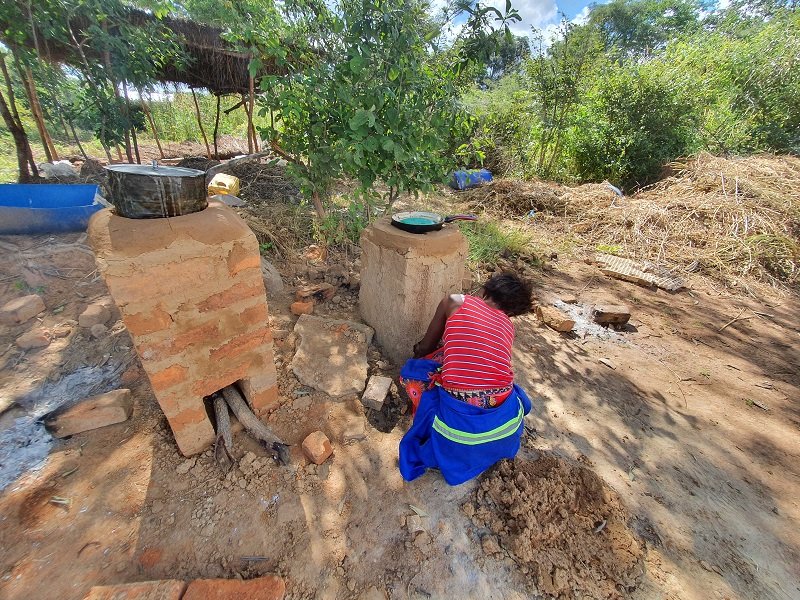

Tongabezi is a lovely lodge situated on the banks of the Zambezi river, where Victoria Falls is located, is home to a thriving community where humans and wildlife habitats co-exist. The lodge, in partnership with guests, explores numerous avenues to help support the local communities, along with running conservation schemes which help to conserve the land for future generations.

When you stay here, you are not only going to enjoy exploring Victoria Falls area and it’s many activities, but also support a community you can visit on your Safari, and support from afar.


Have more questions for us? Send us an email and we can chat more about each organization and point you in the right direction. We appreciate all the help you can give our Safari Partners.

How does your Safari make a difference!

The ‘Why’?

I have been thinking a lot recently about my “why”. Why is Journey To Africa different? Why should you come on Safari with Journey To Africa?

The answer is in the places and the people. I will take you to places I love and you will be meeting and supporting people I cherish. As a Tanzanian, the impact of each Safari with Journey To Africa is my biggest passion. I want you to show the Africa I love, whilst making a difference.

I thought I would take you deeper into how a Safari with Journey To Africa actually benefits people and places I know and love. What sets us apart is the personal connection I have with the places and people you will see and meet on your Safari especially in Tanzania.

My friends - When I tell you I am going to send you on Safari with Safari guide Kakae, Michael, Chiedel, Baraka, Bingo, Nathan, etc., I know them. When I say you will meet Lodge manager Mo, Mosongo, Baraka, Alex, Julien, etc., I know them.

I know that by sending you to particular lodges and camps that I have stayed at many times, you will be directly and indirectly supporting the people I have touched - the waiters, cooks, cleaning staff, askaris (guards), rangers, and all their families. Having become friends with these wonderful people over the years, it makes me proud that my Safari business supports them directly.

Aside from directly supporting the people who work in the Safari industry, I use lodges and camps and Safari Partners who have a focus on both the conservation of Africa’s wild places and the development and empowerment of local communities. From providing education, changing life trajectories from being a poacher to now a farmer or mechanic, to medical assistance provided for the village, etc. I can talk in-depth about this if you lend me your ears. So important to me! The future of what we do have to be protected and I want to work with people who care.

I think that it is important to know that your Safari is an incredible experience for you, and it goes beyond what you see and do whilst you’re there. Your Safari will be impacting local communities, the wildlife, and the people I care about. And my biggest hope is that you will come back invested too.

Let’s get you on a Safari where you will come back being friends with my friends.
- Mefi

My buddies in Greystoke Mahale, one fabulous place to visit for chimp trekking on Mahale Moutains.

My buddies in Greystoke Mahale, one fabulous place to visit for chimp trekking on Mahale Moutains.

What type of Safari vehicles will you ride on your wildlife Safari?

When on your Safari, you are going to enjoy game driving for at least 8-10 hours a day, sometimes more, sometimes less - you get to choose in most cases and sometimes your guide/weather. You may start early around 6:00 a.m. and end as late at 6:30 to 7:00 p.m when the areas close. You may even go out at night on your night game drives from certain lodges.

During this time, you will learn to appreciate your work-horse - your Safari vehicle.
Your 4×4 vehicle expertly maneuvered by our experienced knowledgeable Safari guide is your safe house. It will keep you cocooned from the wildlife, the rough terrain bumpety bump ride, and the range of weather elements you will encounter. The vehicle will act as your photography hide, breakfast and/or lunch table especially the bonnet/hood, your napping spot - happens to the best of us, your evening ride home.

In conclusion, where you will spend a lot of your waking hours. For this very reason, I take my vehicle selection from my Safari partners very seriously as it will be a big part of how you will enjoy your Safari!

Safari Vehicle and Sunset
Safari Vehicle

So, what type of vehicle(s) will you have on your wildlife Safari?
Depends on which area you on Safari.

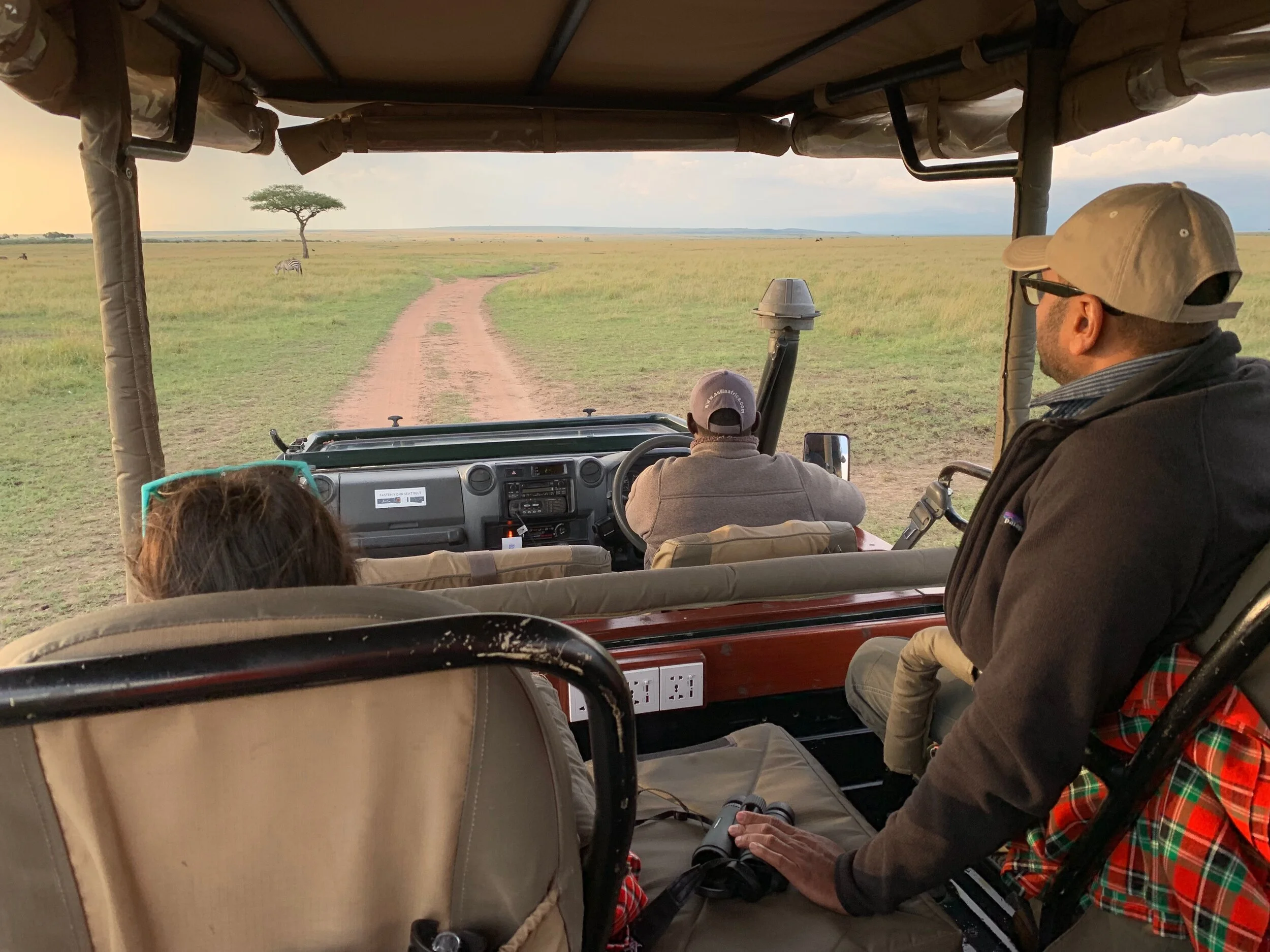
For Tanzania and Kenya, when you fly in an area, like Northern Serengeti or Masai Mara from a city like Arusha or Nairobi, you will hop into an open vehicle. South Africa, Botswana, Zambia, and Zimbabwe, where you mostly fly into an area; open vehicles are your go-to ride.

The open vehicles here will have a roof on top and plastic canvas on the sides should you need to protect yourself from rain. The open vehicle may look different in many areas in South Africa like MalaMala Game Reserve or Sabi Sabi Lodges where they will have open vehicles with no roof giving you a completely open feel.

If you are driving from the city to the parks, especially in Tanzania, you may be in a closed vehicle because doing a drive through the main-road in an open vehicle is not advisable. Going down Ngorongoro Crater is recommened in a closed vehicle.

The closed vehicles that we like, and chose our Safari partners accordingly, have to have large unobstructed windows and a pop-up roof so you can have shade and a panoramic view to enjoy the magnificient scenery.

Regardless of what type of vehicle you will have, your vehicle will have lots of amenities.
A cooler with water, soft drinks, wine, beer, etc., plugs to charge your spare camera batteries or iPhone, bean bags for your camera - big or small, binoculars for spotting, lots of guide books, snacks – you do get hungry on Safari,  blankets to keep you warm from the wind, and raincoat/poncho for the expected or unexpected rain.

If you have any special requests such as need a step stool to get on board, pillow for your back, extra water, etc., we can cater to that as well.

All in all, your vehicle with our professional guides will be ready to show you a great time on Safari with Journey To Africa. Now let’s get you on your Safari.

Africa in the time of CoVID-19

To my guests going on Safari in 2020 - Thank you - you have been patient and kind while working with me in postponing your Safari to the many parts of Africa; your Safari deposit funds have kept our many initiatives going at this unprecedented time.

Masai Tribe traditional dance

Conservation. Community.
The Safari deposit funds you have paid are being used for wildlife conservation and community. My amazing Safari partners and my curated list of Safari lodges, who support wildlife directly or by partnering with many organizations that are responsible for keeping our wildlife safe are working hard to keep wildlife safe as we 'speak'.

Also supported are the many communities surrounding the parks/ conservations. The symbiotic relationship between the community and the Safari lodges is a win-win in so many different ways depending on the location, the Safari lodge, etc.

Besides continuing our support for Big Life Foundation, David Sheldrick Wildlife Trust, RCVC to name a few, we are doing our best to send money to friends in Kenya and Tanzania who are giving meals to people who can't go out to work due to lock-down to small clinics who have lost all funding with only a trickle of tourists. 

Lion Cub Growling

All in this together.
I am hopeful that once the world is safe to travel again, we will travel with consciousness.

We are grateful that our Safari partners and Safari lodges that we work with value conservation and are committed to personally being custodians of the wildlife or partner with companies in the front line taking care of our wildlife. Besides wildlife conservation, without supporting the community, wildlife is in peril. All of these components are essential to sustainability practices.

This was very important to us before the crisis and we are even more committed to making sure this is the cornerstone of all our partners.

Many of you - hello friends - have seen our Safari partners' commitment in-depth first hand. You will have visited the villages/ schools to see first hand how your funds have helped; from clean water, education, de-snaring, farming produce, and more. If you have any special stories you want to tell us more about how their commitment impacted you, please do share.

How you can help my friends?
If you want to support right now when travel is at a standstill please email me and I can point you in the right direction - either a gofundme created by our Safari partner for their initiatives, your specific Safari guide, the Safari lodge, and the crew, a charity you visited, etc. we are here to help.

If you want to know more about what your Safari will be funding, please contact me and I can send you information.

Stay safe and healthy rafikis [friends].
This. too. shall. pass. I look forward to chatting with you about your Safari somewhere in magical Africa soon.

My 5 minutes of fame.

That's me on TV! My 5 minutes of fame.  
Great Day Houston had a Father's Day segment and I was asked to share how being on Safari would be an amazing Father's Day gift. Debra Duncan, the host was really easy to chat with and asked a few spontaneous questions such as shopping for Tanzanite in Tanzania and how Africa gets a bad reputation. I wish I had more time; I was having a blast chatting with her and sharing about Safaris in Tanzania.

So if you want my autograph, I am happy to oblige. :) Or get me back on TV. I am up for talking Safaris in Tanzania.  

Slow Travel on Safari.

If lucky, one of the feelings you will experience on Safari is the slow pace. A wonderful feeling, really!

There is a sense of routine that forms on Safari.  Since the staff will take care of everything for you, it allows the luxury of this relaxed, laid back feeling to sink in so you can really take in the incredible, natural surroundings. For example, you have your day planned by your guide and Safari lodge [thanks to all the planning you and I will do before you get to the ground], you are 'driven around' in your Safari vehicle, meals taken care off, activities arranged, etc. You can allow yourself to surrender in these wonderful places. You are detoxing from the hustle bustle of your day-to-day.

Dip in Lake Tanganyika, after a trek to see the chimps. Photo taken by Julien Polet, the manager of Greystoke Mahale at the time.

Dip in Lake Tanganyika, after a trek to see the chimps. Photo taken by Julien Polet, the manager of Greystoke Mahale at the time.

Three ways to enhance that for yourself.

Take time to enjoy the park.
To really get the feel of the park or a corner of the park, make sure to settle in. Unpack your bags and spend at least 2 nights in each of our lovely lodges so you can really sink in that vastness of the terrain you have the privilege to explore. Most of the parks and conservancies in East and Southern Africa are huge. Give yourself time to dig deep into the park and you too will start feeling like you are 'at home'.

Decompressing takes time; stay at least 8-9 days.
I may not be too far from the truth when I say our lives are on the run. Whether you are a family with young or adult kids, a couple, or even retired, we travel to escape. The first few days on Safari, you are still getting in the groove of how to relax ... or at least that is what most of us feel. Then we slowly start putting the phone away longer and are not craving for wi-fi. Your body is learning to relax. The game drives start become more enjoyable; you are decompressing. One of the reasons you are taking a Safari right?  

Friendships.
The longer you spend time with your guide, the lodge crew, the other travelers you will meet on Safari, your family and friends, the deeper the connections that will start to form. So much fun if you can open up and chat with your Safari mates.

One of my favorite things on Safari is to chat with the guide and lodge crew. Tanzania has over 100 tribes and each one has an amazing story to tell. My Lost in Translation blog post came from my time chatting with these knowledgable guides. I still keep in touch with many of them. They have taught me a lot.

Evening game drive in Ruaha. You can't help but appreciate the vastness, the silence, the unknown.

Evening game drive in Ruaha. You can't help but appreciate the vastness, the silence, the unknown.

The #traveldeeper hashtag - that's what we want you to achieve. If you can afford to give yourself the time and depth of slow travel, do it! They will create amazing experiences creating lifelong friendships.

I look forward to being on Safari [or any trip] so I can slow down the pace of life.
Ready to enjoy some slow travel time on Safari? We can make it happen.

Trekking Tips for Mahale Mountains from Greystoke.

I have rubbed shoulders with chimps. Yup, I rubbing shoulders with no other than a male chimp called Christmas, who lightly whacked me with a twig [no harm was done] - what an unforgettable present. 

sally_and_i.jpg

To successfully hike the mountains, I have some tips for you [in no particular order] especially for amateur hikers like me. Tips collected from personal experience and collected from other experienced hikers. Rain and sleek or dry, these should come in handy. 

// Wicking clothing.
It is hot and humid in the mountains. Having moisture-wicking clothing was more comfortable but on the day I did not wear that fabric, I was drenched. Not a deal killer for me but if you are sensitive to sweating, definitely look into moisture-wicking clothing - you can use it for your Safari as well. 

// Raincoat. 
Greystoke Mahale provides a poncho but for a smaller person like me, I found myself tripping on the way up and down the mountain. Having my own rain jacket would have been more comfortable. I do have to say that the poncho did cover my camera packed back-pack when it was raining hard so if you do take a raincoat, see if it will cover you and your back-pack. Or stick with the poncho.

// Gaiters.
When Sally said she was getting this, I was not 100% convinced I should get the gaiters but I am glad I did. It kept my socks very dry. Which leads me to then next must item ...

// Waterproof hiking shoes  - if you can.
I had Columbia Peakfreak hiking shoes and I could not have been more comfortable. They gave me traction, kept my feet dry and kept me blister free. I wore mine with Smart Wool socks. Happy hiker here.

// Camera solution.
A fellow trekker could not use his lens because of moisture. Make sure you have a water proof protection / backpack for your camera on the climb - he had it around his neck, and making sure you have a good seal for your lens + camera. Have a back-up as well if you can. 

Another personal note - I lost my lens cap on the mountains and some chimp is playing with that. In the fluster of climbing up fast, setting up the camera quickly, etc., I dropped my lens cap and realized too late. Note to self - secure your lens cap with a cord. 

// Camera Tip.
Learn your camera. Have it set for the quick shooting in low light and definitely know your settings if you are planning on using manual. The camp manager and guides like Butati at the camp were helpful with suggestions. It is dark, humid, and the chimps can be 5 ft. away to 50 ft. so what type of lens to carry is the million dollar question.  I had my 70-300 mm lens and used my iPhone for the close-ups.

// Other trekking notes.
- Energy bars and sweet bananas were provided by Greystoke Mahale - they really helped with giving the group a nice boost on the trek.
- Bring extra cash. There were other people besides our guides who took care of us like the trekkers who start early to find the chimps and Tanzanian government rangers.
- Self care items like for blisters, scratches from the forest, balm for the hard trek. 

trek_two_group.jpg

Anything else we can add to these tips?
Besides these few tips, do make sure you are fit to make this trek. It can be long and steep up the mountain, and you truly want to enjoy the whole experience.

And let me tell you, it has been one of the best experiences of my life!

A Typical Day on Safari in Tanzania and Kenya.

Everyday is a different day on Safari. No agendas; just you and your Safari guide making plans on what to see, where to go, how long to be out, and more. Here are guidelines to navigate your day on a Tanzanian Safari.

Serengeti breakfast Tanzania

Morning.
For the most part, I'd say on Safari, waking up early should be the norm even if you are not a morning person. Why? Sunrise. This time of the day is truly glowing. 

Your wake-up call can be any where from 6:00 am onwards.

1. You can decide to have breakfast at the lodge. Enjoy coffee in your room, then head to the main area. Majority of the Safari lodges in the national parks have a deck looking out at the park. Enjoy the sunrise while eating breakfast.  
2. Start around 6:30 am and go out looking for wildlife in the early morning, when the sun is lighting up the African soil. Have breakfast around 8:30 -9:00 am [or when your stomach calls for food] in the middle of the national park. This should be your choice at least once or twice in each national park.

serengeti safari tanzania

Afternoon.
Depending when you have started, you will have two choices. 

1. Stay out for lunch in the parks. If you have stayed in for breakfast, go out and stay out for a bit longer. There are many picnic spot your guide will take you or in some cases, you will eat in the car while watching the rhino crawl or in the middle of the Wildebeest Migration.
You can come back to the Safari lodge at your own leisure for your afternoon siesta.

2. Come back for lunch at the Safari lodge. If you have been out from early morning, this can be an option. And if you want, squeeze in an outdoor shower when the sun is out. 

sundowner, tarangire, tanzania

Late afternoon / Evening.

Around 3:30 - 4:00 pm, you will be heading out again if you have been in the Safari Lodge. Go out to capture the evening golden hour. If you've had enough for the day, stay back. There are no rules. 

You will be out and about until 6:30 pm, stretching it to 7:00 pm before you have to return back. Many a rush drive back have been had as you want to soak in every last light on Safari.
Also, this is the time for sundowners. The time you park your vehicle, enjoy a drink while watching the glorious sunset in Africa. You will pinch yourself, you are on Safari.

story time tarangire

Night-time.

Pure cozy. Campfire, Safari stories by the camp manager or staff + dinner.
Some stories that have to be heard like this Maasai warrior telling us about his right of passage by hunting lions. Keep an open mind - it's not all black and white, lots of grey, lots of changes that need to be made, lots of traditional ways that have to alter, lots of cultural stories that need a new course - listen. 

In the end, you decide your travel style. Some clients want to be out all day; they want to soak every minute of being on Safari. Others want to relax a bit more; have all meals or more meals at the lodge and go out on game drive at leisure. 

Whatever your style, you will love your day on Safari.