G-9N5RQ3V541

Safari Planning

A Guide to Zambia Safaris: South Luangwa, Lower Zambezi and Victoria Falls

Zambia, you blew me away.

When I visited Zambia for the first time, it surprised me in the best possible way. From the moment I landed in Lusaka and was met with warm smiles and genuine hospitality, I knew this trip was going to be something different.

Zambia doesn't shout. It doesn't need to. It just quietly delivers some of the most extraordinary wildlife encounters, most authentic Safari experiences, and most underrated landscapes on the entire continent. If you've been on Safari before and you're wondering where next — or if you're planning your first and want somewhere that feels genuinely wild — Zambia should be at the top of your list.

Here is everything you need to know when considering Zambia for your Safari and some reasons it should be top of your Safari list!
The wildlife is next level

Let me tell you about some of the moments that stopped me in my tracks.

  • In South Luangwa, I watched a pack of wild dogs cooling off after a hunt — utterly unbothered, completely relaxed, just living their lives. Later, in the Lower Zambezi, the same pack gave chase to an impala across open ground. The speed, the coordination, the sheer wildness of it.

  • A leopard sighting one morning had me abandoning my planned walking Safari without hesitation. My guide Sandy from Sungani Lodge spotted her in the golden morning light, draped across a branch with that perfect, liquid leopard indifference. I don't regret the decision for a second.

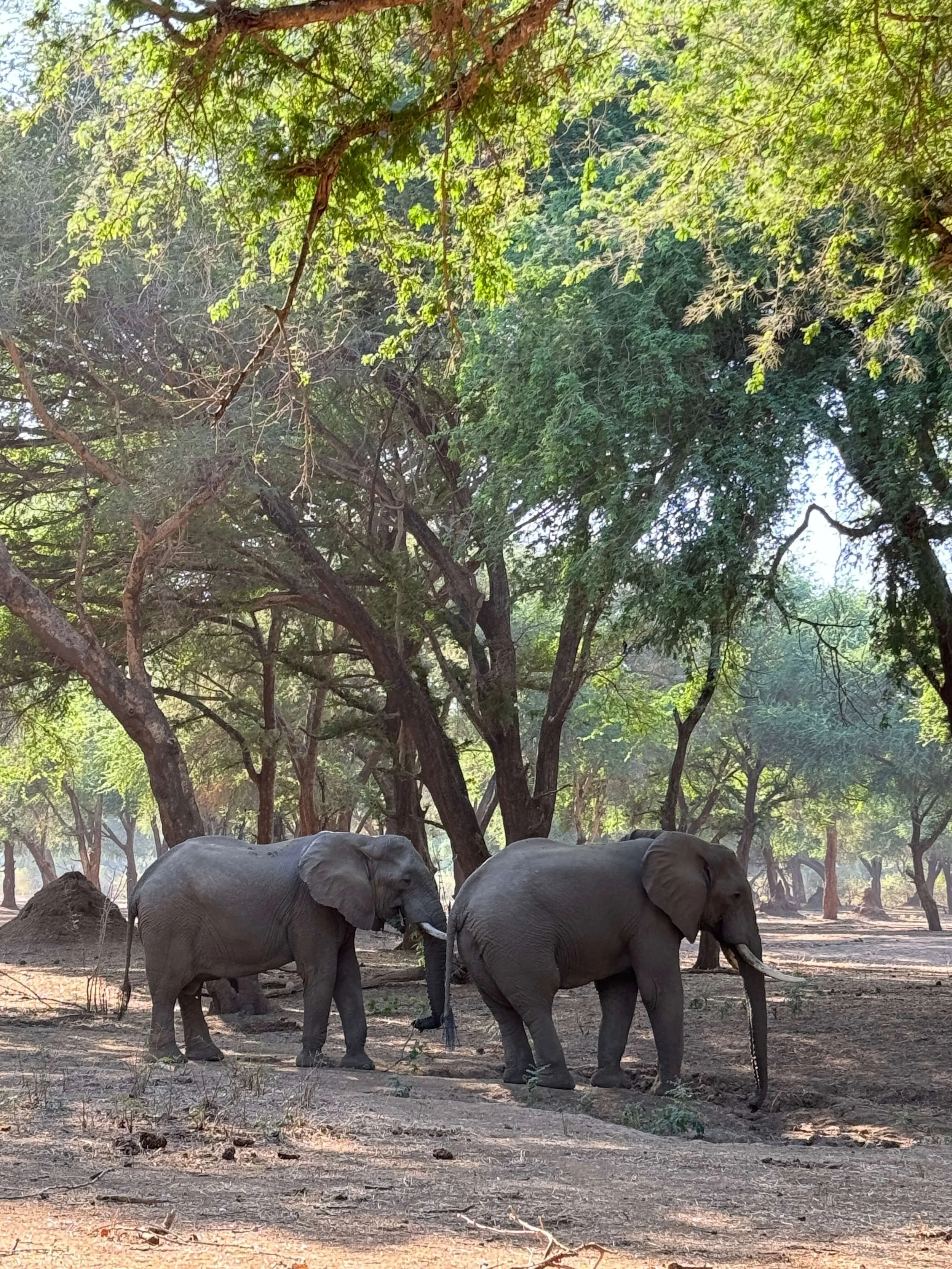
  • The elephants were everywhere — and not just in numbers. I got to watch them properly. Mothers with tiny calves navigating riverbanks. Teenagers jostling and testing each other. An old bull moving alone through the mopane. When you spend time quietly with elephants, you see things you'd miss on a rushed game drive. Elephants, all day, any day.

  • Lions were a constant. A sibling pair playing with sticks — one enthusiastic, the other emphatically not interested. A cheeky lion cub attempting to steal from his father's kill, trying with extraordinary patience while Dad refused to budge, and Mum eventually running over to sort out the family drama. Wildlife doesn't get more entertaining than that.

  • And then there were the white rhinos. My guide and I were transferring through Mosi-O-Tunya when something large caught my eye at a distance. I called hippo. He called elephant. We were both wrong — and both got goosebumps when we realized we were looking at two white rhinos. Neither of us could stop talking about it for the rest of the journey.

  • The carmine bee-eaters were an unexpected highlight too — arriving at the riverbanks to nest, a flash of colour and movement that birders travel specifically to see. They are utterly beautiful and if you think you aren’t into birds, you might just find yourself enchanted by the birdlife and leaving Zambia a step closer to being a true birder!

South Luangwa National Park — the home of the walking Safari

South Luangwa is where the walking Safari was born, and it remains one of the best places in Africa to experience it. There's something fundamentally different about being on foot in the bush — the sounds sharpen, the smells intensify, and the relationship between you and the landscape changes entirely. You notice things from a vehicle that you'd never see on foot, and vice versa.

The park itself is extraordinary: dense mopane woodland giving way to open floodplains along the Luangwa River, oxbow lagoons teeming with hippos and crocodiles, and a concentration of leopard that is among the highest in Africa. It's a place where every game drive feels different from the last.

Puku Ridge Camp was one of our favourites on the South Luangwa circuit — beautifully positioned, exceptional guiding, and the kind of intimate camp experience that makes a Zambia Safari feel genuinely personal.

Sungani Lodge delivered some of the best guiding of the entire trip. Sandy, our guide there, had the kind of knowledge and instinct that you only develop from years in the bush — and that leopard moment was his doing entirely.

Best time for South Luangwa: The dry season (May to October) is peak season — the bush thins out, wildlife concentrates around the river, and game viewing is exceptional. The green season (November to April) brings lush landscapes, baby animals, and the carmine bee-eaters — and rates are lower.

Lower Zambezi National Park — river Safaris and extraordinary game

Where South Luangwa feels intimate and wooded, the Lower Zambezi opens up. The Zambezi River forms a natural boundary with Zimbabwe, and the combination of land game drives and river-based activities — boat Safaris, canoe trips, fishing — makes for one of the most varied Safari experiences anywhere in Africa.

Canoe Safaris on the Zambezi are something special. Drifting past elephants drinking on the bank, hippos submerged to their eyes, fish eagles overhead — the river gives you a completely different perspective on the wildlife, and there's a quiet thrill to being that close to the water and everything in it.

The wild dog sighting I mentioned — the impala chase — happened here. The Lower Zambezi delivers.

Best time for Lower Zambezi: May to October. The camp access roads can be impassable in the wet season, and the river experience is best when water levels are lower (August to October for canoe Safaris).
Victoria Falls or Mosi-O-Tunya‘The Smoke that Thunders’

No Zambia Safari feels complete without Victoria Falls. The Zambians call it Mosi-O-Tunya — the smoke that thunders — and the moment you hear it before you see it, you understand why.

The falls are extraordinary from every angle: from the walking paths through the rainforest, from a helicopter, from the bridge between Zambia and Zimbabwe. But the most unforgettable way to experience them — if you have the nerve — is from Livingstone Island and the Devil's Pool.

I am afraid of heights. My intention, genuinely, was to watch and observe for the benefit of everyone reading this. The guides had other plans!

Livingstone Island sits right at the edge of the falls, and the Devil's Pool is a natural rock pool that forms in the dry season (roughly August to January) where you can swim to the very lip of the falls and peer over the edge. Nothing but a slippery rock between you and one of the most dramatic drops on earth. The guide's encouragement was, I have to say, extremely persuasive. I took the plunge — literally, into cold water — and it was one of the most exhilarating, terrifying, laugh-or-cry moments of my life.

The breakfast served on Livingstone Island afterwards, looking out over the falls, was one of the best meals I've had anywhere.

Important: Devil's Pool is only accessible during low water season (roughly August to January). During high water (February to July), the island itself and the pool are inaccessible. If this is on your list, time your trip accordingly.

Latitude 15 in Lusaka is a fantastic first night — a beautifully decorated boutique hotel that lets you decompress after the long journey before heading into the bush. It sets exactly the right tone for what's to come.

How to combine Zambia with neighbouring countries

Zambia sits in a wonderfully central position for combining countries. Victoria Falls connects naturally to Zimbabwe (Matetsi River Lodge is exceptional on the Zimbabwe side) and Botswana's Chobe National Park is just a short transfer away and possible for a day trip. Many guests combine Zambia with Botswana for a Southern Africa Safari that covers extraordinary variety without too much travel.

For guests coming from East Africa, Zambia pairs well with Tanzania — a Southern Africa extension after a Serengeti and Ngorongoro itinerary is something we're increasingly putting together.

Practical notes for planning

Getting there: Most international guests fly into Lusaka or Livingstone via Johannesburg. Internal flights connect to both South Luangwa (Mfuwe Airport) and Lower Zambezi.

How long to go for: We recommend a minimum of seven nights to cover South Luangwa and Lower Zambezi properly, with a night or two at Victoria Falls. Ten nights gives you room to breathe.

Walking Safaris: If you want to include walking Safaris — and we strongly recommend you do — let us know upfront so we can book the right camps and guides. Not all camps offer walks, and the best walking guides need to be requested specifically.

What to expect from Zambian hospitality: The warmth of the people in Zambia blew me away. From the team at Latitude 15 to Sandy at Sungani and the guides throughout, Zambia has a quality of hospitality that is hard to define but impossible to miss. Beyond the wildlife and stunning lodges, it made the trip. The lodge teams, guides, rangers, and everyone in between are the heart beat of the Safari world and we hope you leave Zambia feeling connected to the people who call it home.

Ready to start planning your Zambia Safari?

Zambia surprised me. I suspect it will surprise you too. If you're ready to start thinking about it — or even just curious — get in touch. We'd love to help you put something together.

Start planning your Zambia Safari

Mefi
Botswana: Delta Dreams and Desert Delights

Dumela!

There's something about Botswana that takes hold of your soul and doesn't let go. Maybe it's the quiet glide of a mokoro through golden reeds. Maybe it's the sudden stillness before lions emerge from the brush. Or maybe it's that feeling — coffee in hand at sunrise, nothing in sight but floodplains bathed in morning light — where you realize the world is bigger and wilder and more extraordinary than you ever gave it credit for.

Botswana started as a daunting destination for me. Early in my career as a Safari designer, I didn't know it as well as my home of East Africa, and it felt complex. But over the years I've visited, tried and tested many of the top camps and lodges, found our favorites, and it has slowly become one of the most rewarding Safaris to put together. Now so many of our guests are choosing it — and I couldn't be more thrilled.

If Botswana isn't on your Safari list yet, let me change that.

Mefi

On the Okavango Delta

Why Botswana is unlike anywhere else in Africa

Botswana is one of the most wildlife-rich countries on the continent, and it does things differently. Low-volume, high-quality tourism means fewer vehicles, more space, and a feeling of genuine wilderness that is increasingly rare. The government has committed to conservation over mass tourism for decades — and it shows in everything from the density of wildlife to the quality of the guiding.

What makes it feel truly singular is the sheer variety of landscapes in one country: the water-laced channels of the Okavango Delta, the vast elephant highways of Chobe, the salt pans of the Makgadikgadi, and the red dunes of the Kalahari. No two days look the same.

My trip to Botswana in February

The Okavango Delta — a non-negotiable

The Delta is a must. Full stop.

Every year, rains from the Angolan highlands fill this inland delta — the only one of its kind in the world — transforming dry plains into shimmering lagoons, swelling channels, and breathing life into one of Africa's most extraordinary ecosystems. A UNESCO World Heritage Site, the Okavango is home to lions that have adapted to the wetlands and grown larger and more powerful for it, termite islands built over hundreds of years, enormous elephant herds moving through floodplains, and bird species you simply won't see anywhere else.

I've been on Safari across this continent for over twenty years. The Okavango Delta is still unlike anything else I've seen.

Wet camps vs dry camps — and why the difference matters

Something I always explain to guests before we start planning the places-you-will stay in the Okavango Delta: your experience in the Delta shifts dramatically depending on whether you're staying at a wet camp or a dry camp, and understanding the difference helps you plan the right trip.

Wet camps are surrounded by permanent water. Activities here are water-based — and the star of the show is the mokoro, a traditional dugout canoe poled silently through narrow channels. You won't hear an engine. Just birdsong, the gentle swish of reeds, and the occasional splash as red lechwe leap across the shallows. It's peaceful, intimate, and wildly beautiful. Coming from the East African Safari world and used to bumpy game drives, this was totally enchanting - a truly immersive way to experience your surroundings.

Dry camps sit on islands within the Delta and deliver classic game drives across open savannah — elegant giraffes, stealthy leopards in leadwood trees, and if you're lucky, African wild dogs. The wildlife here is exceptional and the pace of a traditional game drive feels very different from the stillness of a mokoro.

The best part? Many of our favourite camps offer both experiences, so you don't have to choose.

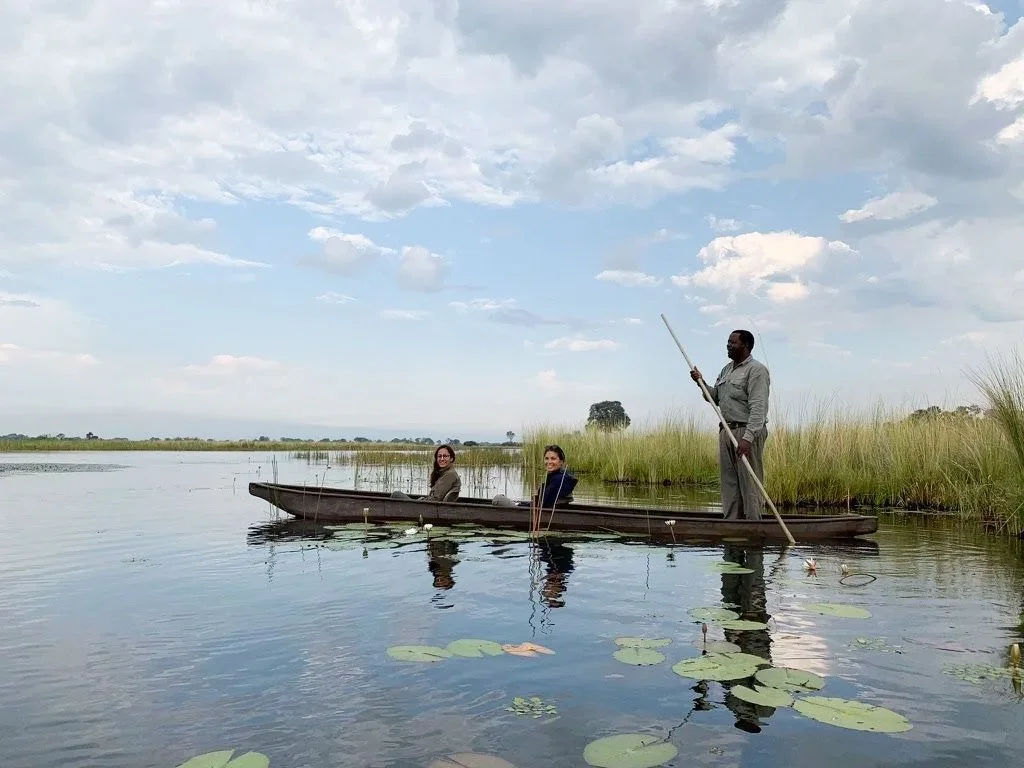
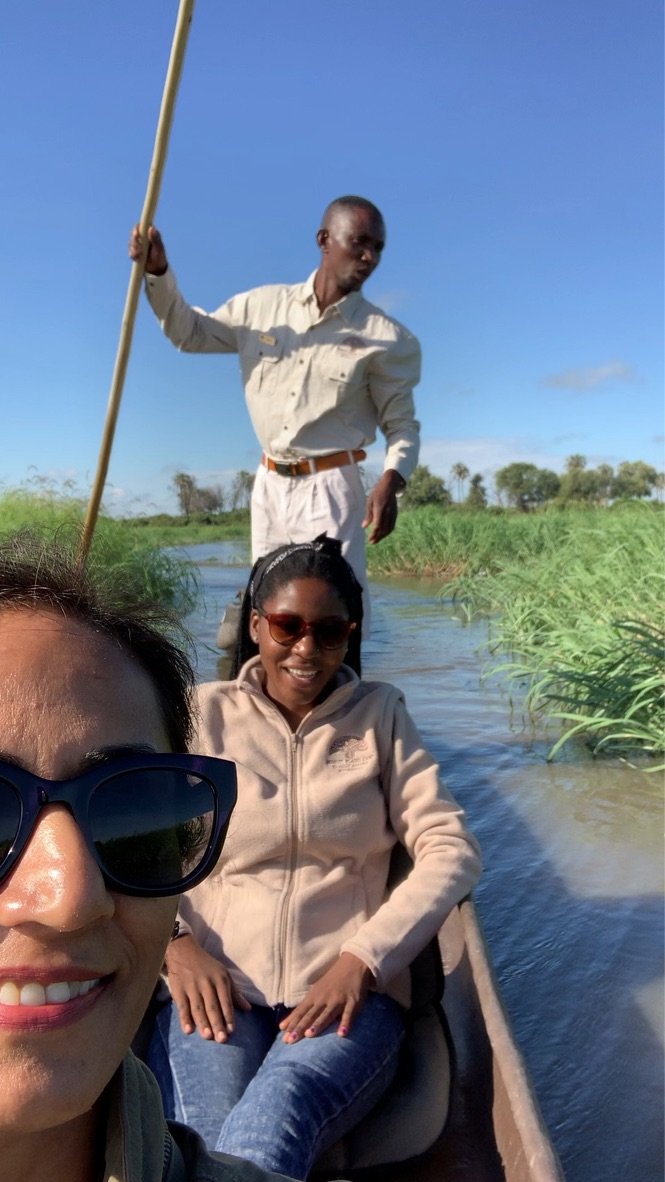
Mokoro Rides through the Delta - gliding through the peaceful channels, loving life!

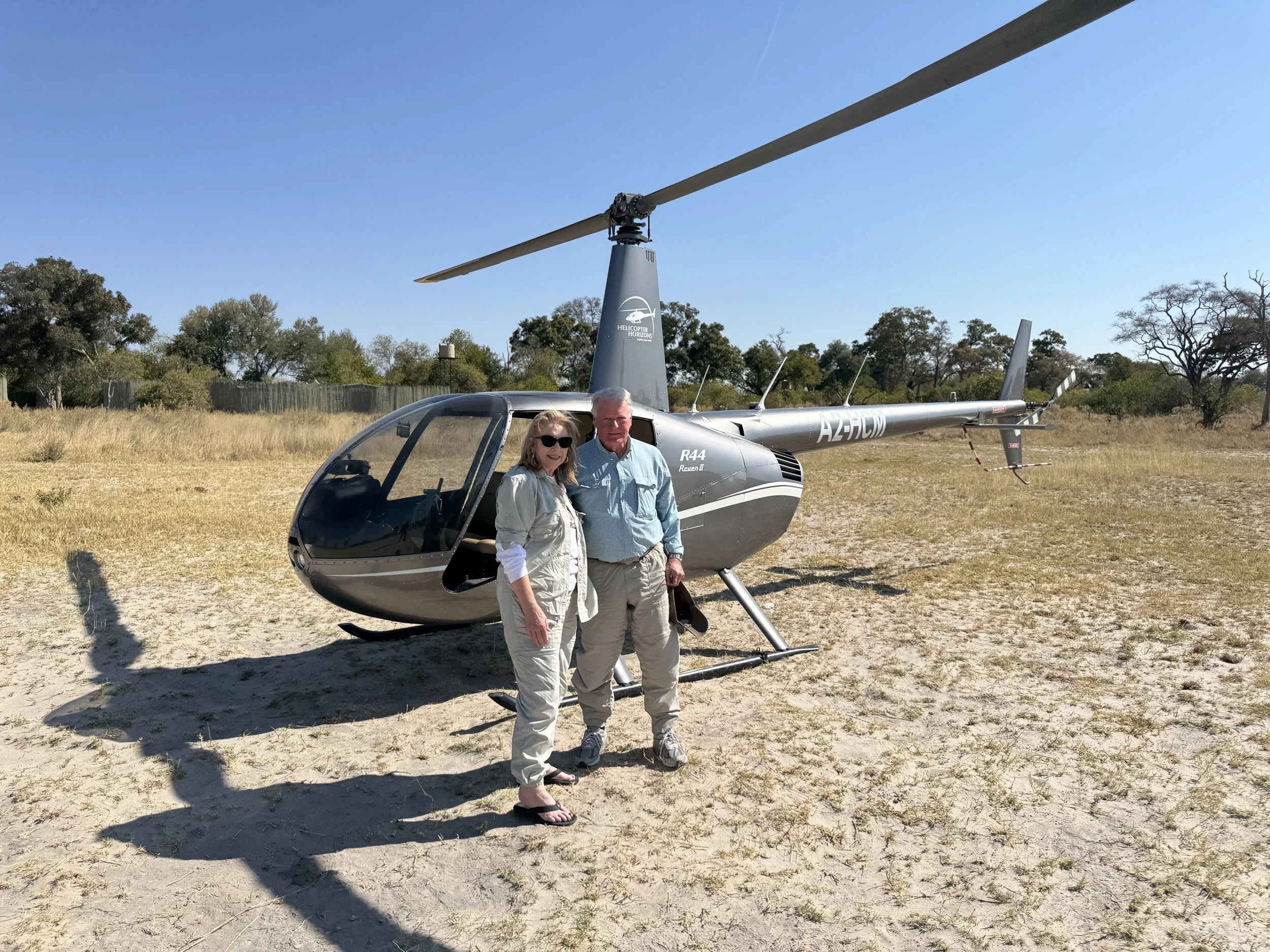
Our lovely guests Dr Hendricks & Vicki enjoyed a Heli ride over the Delta whilst staying at Kiri Camp in Khwai Concession.

When to visit the Delta

May to September is the golden window. This is when the floodwaters are at their peak — channels are high, mokoro rides are at their best, and the concentration of wildlife around the water is extraordinary. Hippos peek from the shallows. Elephants gather at newly-filled pools. Over 400 bird species fill the air.

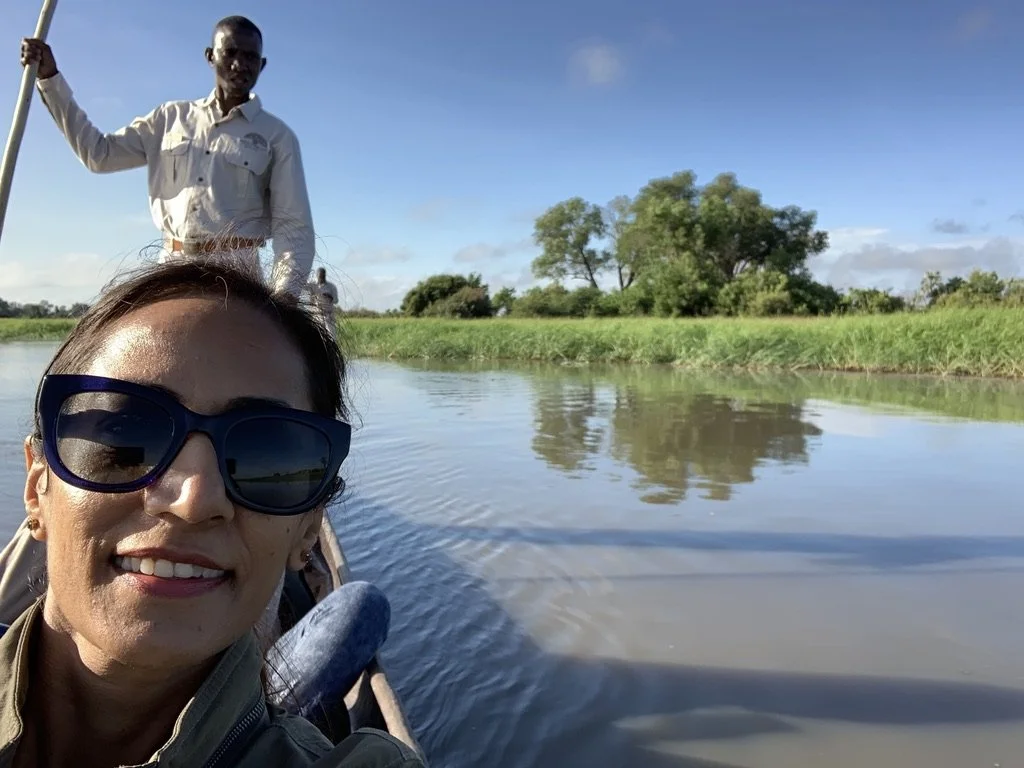
Can't travel between May and September? Don't wait. I was in the Delta in February — channels lower, yes, but the wildlife is still there. That's me in the photo above, on a mokoro in February, having just seen leopard, lion, wild dogs, and a sitatunga in one day. The animals don't take the dry season off, and neither should you.

One thing worth noting: October and November can be extremely hot in Botswana before the rains arrive. Not impossible, but something to factor in.

The cherry on top: A helicopter flight over the Delta is something our guests consistently say is one of the most breathtaking things they've ever done. Seeing the scale of the channels, islands and floodplains from above - with wildlife moving through it all below you - completely changes how you understand this landscape.

“It produced a wonderful overview of the Okavango Delta and an understanding of how abundant the wildlife is there. We must have flown over literally 400 elephants during the flight.” Our JTA Guests on their Helicopter Ride over the Delta.


Chobe National Park — where the elephants rule

If the Delta is about intimacy and water, Chobe is about scale and abundance. Home to the largest elephant population on earth — over 130,000 elephants — Chobe delivers game viewing that is genuinely hard to believe until you're in it. Herds of hundreds moving through the floodplains. Lions on the bank. Buffalo, sable, roan antelope. And boat Safaris on the Chobe River that put you right at eye level with it all.

Chobe is a great place to combine a river Safari with a land Safari — the two activities complement each other beautifully and give you completely different perspectives on the same landscape.

Best time: Year-round, but the dry season (May to October) brings the most dramatic game viewing as wildlife concentrates along the river.

Safari Tip: Chobe National Park can also be visited on a day trip from Livingstone if you are visiting Victoria Falls in Zambia.


The Kalahari — Botswana's best-kept secret

Most guests come to Botswana for the Delta and leave without experiencing the Kalahari. The semi-arid desert of the Central Kalahari Game Reserve is one of the largest protected areas in the world, and it offers a completely different Safari experience: open, ancient, and hauntingly beautiful.

The black-maned Kalahari lion is the star here, along with massive gemsbok, springbok, cheetah, and brown hyena. The Makgadikgadi Salt Pans — white, utterly vast — sit on the Kalahari's edge and offer one of the most otherworldly landscapes in Africa. In the summer months (November to April), the pans fill with water and attract huge flocks of flamingos.

For guests looking to add something genuinely unexpected to their Okavango Delta Safari, the Kalahari is an incredible way to experience Botswana’s two extremes.

Practical notes for planning

Getting there: Most international guests fly into Maun (for the Delta) or Kasane (for Chobe) via Johannesburg. Internal bush flights between camps are a standard part of any multi-camp itinerary and add to the adventure. 

How long to go for: We recommend a minimum of seven nights in Botswana to do it justice. Ten to twelve nights allows you to move properly between areas without rushing.

Budget: Botswana sits at the premium end of the Safari market — the low-volumm  tourism model means camps are intentionally small and exclusive, and that comes at a price. We're always transparent with our guests about budget from the first conversation. The quality of what you get in return is genuinely exceptional. Botswana Safaris typically start at approximately $1,200 per person, per night.

Best overall season: May to October for peak game viewing and the best Delta water levels. November to April for lower rates, fewer guests, lush green landscapes, and the flamingos on the pans.

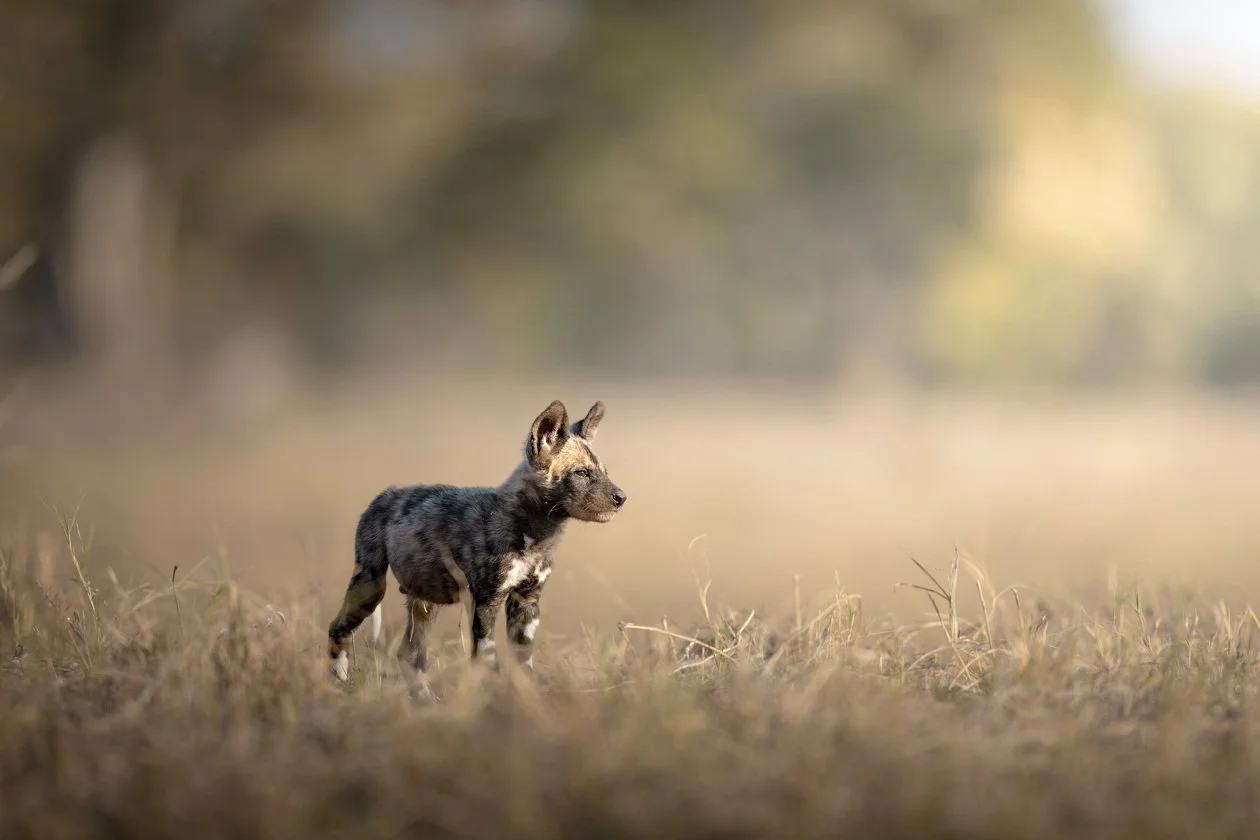
Wild dog pup in the Savute Region of Chobe, photo from our partners at Desert & Delta

Our favourite camps and areas

We're very deliberate about the camps we recommend. Over the years we've tried and tested across all the key areas, and these are the places we come back to again and again. Our list of favorite places is always evolving and growing.

In the Okavango Delta: We love the Kwando circuit of camps for their exceptional guiding and beautiful positions, and the Natural Selection camps for guests looking for something more intimate and design-led. Khwai Private Reserve — on the eastern edge of the Delta — is fantastic for dry land game viewing combined with the atmosphere of the Delta, and consistently delivers wild dog and leopard sightings.

In Chobe: Chobe-area camps that combine river Safaris with land game drives are our go-to. The quality of the boat Safari experience here is something we always highlight to guests.

In the Kalahari: Kalahari Plains Camp by Natural Selection is one of our favourites — remote, beautifully designed, and the gateway to some of the most extraordinary desert wildlife encounters we've seen.

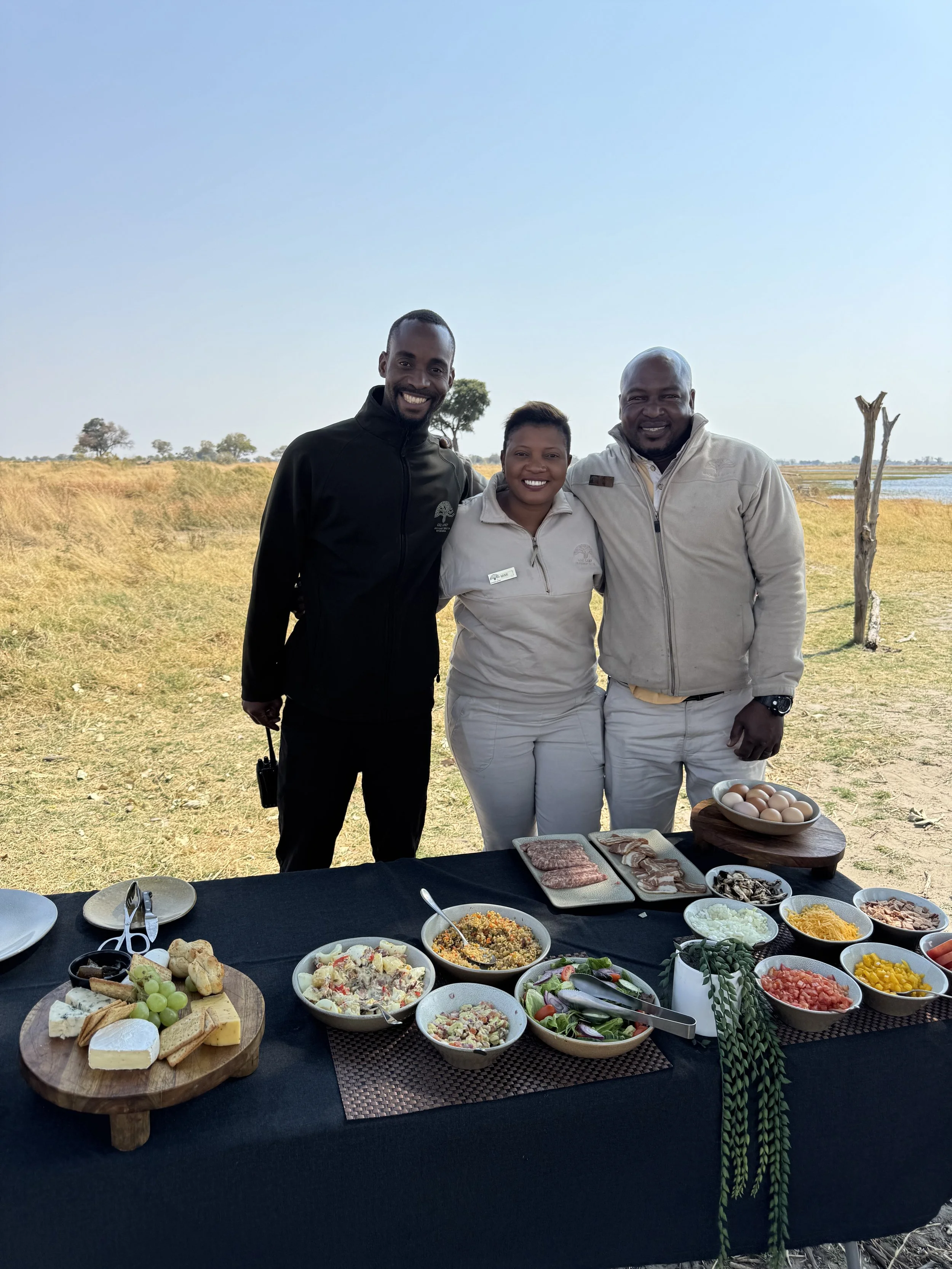
Some of the wonderful team at Kiri Camp from our Journey to Africa guests Botswana Safari. They loved Kiri Camp - the people, place and little touches!

Ready to start planning?

Botswana has a way of getting under your skin. Guests who go once almost always come back — often bringing friends or family the second time, wanting to share something they can't quite put into words.

If you're ready to start thinking about your Botswana Safari, we'd love to hear from you. Tell us when you're thinking of going, who you're travelling with, and what kind of experience you're after — and we'll start building something extraordinary for you.

Start planning your Botswana Safari

Mefi & Georgie

Why Botswana For Your Safari!

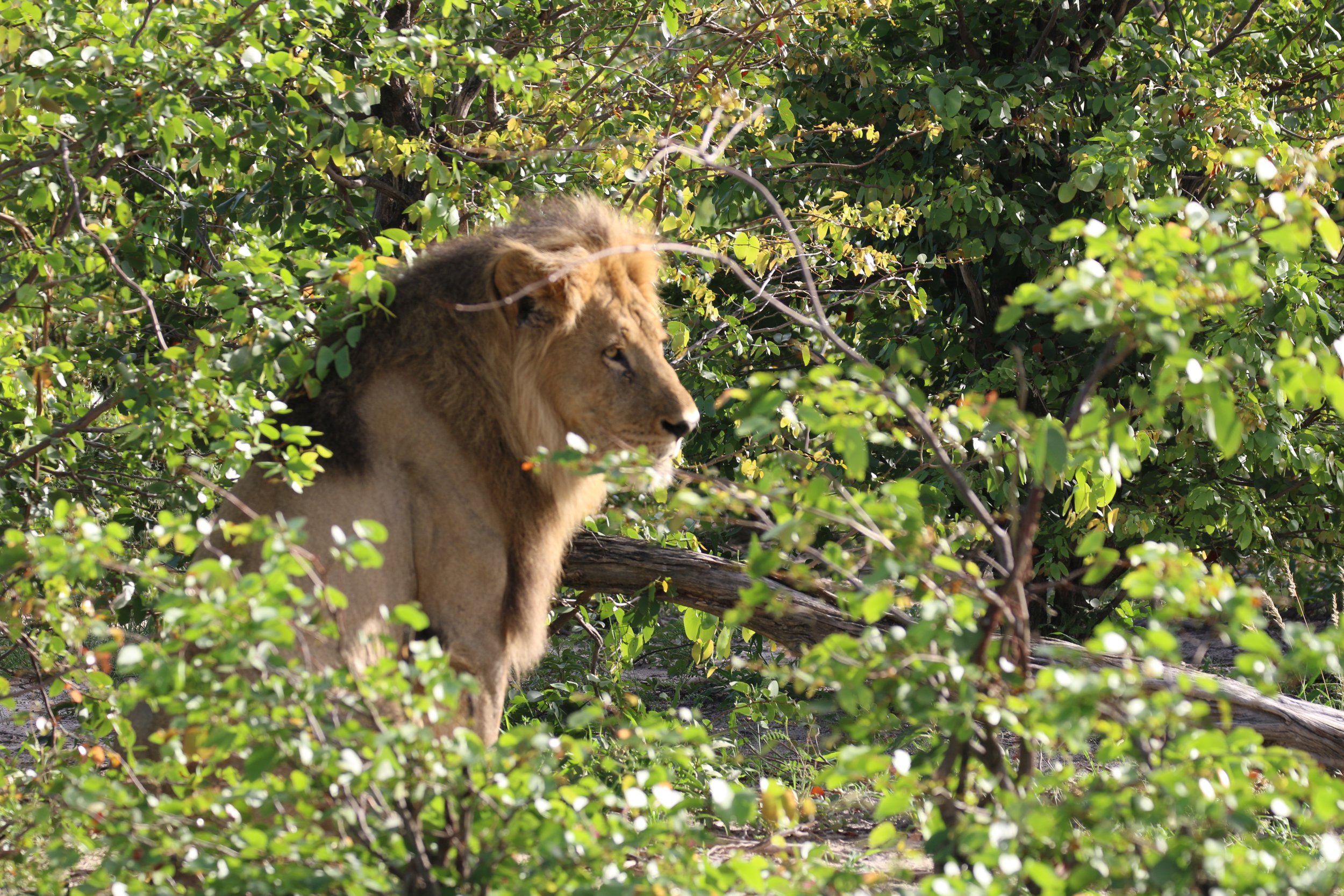
Leopard from my time in Khwai Private Reserve.

There’s something about Botswana that just takes hold of your soul. 

Maybe it’s the quiet glide of a mokoro (canoe) through golden reeds of the Okavango Delta channels. Or the sudden thrill as lions emerge from the brush. Or maybe it’s that feeling you get when you’re sipping coffee at sunrise with nothing (absolutely nothing!!) in sight but floodplains bathed in morning light. 

Whatever it is... Botswana is calling. And I’ve been answering! So many of my guests are choosing this incredible country for their Safari – and I couldn’t be more thrilled. 

Let me tell you why. 

The magic of the Okavango Delta 

The Okavango Delta is one of those places you truly have to experience to believe. A UNESCO World Heritage Site, this inland delta breathes life into everything around it – seasonal floodwaters transform dry plains into lush wetlands, creating one of Africa's most dynamic wildlife habitats. 

Here’s where the magic lies: depending on where you stay within the Delta, your experience shifts dramatically based on whether you're in a “wet” camp or a “dry” camp. 

  • In wet camps (camps surrounded by permanent water), water-based activities take center stage, such as mokoro rides (Botswana’s version of a canoe). These traditional dugout canoes drift silently through narrow water channels guided by expert polers – it’s peaceful, intimate, and wildly beautiful. You won’t hear an engine here… just birdsong and splashes as red lechwe leap across shallows. 

  • Dry camps bring classic game drives across open savannahs teeming with wildlife, from elegant giraffes to stealthy leopards perched in leadwood trees. And if you’re lucky? African wild dogs might make an appearance, too. 

Best part? Many camps offer both types of experiences… so you don’t have to choose! 

On my evening game drive from Machaba Camp.

Wildlife encounters that stay with you 

Botswana delivers some serious ‘wow’ moments when it comes to wildlife. We’re talking dreamy leopards and lions, a highly likely wild dog sightings plus rare species like the sitatunga antelope (you’ll only find them here), Pel’s fishing owl (a birder’s dream!), and even pangolins if you’re extremely lucky. 

And then there are elephants – the herds here feel endless sometimes. Especially around Chobe or Khwai, where they gather by the hundreds during dry season.  

Captured him from resting, getting ready to hunt [above], to hunt, to eating the whole impala. Video if you care to see.

I was watching these wild dogs play while a leopard couple was close by. Pure magic.

These are a few of my favorite camps.

My clients have had so many special moments at these properties – they each offer something special while staying true to what makes Botswana stand out: untamed beauty + thoughtful hospitality + meaningful community impact. 

Machaba Safaris.

We like:
- Gomoti Camp, set along the Gomoti River in Khwai Conservancy.
- Machaba Camp, by Khwai River, overlooking Moremi Game Reserve.
- Kiri Camp, overlooking Kiri River in the delta.
All of them feels like stepping straight into nature with style!

The tents overlook waterways where elephants often wander by while you’re enjoying breakfast or lounging poolside (yes please!). It’s 100% solar-powered, too. A huge win for sustainability lovers like me. 

  • Great mix of land AND seasonal water activities.

  • Private concession = fewer vehicles = better sightings 

  • Rustic-chic design that’s all about blending with nature 

Natural Selection Camps.

We like:
- Sable Alley and Tuludi Camps, set in floodplains of Khwai Private Reserve
- North Island in the northern Okavango Delta, its’own private paradise  tucked away among islands and lagoons

Every tent is surrounded by ancient trees with views over shimmering channels. You’ll fall asleep to frogs chirping and wake up with hippos grunting nearby! 

  • Best done three ways: land safaris + boat rides

  • Phenomenal birdlife 

  • Conservation-focused through local youth development programs 

Pro tip? If budget allows, treat yourself to a helicopter ride over the Delta from a few of their camps – it completely changes how you see this wild mosaic below. 

African Bush Camp’s Khwai Leadwood  

This one’s perfect for families or anyone who wants front-row access to everything Moremi has to offer without being inside park boundaries (translation: more flexible activities!). It sits right along the Khwai River where animals gather constantly – you won’t even need binoculars half the time. 

  • Mokoro rides guided by locals = cultural connection + serenity 

  • Gorgeous rooms & warm service 

  • Ngwana Club keeps younger guests engaged while adults unwind 

And yes, the outdoor bath under starlight at their honeymoon suite? Unreal! 

Mokoro riding!

So, when should you go? 

You literally can’t go wrong. Dry season runs from May–October, which is peak game viewing time as animals congregate around permanent water sources like rivers and lagoons. But don’t rule out green season either! November–March brings lush landscapes, dramatic skies… and lower rates.  

I always help my guests match their travel dates with exactly what they’re hoping for, whether that’s predator action, birding bliss, or simply soaking up scenery few will ever see firsthand. 

If you’ve been dreaming about an African Safari that's immersive yet intimate… raw yet refined… adventurous yet deeply personal, I would love nothing more than to craft your dream journey through wild Botswana together.  

Let me show you why travelers keep coming back again…and again…and again… 

Ready when you are!

Africa from the air – Adventures that take you higher

There’s something unforgettable about standing in the middle of the Serengeti National Park, Tanzania or Masai Mara, Kenya as wildebeest thunder past or watching hippos laze in the Zambezi River, Zambia as your guide whispers stories of the bush. But if you want an entirely different view – one that will take your breath away and stay with you forever – look up. 

And then? Take off. 

Mighty Zambezi River as I was leaving Lower Zambezi National Park, Zambia.

Exploring Africa from the air is about seeing familiar landscapes from an entirely new angle. Whether you’re floating in a hot air balloon over endless plains, flying low over the tangled channels of the Okavango Delta in Botswana, or paragliding along the dramatic cliffs of Victoria Falls, Zambia from above is pure magic. 

Here’s how to take your Safari to new heights (literally!). 

Hot air balloon Safaris: sunrise and silence 

With my daughter on our Spring Break Safari 2022 in Southern Serengeti, Tanzania with Serengeti Balloon Safari.

One of my absolute favorite Safari moments is floating peacefully in a hot air balloon above the golden grasses of the Serengeti or Masai Mara. Everything is so still… and the world is waking up beneath you. Herds moving gently below, giraffes on a journey, and elephants casting long shadows across the plains. You never know what you will see when up in the sky.

You’ll take off just before sunrise, and with any luck, you’ll catch that first golden light painting the land in warm amber hues. When I say it’s magical, I really mean it. 

Hot air balloon Safaris are offered in several places, including the Tarangire and Ruaha National Park, Tanzania. It’s always a smooth early morning experience followed by a bush breakfast and bubbly under a flat-topped acacia.  

Heli flips & light aircraft: Into the wild we go 

Via Helicopter Horizons

Flying into remote Safari parks is part of the adventure! There’s nothing quite like landing on a makeshift bush airstrip while your pilot radios a quick message: “We may need to circle once – there’s a zebra on the runway.” (Yes, it happens. Often. And trust me, it never gets old.) 

From the air, you’ll see the land unfold: verdant wetlands, deep escarpments, glittering rivers, and even herds beneath you that you wouldn’t spot from the ground. The first time I flew over the Okavango Delta in a four seater plane, I was stunned by the sheer geometry of it. The way water, reeds, and tracks form a natural patchwork quilt, stirred by the movement of elephants, buffalo, and hippos below. 

Want an even more heart-thumping experience? Opt for a low-altitude helicopter ride over the Okavango Delta, the Zambezi River when or through the dramatic red canyons of Namibia. You’ll feel every curve, every cliff. It’s wild freedom in every sense. 

Daredevils welcome: Skydives & paraglides 

Microflight via Livingstone’s Adventure, Victoria Falls, Zambia

For my thrill-seekers, Africa is a playground waiting to be experienced upside down, inside out, and freefalling. 

Skydiving over the Namib Desert? The contrast of the bright sky and red dunes is nothing short of cinematic. Or take a leap over Lake Victoria and watch its vastness stretch well beyond imagination. 

Prefer something slightly less vertical? Paragliding over Zambia and Zimbabwe’s Victoria Falls lets you soar like a bird across one of the most geologically impressive landscapes on Earth. Thermals carry you over escarpments, lakes, and forests – it’s peaceful... and a lot more accessible than people realize! 

Why flying in Africa feels so different

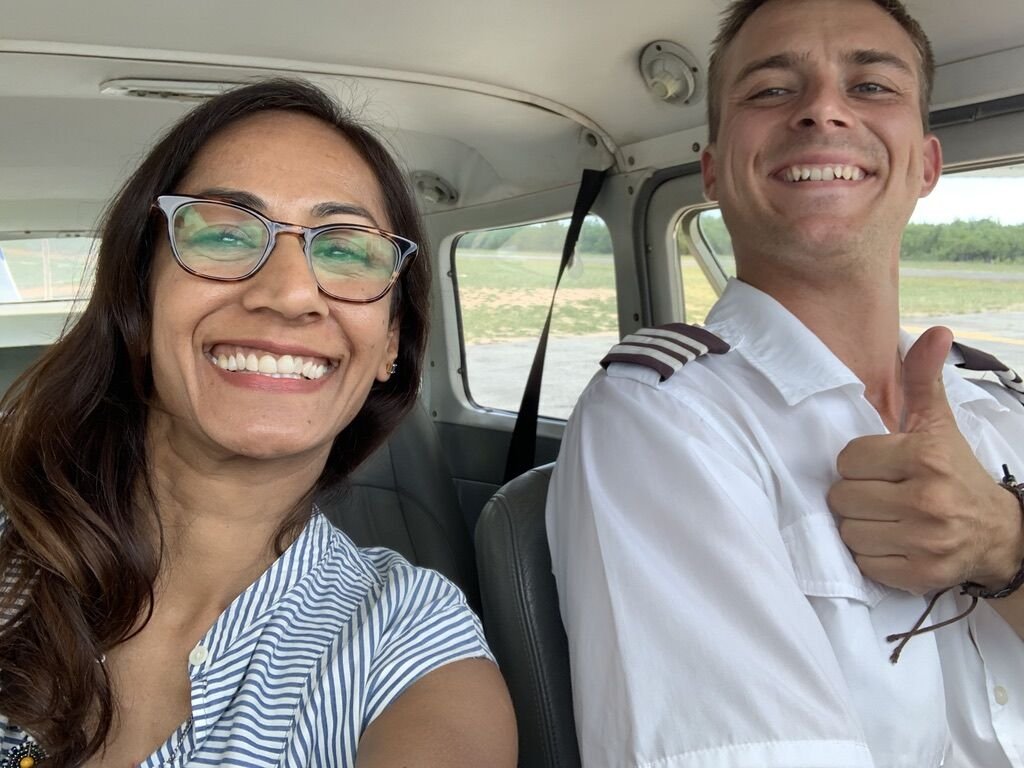
On my way to Mala Mala Game Reserve in South Africa

Here’s something I love about air travel in Africa – it’s never just “a flight.” It’s a story. A moment. Maybe it starts with the car gently herding giraffes off the runway. Or it’s your pilot who’s been flying for 30 years and has tales to share that make your jaw drop. Or maybe it’s the fact that your ‘airport’ is a grassy clearing with no terminal in sight… just zebras hanging out near your luggage. 

These little moments? They give your Safari an edge. A touch of magic. A different kind of freedom. 

If you’re dreaming of Africa, don’t just think land cruiser and beautiful places-to-stay (though you know I love those, too). Let’s add the sky to your story. 

Up, up… and Safari on. 

Zanzibar – The soulful spice in your Safari adventure.

Want to end your Safari with a little salt in your hair and a swirl of spice in the air. That’s Zanzibar. 

I always get excited when guests ask, “Should we add Zanzibar to our Safari?” My answer? A resounding YES! If your Safari feeds the wild part of your soul, then Zanzibar is where your heart slows down, your senses wake up, and your connection deepens… not just to the land, but to the people who call it home. 

Upendo Beach - one of the beach resorts we enjoy sending you.

The perfect pairing: Safari + Zanzibar 

After days in the bush tracking lions, sipping sundowners under acacia trees, and waking to the calls of hornbills, there’s something magical about trading your hiking boots for flip-flops. 

You might see Zanzibar as a relaxing post-Safari “add-on,” but the reality is that it’s part of Tanzania’s beating heart. I always recommend visiting after your Safari, so you get to soak in that wild energy first… and then let the island bring you gently back to earth.

Via Sam Vox, a brilliant photographer who captures Zanzibar magically.

Stone Town: Zanzibar’s cultural heartbeat 

Stone Town is where Zanzibar tells its story. It’s not polished. It’s real, layered in history, and oozing character in every crumbling coral wall and carved wooden door. This UNESCO World Heritage Site is a kaleidoscope of cultures (African, Arab, Indian, European) all woven together in narrow alleyways and buzzing bazaars. 

You’ll walk past colorful markets where spices fill the air and women wear kangas printed in Swahili proverbs. You’ll hear the call to prayer echo off centuries-old minarets as kids dart through the streets kicking homemade soccer balls. The scent of cardamom and grilled octopus floats through the evening air, and if you pause to look up, you’ll see balconies crafted hundreds of years ago, each one telling its own small tale of this island’s layered past. 

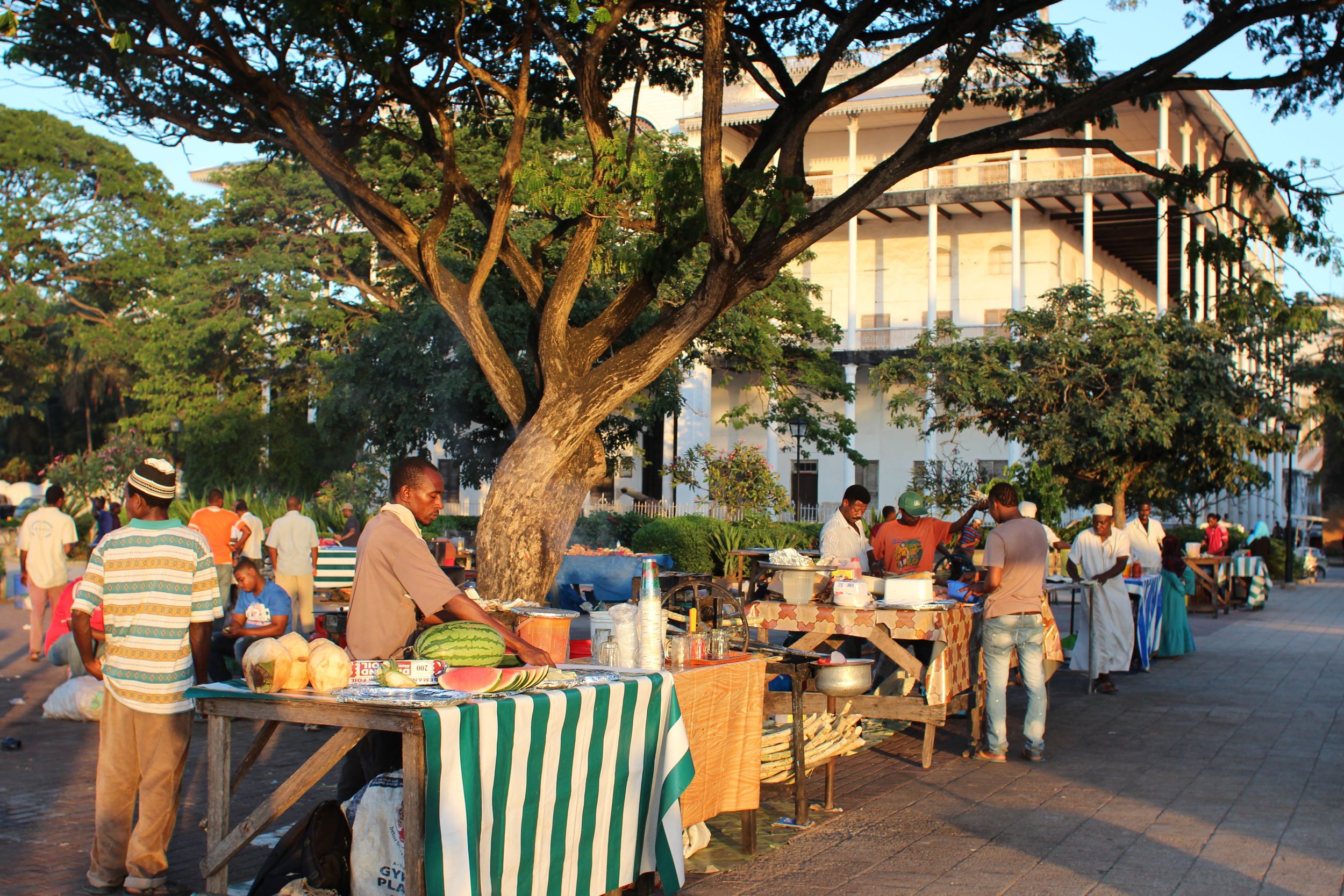
My kids in 2015. Watching in awe the kids jumping in Forodhani, Stone Town, Zanzibar.

Evening meal preparation in Forodhani, Stone Town, Zanzibar

Anglican Church - a place of history

House of Wonders - place fit for a king.

Coffee break after exploring the sensory overload meat market.

Zanzibar’s history as a trading hub means you’ll taste Indian and Persian influences in the food (don’t skip a bowl of spicy biryani or Zanzibari mix). If adventurous, enjoy the Forodhani food scene in the evening. You may have passed the local market on your Stone Town tour.

You’ll see majestic Omani architecture near centuries-old churches. You’ll learn about the dark legacy of the slave trade, and witness how modern Zanzibaris carry their past with strength and grace. 

People here are proud of their heritage – and wonderfully open to sharing it with curious travelers. A guided walking tour is one of the best ways to explore the labyrinthine alleyways on your first day. After that, take it slow, get deliciously lost, and let the street rhythms lead you. 

Local etiquette note:
Zanzibar is predominantly Muslim, so dressing modestly in town is appreciated (think shoulders and knees covered). 

Humpback whales? Just another bonus! 

Want one more wild, heart-stirring reason to go? 

Between July and August, Zanzibar sits along the migration route of Humpback Whales traveling with their calves from the chilly waters of South Africa toward the warmer currents of Somalia. Seeing a mother and baby breach against a Zanzibari sunset? It’s the kind of moment that lives with you forever. 

This is the magic of combining Safari and sea. You go from spotting lion cubs on dust-colored savannas to watching whale tails slice through sapphire surf. 

Zanzibar is a vibe-shift… in the best possible way. 
It’s the celebration after the Safari. The soul after the thrill. 

If you’re dreaming of an adventure that’s wild, warm, and wonderfully human, Zanzibar is calling. And I’d love to help you answer. 

Why should you take a Safari to Zambia?

Been on Safari and thinking of where to for your next Safari?
It’s a no-brainer: Zambia! After my recent trip, I’m absolutely in love with this place, and I’m betting you will be too. Here are a few reasons why I’ve fallen head over heels:

1. The Wildlife.

Grab your front-row seat - Zambian wildlife is next level. So many stories I can share.
- The rare wild dog moments in South Luangwa, chilling after a meal and not budging to the epic impala chase in Lower Zambezi National Park. While the pack did get the impala and devoured it in minutes, I am glad in some way I did not see the kill itself as I am sure it was brutal.
- The beautiful leopard sightings with the best morning light. I skipped my walk for this moment with my Safari guide Sandy from Sungani Lodge. Well worth the gaze.
- Every game drive highlighted elephants with wee ones and lots of them. Just being in the quiet with them, I got to see so many cool interactions. Elephants all day, any day.
- Lions galore. Every drive, we had lion sightings. From a sibling pair playing with sticks and the older sibling not being in the mood for play, to a cheeky lion cub trying to sneak a bite of his dad’s kill. He patiently tried hard for minutes and Dad was NOT feeling generous – cue some serious family drama with the mama lion running to check in on the young one.
- Lots of giraffes on Safari - got to see them necking and mating. Pretty neat.
- From the river banks in Luangwa and Zambezi, I got to see the beginning of the carmine bee-eaters migration - they were making their way to nest. I had heard of this so was excited to get a glimpse of them arriving.
- My Safari guide and I were transferring through Mosi-O-Tunya and at a distance, we see something large. I say “hippo“ and he say’s “elephants“, and when we got closer, we both got goosebumps as there were two white rhinos. We could not stop talking about them until we got to Matetsi River Lodge in Zimbabwe.

Moments like this, with a lion pride, a pack of wild dogs, elephants, and more, make Zambia one of the best countries for wildlife viewing.

2. The People.

Welcoming and warm! You’ll get all the feels from the moment you step onto Zambian soil. The Safari guides shared with me more than wildlife stories. I heard how school works in villages to getting through college and how some guides move to towns like Livingstone and Lusaka for better education for their kids. They shared how they decided to become guides and the process. I heard of the challenges of health care in Zambia especially if you are in remote areas. So much to learn.

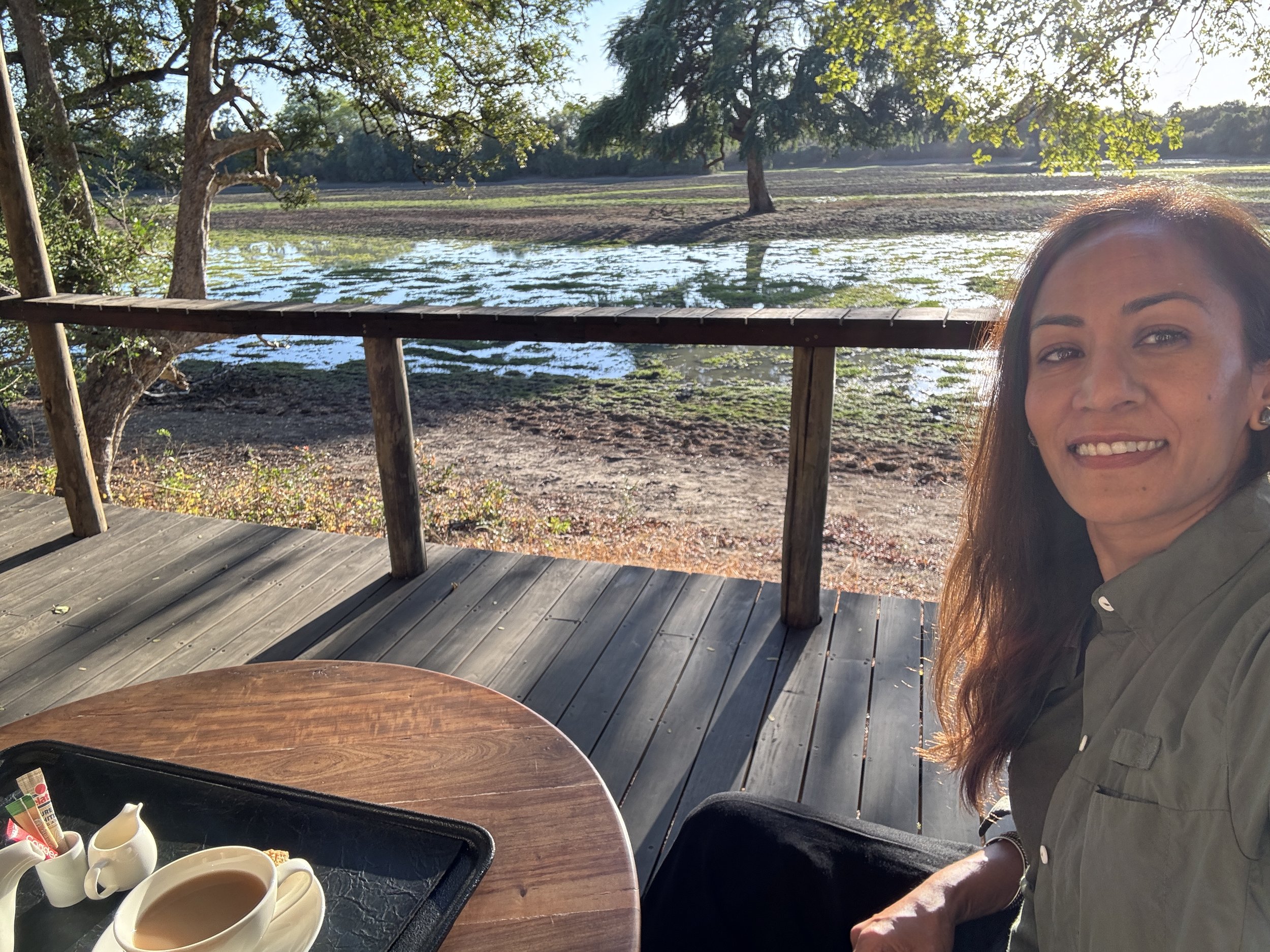
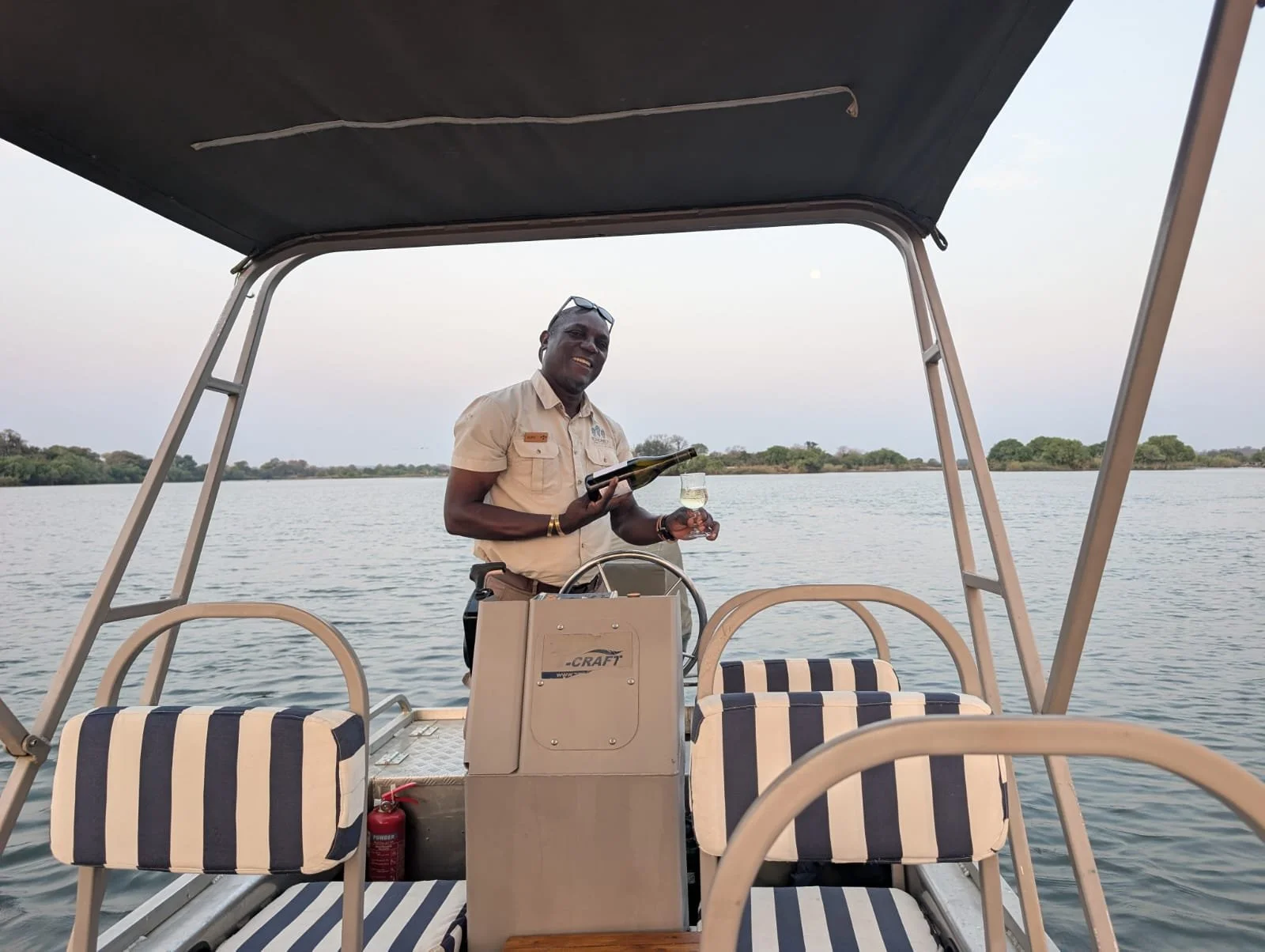
The kind and caring lodge crew made sure I ate well and had my morning tea or decaf coffee for me. I always try to chat with them and I can’t wait for some of them to become Safari guides.

To the local artisans in Mfuwe in South Luangwa to the craft market near Victoria Falls, you’ll have a blast bargaining if you are into that but just remember, every extra dollar you spend makes a big difference to the local families!

My tip, I bargain to get the thrill, and then end up paying the original price quoted.

3. The Places.

Amazing hospitality. After hours of bouncing around in a 4x4 Safari vehicle, you’ll want somewhere comfortable to put your feet up. One family run lodge that won the couch test was Sungani Lodge. The couches are so comfortable here – just one example of the Safari essentials you never knew you needed.

Each place [more details here] offered gorgeous views, great food, and all sorts of wildlife rolling in for a visit – I was spoilt on every couch.

4. Victoria Falls.

Nature’s biggest showstopper. Victoria Falls is an absolute must-see when you’re in Zambia, or Zimbabwe. Known locally as “Mosi-oa-Tunya” – The Smoke That Thunders – the sheer power and beauty of the Falls will leave you with your mouth hanging open for minutes at a time. Even in September when the falls is not thundering, I was in awe of this geological wonder. Andddd, I got to experience the Devil’s Pool. Mind blowing experience.

If thunderous stream is what you are after, the Zambian side during the drier months does slow down hence going to the Zimbabwe side may be the answer. You have to be patient because you have to cross the border and would recommend getting the KAZA visa on arrival. But the beauty doesn’t fade with the water levels – this natural wonder is awesome all year round!

5. Fewer Vehicles at this time.

What a treat this is for those of us who are used to areas with lots of vehicles. To have a leopard, lion or wild dog sighting limited to one to two vehicles - wow. When we were trying to capture the wild dogs hunting in Lower Zambezi, my guide Taps was all flustered because there were about ten or so vehicles all trying to get a closer look. I hope they always keep the numbers low, which means we need to make sure we support the right lodges who are protecting the areas.

Would love to chat more with you about the beauty that is Zambia.

Where to next for your Safari?

Every corner of this magnificent continent offers something unique, and the perfect destination for YOU depends on the kind of adventure you crave.

What’s most important?

  • Luxury of space and places-to-stay? Botswana is your go-to. Think private plunge pools, Michelin-star meals under the stars, and the most exclusive camps imaginable. Alternatives are available as well if seeing the Okavango Delta is your goal.

  • Authenticity above all else? Tanzania and Kenya are both fantastic options. These countries offer a classic Safari vibe, with incredible wildlife viewing, culture, and a sense of timeless adventure.

  • Ultra-unique encounters? Rwanda and Uganda tick this box. These lush, mountainous countries are home to magnificent mountain gorillas. Prepare to be humbled by these gentle giants as you trek your way through forests to get to know them up close.

How do you Safari?

  • ‘See-it-all’ adventurer? South Africa’s your match! Combine the Big Five with bustling cities, stunning coastlines, wine country, and a Rainbow Nation of interesting cultures.

  • ‘Slow and steady’ explorer? Zambia offers remote wilderness areas, walking safaris, and canoeing along peaceful rivers where you’ll want to linger longer so you can take your time and soak it all in.

What’s on your bucket list?

  • Hot air ballooning? Tanzania and Kenya are your place.

  • Walking with elephants in the wild or seeing Victoria Falls? Zambia’s your calling.

  • Witnessing the Great Migration? Tanzania or Kenya are where it’s at.

  • Combining bush, beach, and winery visits? South Africa awaits.

  • Gorilla trekking? Rwanda or Uganda are the places to be.

  • Staying away from crowds to see gorillas and chimps? Republic of the Congo or Western Tanzania will give you silence.

  • Relaxing mokoro rides through winding waterways in the Okavango Delta? Botswana’s best.

Need some help finding your perfect match? Answer these questions and I’ll get back to you with my suggestions for a lovely Journey to Africa Safari.

Mother's on Safari!

Most moms love flowers – and the thought still counts! But how about spending money on something that’ll last longer … celebrating Mother’s Day soaking up an experience you’ll both treasure forever?

That’s where a Safari comes in – and I’m here to personalize it to every last detail. But regardless of whether your mom loves thrills and adventure or prefers quiet downtime, I’ll ensure she’s somewhere remote on the most magical continent in the world, bathed in sunshine and tranquility and surrounded by untouched nature and wildlife.

Here are a few reasons why a Safari is the ultimate Mother’s Day spoil:

1] Spa treatments under African skies:
After an exhilarating game drive chasing down the king of the bush, Mom deserves to be treated like royalty. How does a traditional African massage using ingredients like warm shea butter and exotic marula oil (infused with the soothing scents of lavender and lemongrass) sound? Pure bliss! Plus, you’ll have an excuse to treat yourself, too!

Spa Time from Lemala Kuria, Northern Serengeti, Tanzania

2] Shopping on Safari:
No Safari is complete without a little retail therapy and a souvenir (or five) to take home! Whisk Mom away on a private shopping spree to hidden boutiques or bustling local markets in Nairobi, Kenya, Arusha, Tanzania or Cape Town, South Africa. These places are always packed to the brim with colorful textiles, handmade beaded jewelry, and other gorgeous handcrafted treasures—each piece is a special keepsake from her unforgettable African adventure.

3] Bubbles & hot air ballooning:
Looking for an experience that’s equal parts relaxing and adrenalin-charged? Nothing beats floating along in a hot air balloon over the Serengeti, Tanzania, Masai Mara, Kenya or Namib Desert. Talk about an life-changing moments! And, of course, I’ll top it off with a lavish champagne breakfast on the ground. Because even the most hardened adventurers need (and deserve) a little luxury.

Serengeti Balloon Safari Champagne Breakfast

4] Starlit dinner date (with a wild soundtrack):
Why dine in a crowded restaurant when you can savor a candlelit dinner under a blanket of twinkling African stars and encircled by the sounds of the bush? Pair this unrivaled ambiance with a gourmet meal crafted with the freshest ingredients and a bottle of fine wine from South Africa ... with plenty to toast to!

Waiting for the Serengeti sunset from Serian’s Serengeti South.

5] Maasai warriors and roots:
I love adding a dash of the unexpected to my guests’ Safaris! Something like a morning spent learning bush survival skills from Maasai warriors and Hadzabe, followed by an late afternoon on top of a kopje [rock outcrop], waiting for the sunset.

Inspired? Let’s swap those roses for rhinos this Mother's Day and give Mom a gift that’s [literally] roar-some! Get in touch with us, and we’ll piece together a Safari escape Mom [or you] will never forget.