One of the biggest draws to the wildlife-rich Serengeti National Park in Northern Tanzania and the Masai Mara in Kenya is the wildebeest and zebra migration. The 1.5 million wildebeests and 200,000 zebra, and their many herbivore and carnivore co-dependents, are constantly roaming this expansive area - The Great Migration isn't a once-off annual event. It's constant movement as the herd goes in search of fresh water and food.
A never-ending cycle.
The phenomenon is one of the Natural Wonders of the World and often called the 'Greatest Show on Earth.' It's an epic journey (approximately 250,000 wildebeest and 30,000 zebra die every year due to predators, drowning, thirst, hunger, and exhaustion!) that you simply have to witness firsthand... no words could ever do it justice!
They will feast on the nutritious mineral-rich grass of the Southern Serengeti during birthing time (and with plenty of calves, the big cats, like lions, leopards, cheetahs, and other predators have easy targets.) The herd sustains itself on the long grass of the Northern Serengeti and the Masai Mara after rutting in Western Serengeti, and they pass through Central and Eastern Serengeti/Loliondo area when heading back south. As their movement continues, you may be lucky enough to witness the iconic Grumeti River crossing in the Western Serengeti and the similarly dramatic Mara River crossing in the Northern Serengeti. That's bonus!
Southern Serengeti Calving Season
Where the Migration goes: a month-by-month guide
November: On the move
During this time, the wildebeest and zebra are heading to the south of the Serengeti from the north. They're moving down via the east of the Serengeti and the concessions. If on Safari, it's best to hedge your bets and stay in two regions of the Serengeti to boost your chances of finding the herd on their trek.
December to March: The calving season
The beginning of the year is the herd's birthing season, where around 8,000 new calves are born every day between late January and early February. The place to be is at a camp in the Southern Serengeti, Ngorongoro Conservation Area, to private Maswa Game Reserve. This is a good time to enjoy some thrilling predator action as they stalk, hunt, and prey on their easy targets.
April to May: The rainy season
The long rainy season sees showers lasting a few hours. It’s also rutting (mating) time again so expect some interesting behaviour. If you don’t mind being adventurous, this is a great opportunity to visit and get some amazing deals on places-we-stay. The Central Serengeti, through to the Western corridor are the best places to be.
June to July: The green season
June is green after the rains, making this one of the most beautiful times of the year to visit - especially if you love wildflowers. The hundreds of thousands of wildebeest and zebra are roaming from Central to Western Serengeti on their way towards the Masai Mara. During this time, the herds may be crossing the Grumeti River to get to the Northern Serengeti or may already be in this area. The Grumeti River is home to large crocodiles who lie in wait for their tasty snack. Areas outside western Serengeti are also prime viewing spots.
August to October: The Mara River drama
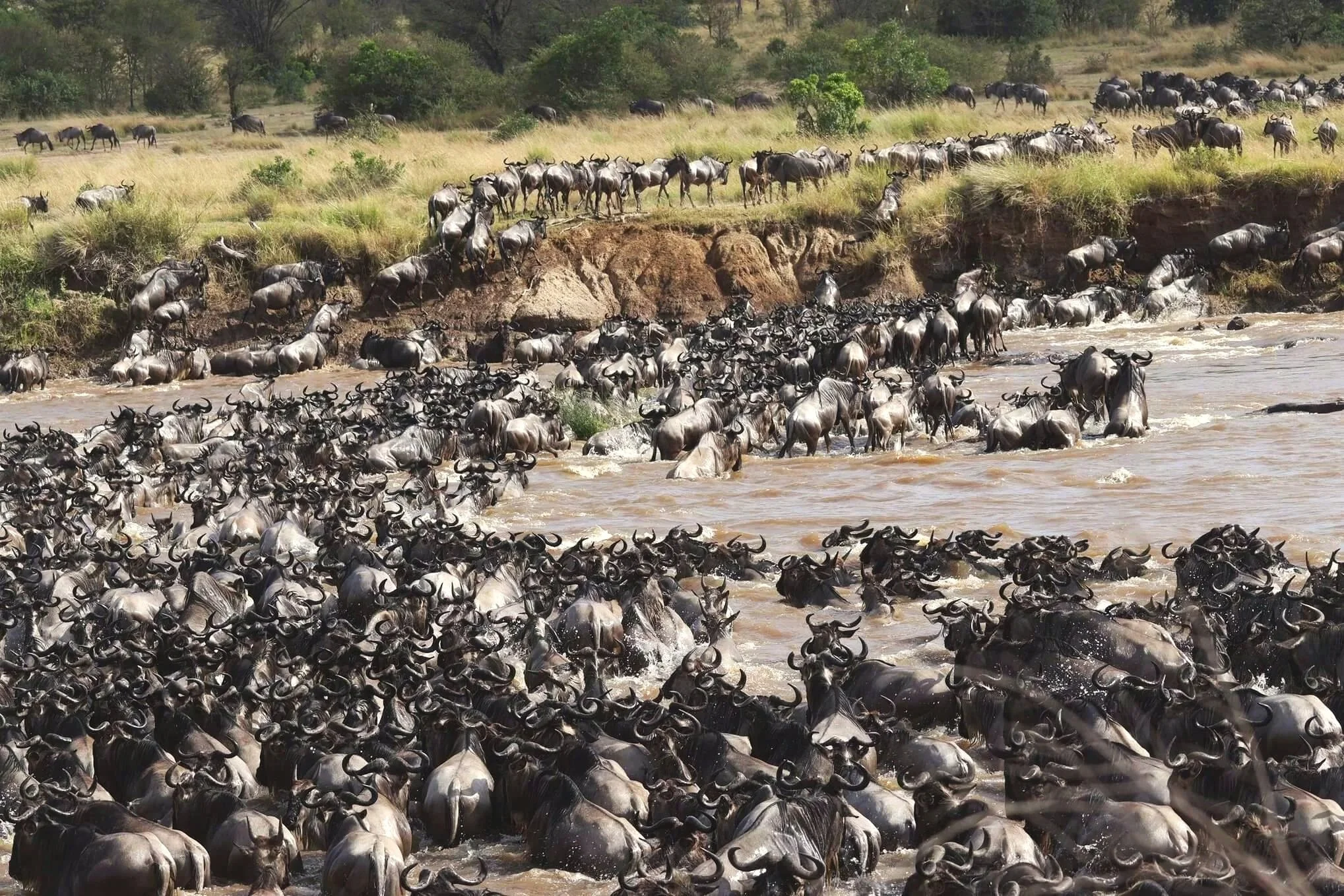
The herds of wildebeest and zebra enter the long, lush grass of the Masai Mara and the Northern Serengeti come August – which is also when those ultra-dramatic Mara River crossings take place. They stay in this region for a few months enjoying vegetation that the long rains of April May brought about (with the short rains in late October ensuring the grass remains abundant.) The herds are going back and forth between Tanzania and Kenya and increasing the odds of seeing a lovely Mara River crossing.
The drama of a river crossing - brutal, fascinating and sometimes hard to watch!
Frequently asked questions about the Great Wildebeest Migration
When is the best time to see the Great Migration?
The Migration is a year-round event — the herd never stops moving. That said, there are two standout seasons. The Mara River crossings (July to October) in the Northern Serengeti (Tanzania) and Masai Mara (Kenya) are the most dramatic spectacle, with hundreds of thousands of wildebeest plunging into crocodile-filled waters. Then there is the calving season (January to March) in the Southern Serengeti. This is equally breathtaking — up to 8,000 calves born every single day, and the predator action that follows is extraordinary. The best time for you depends on what you want to witness most.
Do you need to visit Kenya or Tanzania to see the Migration?
The Migration moves between Tanzania's Serengeti and Kenya's Masai Mara in a continuous annual loop — so the answer is ideally both. Many of our favourite itineraries follow the herd across both countries, combining the vast plains of the Serengeti with the iconic open grasslands of the Mara. If you can only choose one, your timing determines which side of the border to be on — and that's exactly where we come in.
How far in advance should I book a Migration Safari?
For peak river crossing season (July to October), we recommend booking 12 to 18 months ahead. The best-positioned camps and the places we stay are small, intimate and conservation minded. The guides who know how to navigate this ethically, and give you the best chance to see the river crossings without impacting the phenomenom. For calving season, six to twelve months is usually sufficient. If you have a specific travel window in mind, get in touch sooner rather than later and we'll tell you honestly what's still available.
Can you guarantee a river crossing?
No one can — and anyone who tells you otherwise isn't being straight with you. The Migration follows water and grass, and the crossings happen on the herd's terms. What we can do is position you in the right place at the right time, with guides who know this landscape intimately and will give you the best possible chance of witnessing one. Many of our guests see multiple crossings in a single stay. But also remember, there is SO much more to see when you’re out there, other incredible mammals, birds, insects. Go without expectation and curiosity for your surroundings and mother nature will provide - beyond just ticking off seeing a crossing.
Northern Serengeti
Central Serengeti
The right place at the right time!
Spotting these incredible African animals on the move is all about being in the right place at the right time. Let me help get you a front-row seat to this wildlife spectacle, where you can admire every detail of the Greatest Show on Earth!
Let’s chat about your Journey to Africa!