Want to end your Safari with a little salt in your hair and a swirl of spice in the air. That’s Zanzibar.
I always get excited when guests ask, “Should we add Zanzibar to our Safari?” My answer? A resounding YES! If your Safari feeds the wild part of your soul, then Zanzibar is where your heart slows down, your senses wake up, and your connection deepens… not just to the land, but to the people who call it home.
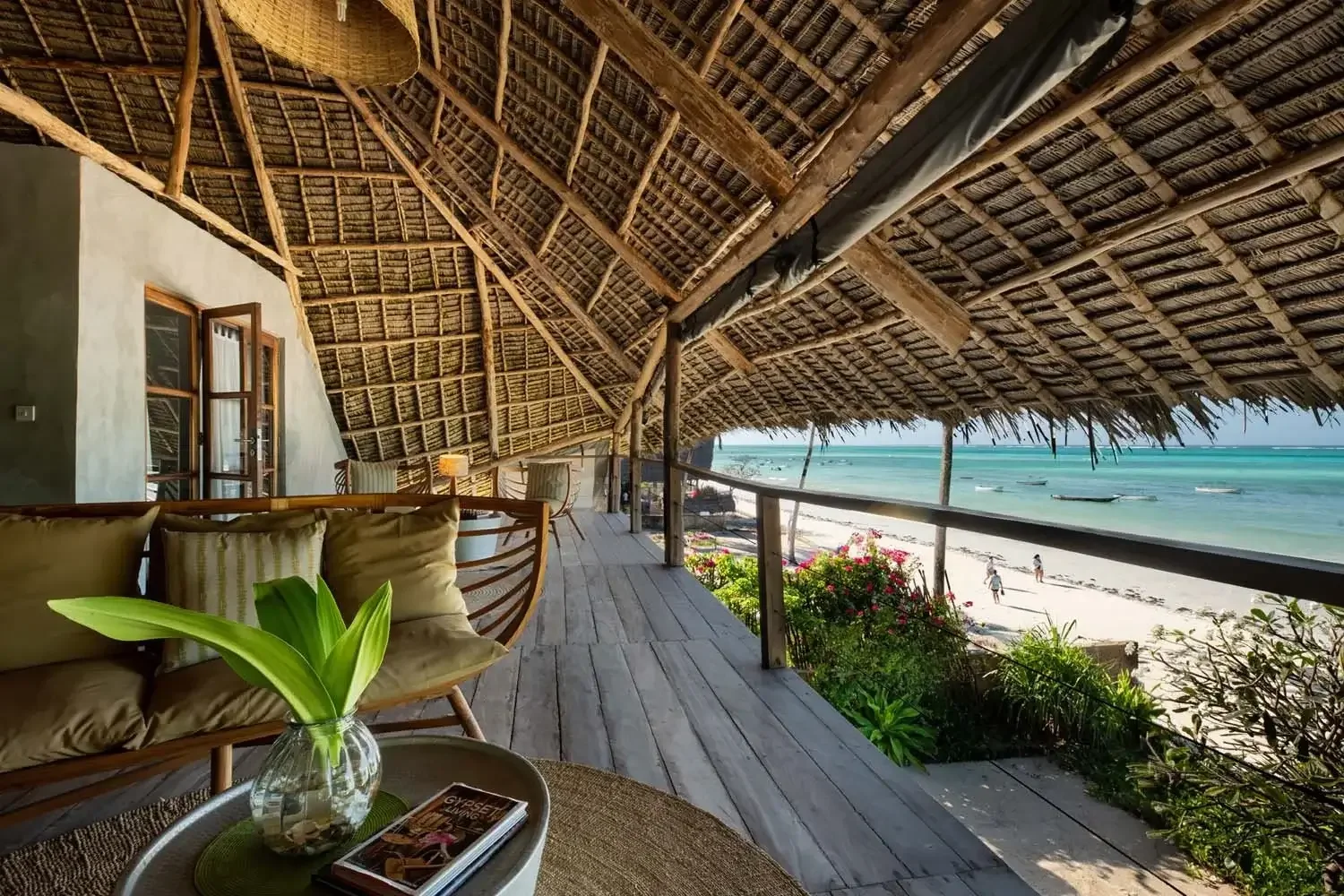
Upendo Beach - one of the beach resorts we enjoy sending you.
The perfect pairing: Safari + Zanzibar
After days in the bush tracking lions, sipping sundowners under acacia trees, and waking to the calls of hornbills, there’s something magical about trading your hiking boots for flip-flops.
You might see Zanzibar as a relaxing post-Safari “add-on,” but the reality is that it’s part of Tanzania’s beating heart. I always recommend visiting after your Safari, so you get to soak in that wild energy first… and then let the island bring you gently back to earth.
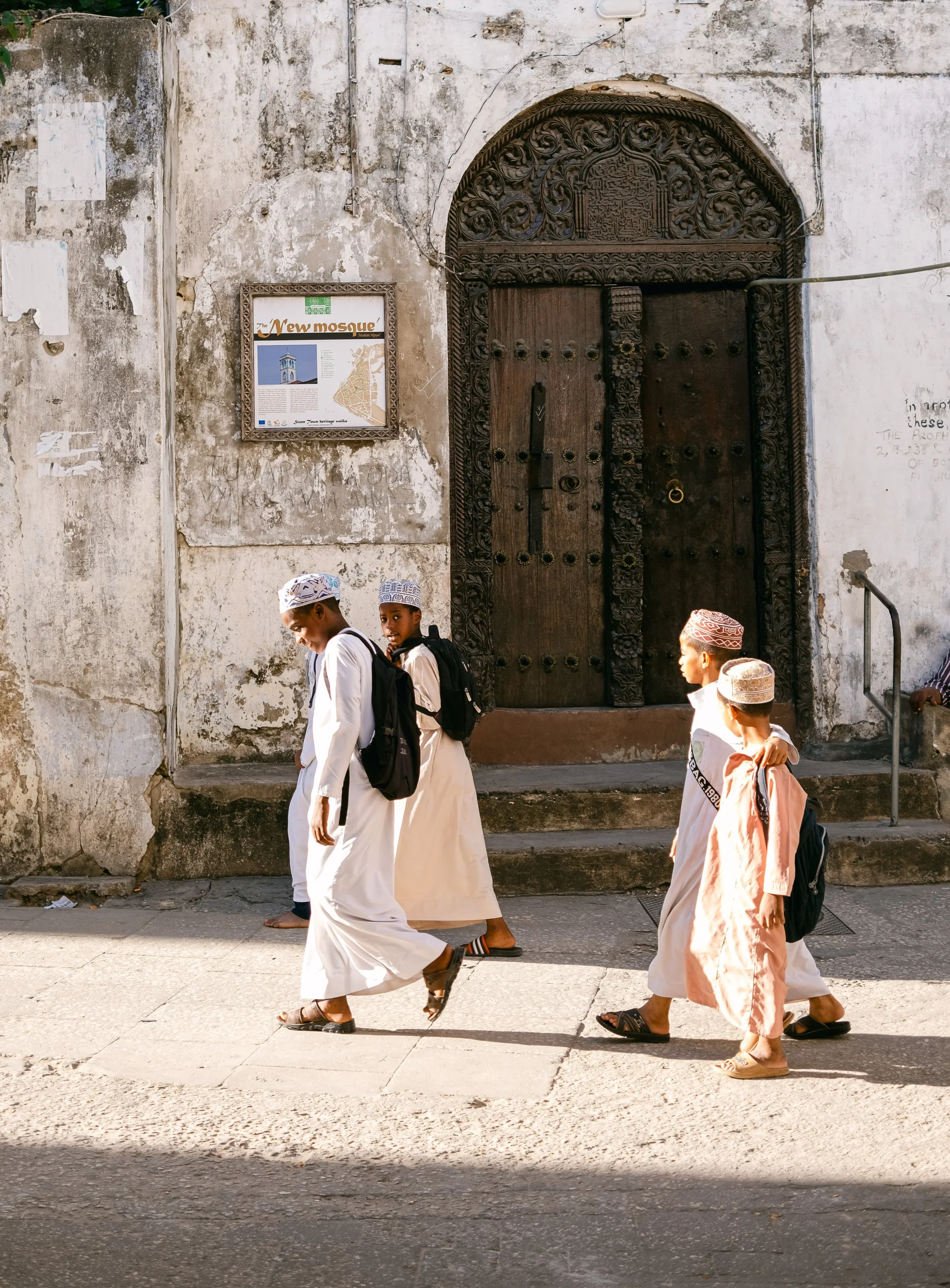
Via Sam Vox, a brilliant photographer who captures Zanzibar magically.
Stone Town: Zanzibar’s cultural heartbeat
Stone Town is where Zanzibar tells its story. It’s not polished. It’s real, layered in history, and oozing character in every crumbling coral wall and carved wooden door. This UNESCO World Heritage Site is a kaleidoscope of cultures (African, Arab, Indian, European) all woven together in narrow alleyways and buzzing bazaars.
You’ll walk past colorful markets where spices fill the air and women wear kangas printed in Swahili proverbs. You’ll hear the call to prayer echo off centuries-old minarets as kids dart through the streets kicking homemade soccer balls. The scent of cardamom and grilled octopus floats through the evening air, and if you pause to look up, you’ll see balconies crafted hundreds of years ago, each one telling its own small tale of this island’s layered past.
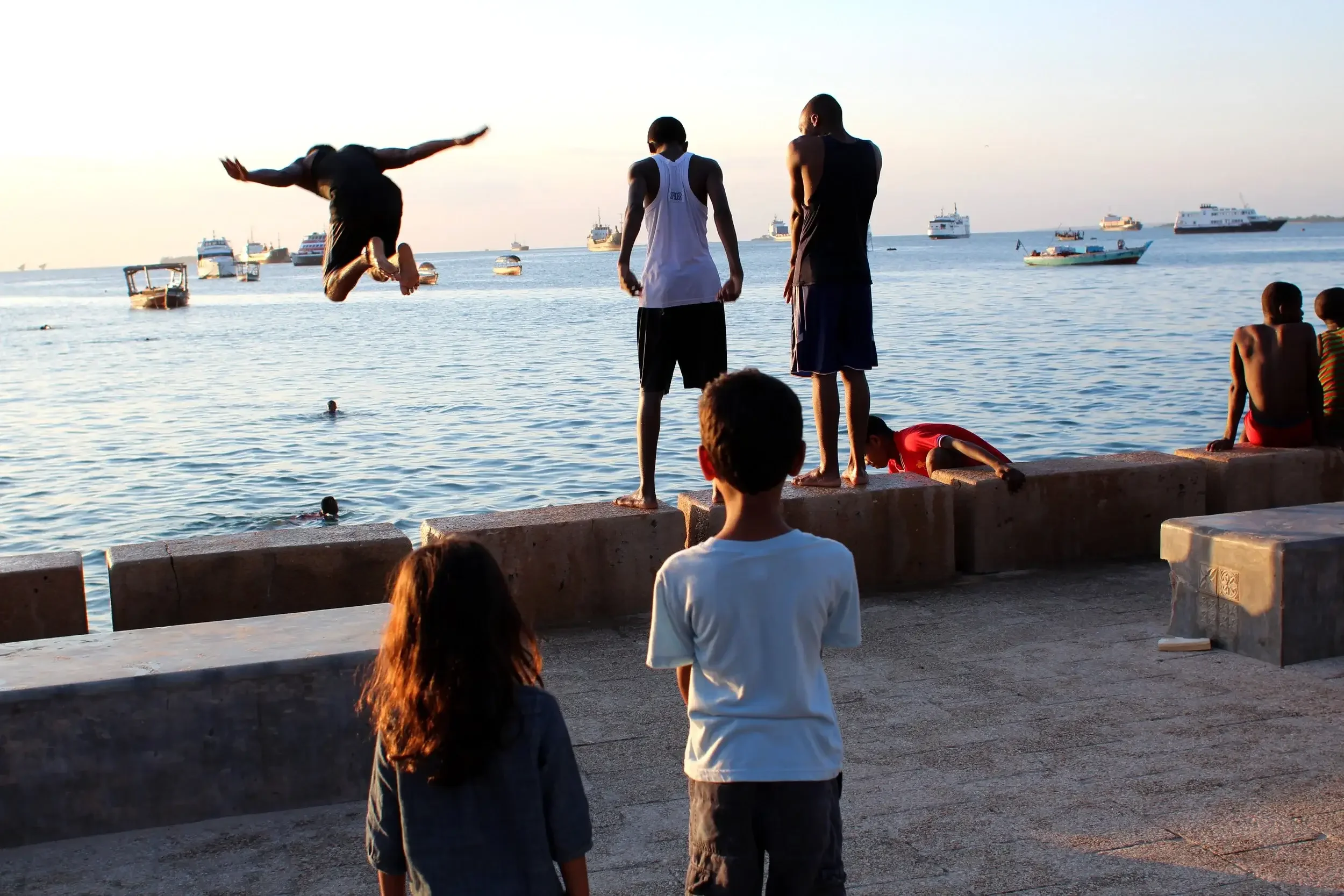
My kids in 2015. Watching in awe the kids jumping in Forodhani, Stone Town, Zanzibar.
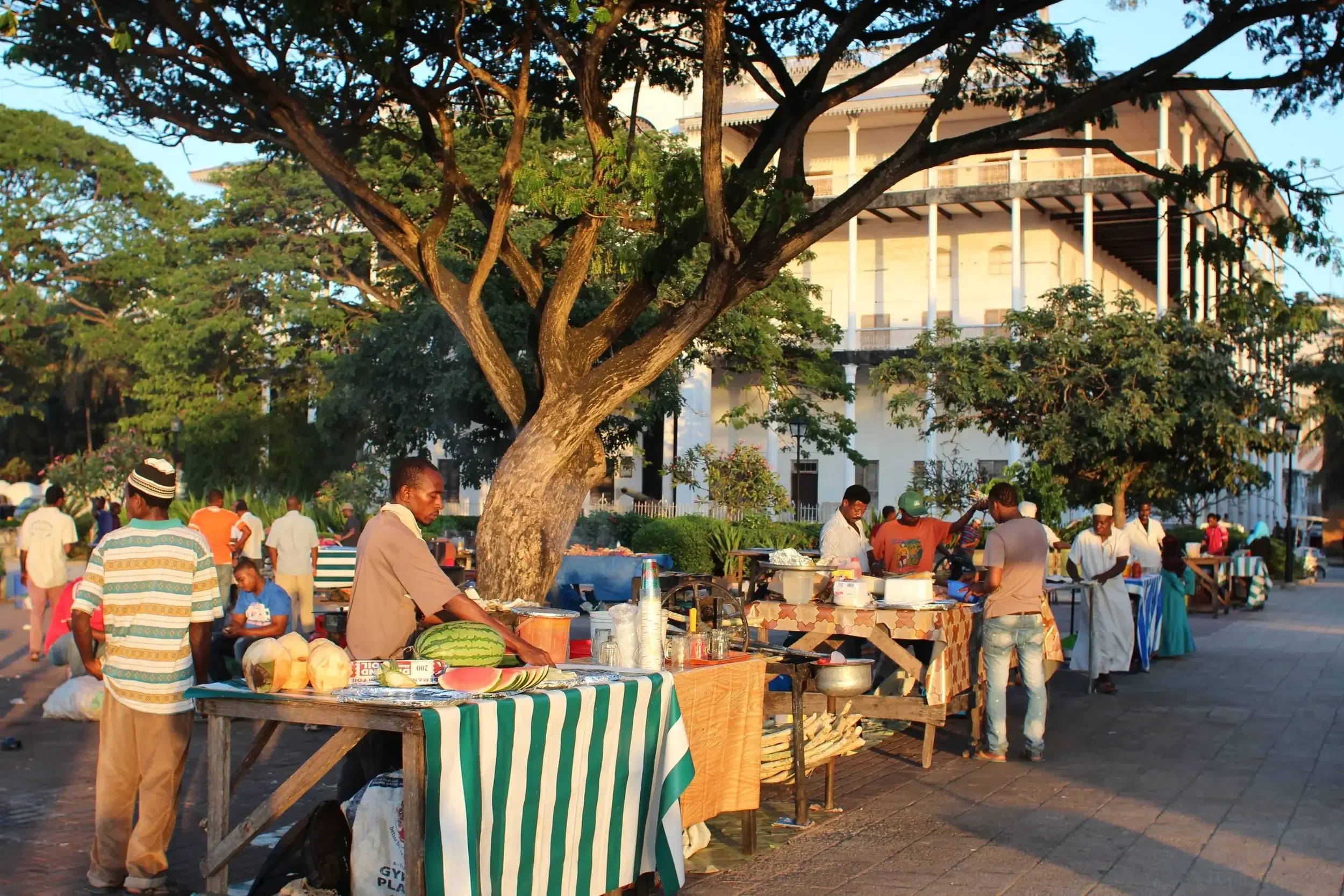
Evening meal preparation in bustling Forodhani, Stone Town, Zanzibar
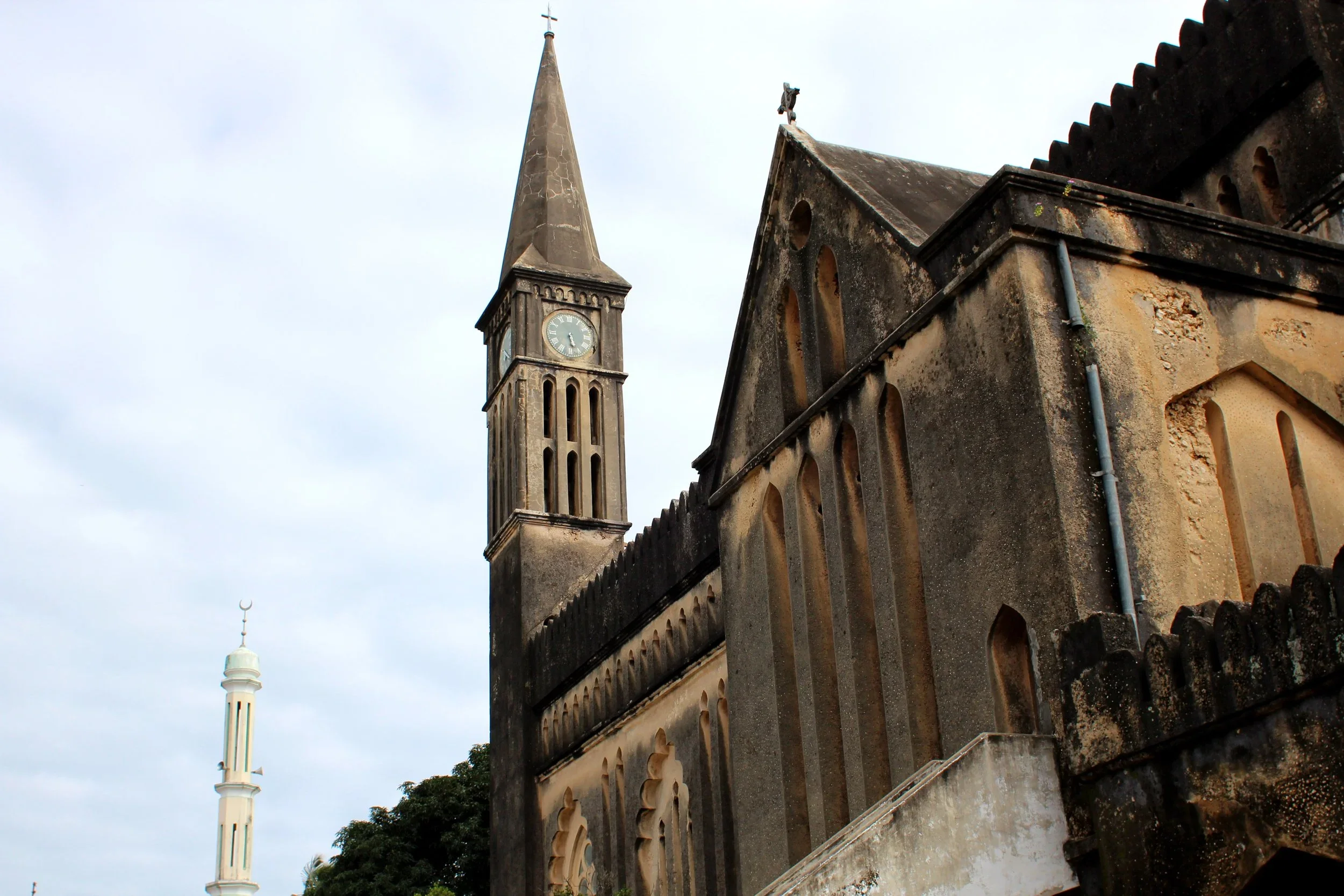
Anglican Church - a place of history
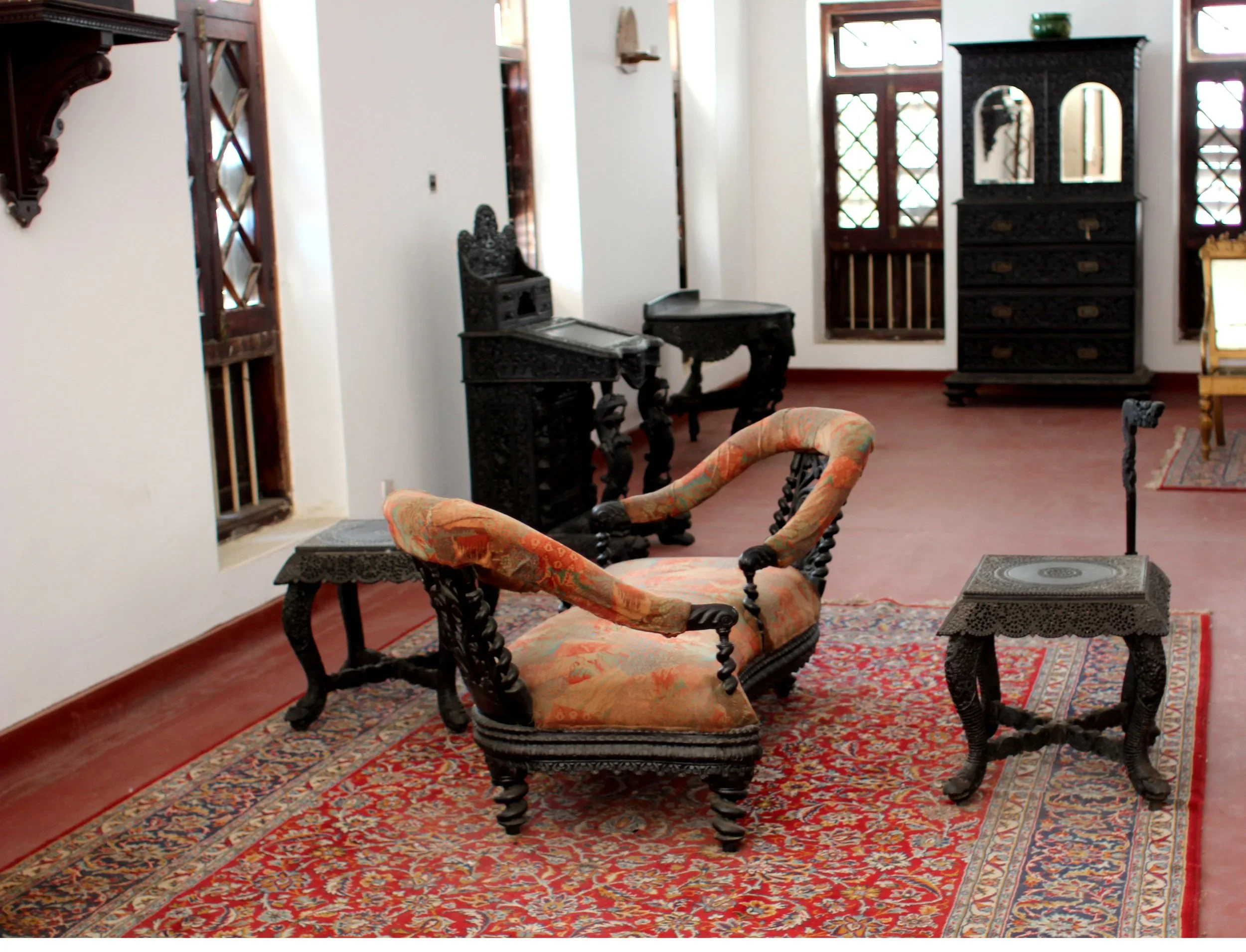
House of Wonders - place fit for a king.
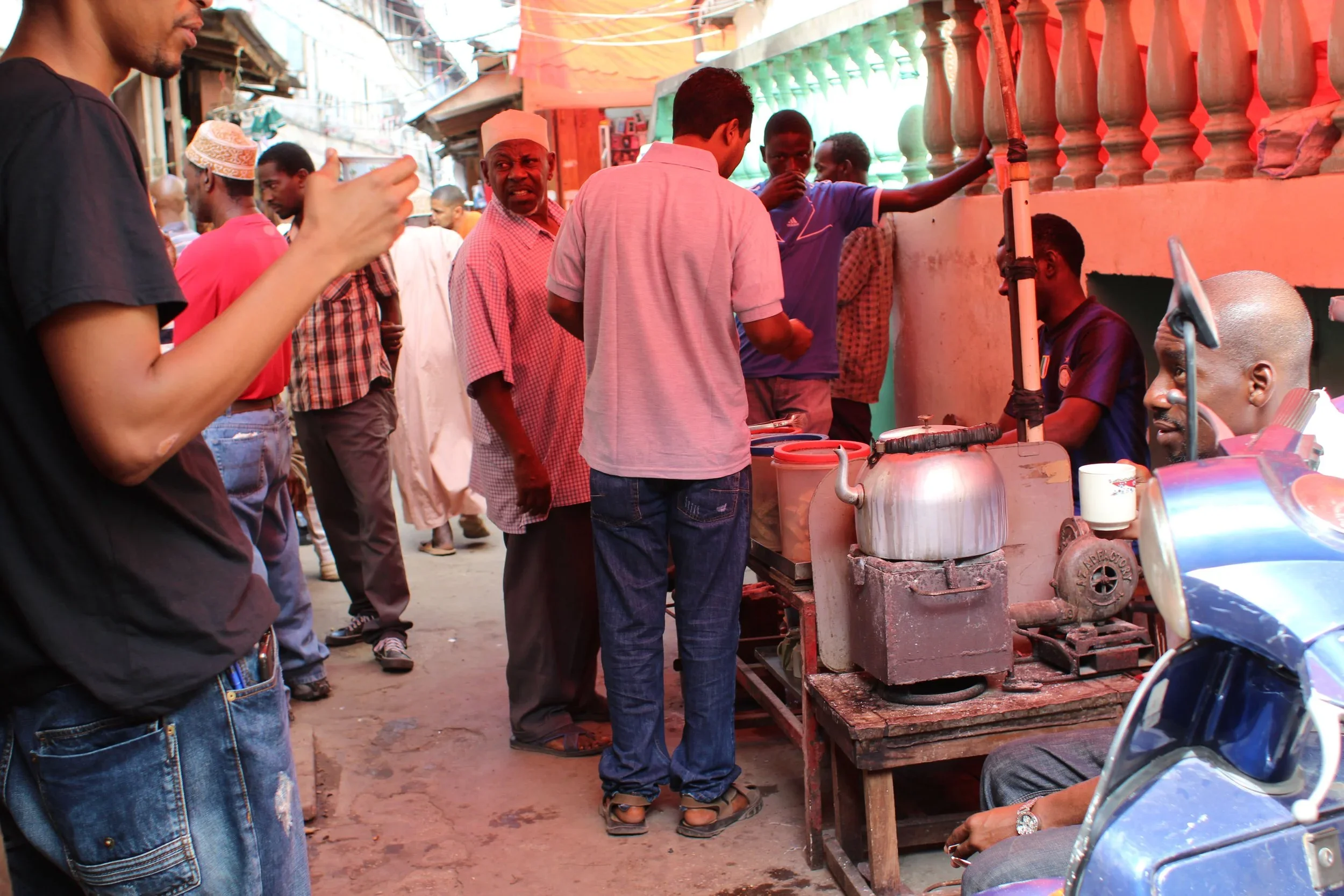
Coffee break after exploring the sensory overload meat market.
Zanzibar’s history as a trading hub means you’ll taste Indian and Persian influences in the food (don’t skip a bowl of spicy biryani or Zanzibari mix). If adventurous, enjoy the Forodhani food scene in the evening. You may have passed the local market on your Stone Town tour.
You’ll see majestic Omani architecture near centuries-old churches. You’ll learn about the dark legacy of the slave trade, and witness how modern Zanzibaris carry their past with strength and grace.
People here are proud of their heritage – and wonderfully open to sharing it with curious travelers. A guided walking tour is one of the best ways to explore the labyrinthine alleyways on your first day. After that, take it slow, get deliciously lost, and let the street rhythms lead you.
Local etiquette note:
Zanzibar is predominantly Muslim, so dressing modestly in town is appreciated (think shoulders and knees covered).
Humpback whales? Just another bonus!
Want one more wild, heart-stirring reason to go?
Between July and August, Zanzibar sits along the migration route of Humpback Whales traveling with their calves from the chilly waters of South Africa toward the warmer currents of Somalia. Seeing a mother and baby breach against a Zanzibari sunset? It’s the kind of moment that lives with you forever.
This is the magic of combining Safari and sea. You go from spotting lion cubs on dust-colored savannas to watching whale tails slice through sapphire surf.
Zanzibar is a vibe-shift… in the best possible way.
It’s the celebration after the Safari. The soul after the thrill.
If you’re dreaming of an adventure that’s wild, warm, and wonderfully human, Zanzibar is calling. And I’d love to help you answer.
Best time to visit Zanzibar
Zanzibar is a year-round destination, but the two peak seasons are June to October (dry, sunny, ideal for beaches and water activities) and December to February (warm and mostly dry, perfect for combining with a Tanzania Safari over the holidays). The long rains run April to May and are worth avoiding if possible. If humpback whales are on your wish list, plan for July to August.
Frequently asked questions about Zanzibar
How do you get to Zanzibar from the Serengeti?
Most guests fly from the Serengeti or Arusha into Zanzibar's Abeid Amani Karume International Airport — it's a straightforward connection, usually via Dar es Salaam or direct on a charter. We handle all the logistics so you don't have to think about it.
How many nights do you need in Zanzibar?
We recommend a minimum of three nights to do it justice — one to explore Stone Town, two to properly unwind on the beach. Four or five nights is the sweet spot if you want to add a spice tour, snorkelling, or a day trip to Prison Island.
Which part of Zanzibar is best for beaches?
The north and northeast coasts — Nungwi and Kendwa — offer the calmest, clearest water year-round. The east coast (Paje, Jambiani) is stunning but can have seaweed seasonally. We'll recommend the right area based on when you're travelling.