G-9N5RQ3V541

Safari Information

A Guide to Zambia Safaris: South Luangwa, Lower Zambezi and Victoria Falls

Zambia, you blew me away.

When I visited Zambia for the first time, it surprised me in the best possible way. From the moment I landed in Lusaka and was met with warm smiles and genuine hospitality, I knew this trip was going to be something different.

Zambia doesn't shout. It doesn't need to. It just quietly delivers some of the most extraordinary wildlife encounters, most authentic Safari experiences, and most underrated landscapes on the entire continent. If you've been on Safari before and you're wondering where next — or if you're planning your first and want somewhere that feels genuinely wild — Zambia should be at the top of your list.

Here is everything you need to know when considering Zambia for your Safari and some reasons it should be top of your Safari list!
The wildlife is next level

Let me tell you about some of the moments that stopped me in my tracks.

  • In South Luangwa, I watched a pack of wild dogs cooling off after a hunt — utterly unbothered, completely relaxed, just living their lives. Later, in the Lower Zambezi, the same pack gave chase to an impala across open ground. The speed, the coordination, the sheer wildness of it.

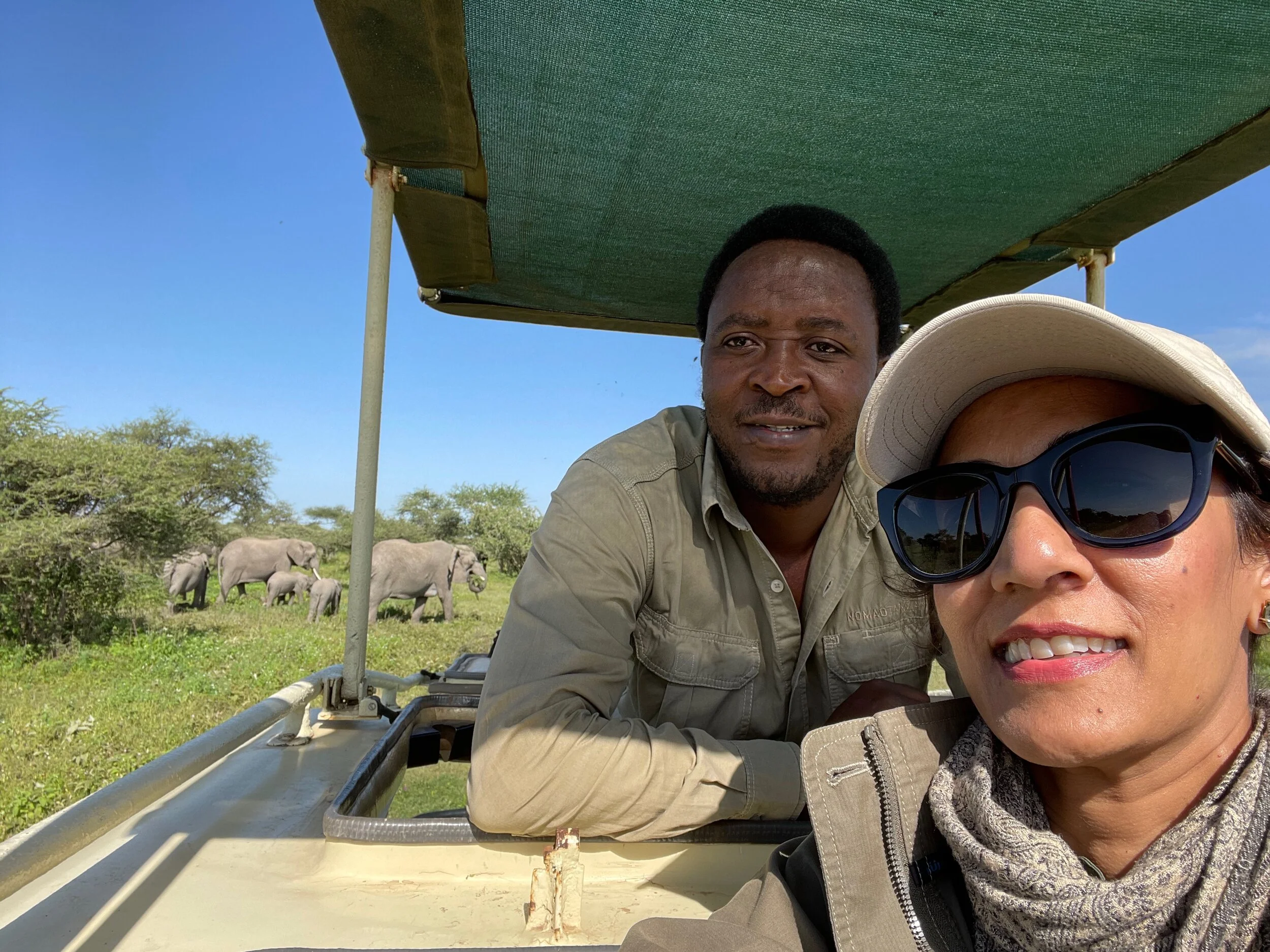
  • A leopard sighting one morning had me abandoning my planned walking Safari without hesitation. My guide Sandy from Sungani Lodge spotted her in the golden morning light, draped across a branch with that perfect, liquid leopard indifference. I don't regret the decision for a second.

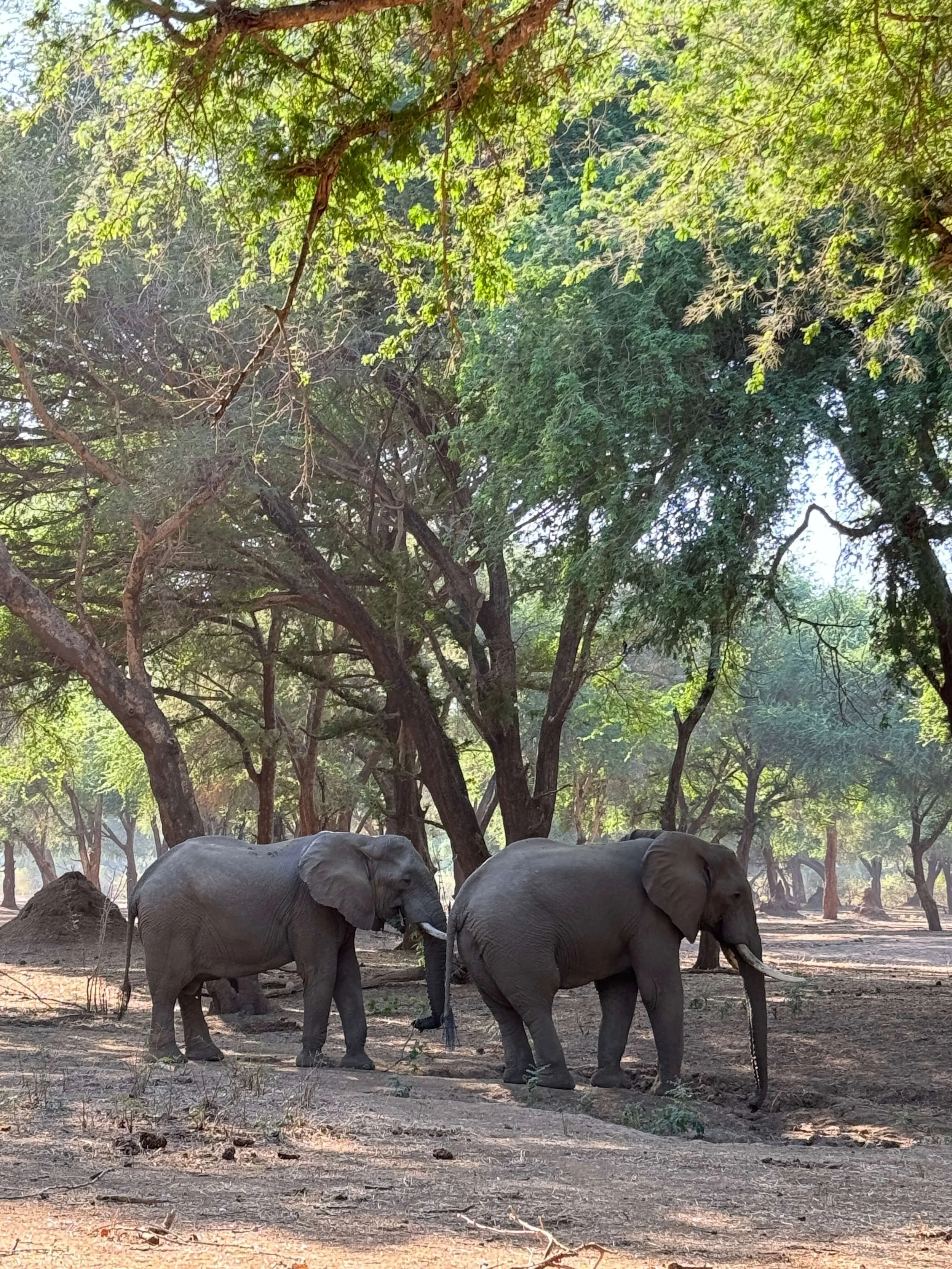
  • The elephants were everywhere — and not just in numbers. I got to watch them properly. Mothers with tiny calves navigating riverbanks. Teenagers jostling and testing each other. An old bull moving alone through the mopane. When you spend time quietly with elephants, you see things you'd miss on a rushed game drive. Elephants, all day, any day.

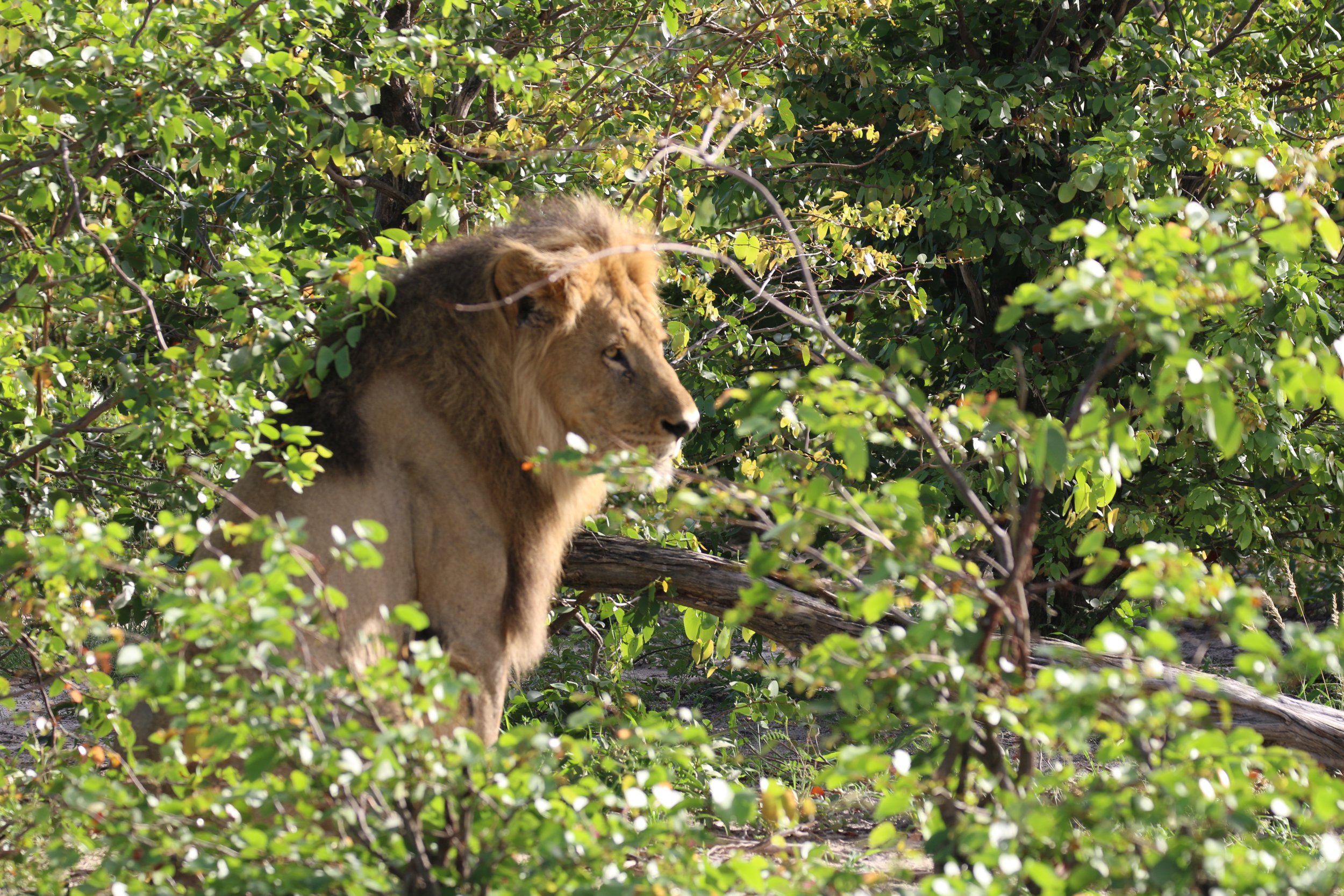
  • Lions were a constant. A sibling pair playing with sticks — one enthusiastic, the other emphatically not interested. A cheeky lion cub attempting to steal from his father's kill, trying with extraordinary patience while Dad refused to budge, and Mum eventually running over to sort out the family drama. Wildlife doesn't get more entertaining than that.

  • And then there were the white rhinos. My guide and I were transferring through Mosi-O-Tunya when something large caught my eye at a distance. I called hippo. He called elephant. We were both wrong — and both got goosebumps when we realized we were looking at two white rhinos. Neither of us could stop talking about it for the rest of the journey.

  • The carmine bee-eaters were an unexpected highlight too — arriving at the riverbanks to nest, a flash of colour and movement that birders travel specifically to see. They are utterly beautiful and if you think you aren’t into birds, you might just find yourself enchanted by the birdlife and leaving Zambia a step closer to being a true birder!

South Luangwa National Park — the home of the walking Safari

South Luangwa is where the walking Safari was born, and it remains one of the best places in Africa to experience it. There's something fundamentally different about being on foot in the bush — the sounds sharpen, the smells intensify, and the relationship between you and the landscape changes entirely. You notice things from a vehicle that you'd never see on foot, and vice versa.

The park itself is extraordinary: dense mopane woodland giving way to open floodplains along the Luangwa River, oxbow lagoons teeming with hippos and crocodiles, and a concentration of leopard that is among the highest in Africa. It's a place where every game drive feels different from the last.

Puku Ridge Camp was one of our favourites on the South Luangwa circuit — beautifully positioned, exceptional guiding, and the kind of intimate camp experience that makes a Zambia Safari feel genuinely personal.

Sungani Lodge delivered some of the best guiding of the entire trip. Sandy, our guide there, had the kind of knowledge and instinct that you only develop from years in the bush — and that leopard moment was his doing entirely.

Best time for South Luangwa: The dry season (May to October) is peak season — the bush thins out, wildlife concentrates around the river, and game viewing is exceptional. The green season (November to April) brings lush landscapes, baby animals, and the carmine bee-eaters — and rates are lower.

Lower Zambezi National Park — river Safaris and extraordinary game

Where South Luangwa feels intimate and wooded, the Lower Zambezi opens up. The Zambezi River forms a natural boundary with Zimbabwe, and the combination of land game drives and river-based activities — boat Safaris, canoe trips, fishing — makes for one of the most varied Safari experiences anywhere in Africa.

Canoe Safaris on the Zambezi are something special. Drifting past elephants drinking on the bank, hippos submerged to their eyes, fish eagles overhead — the river gives you a completely different perspective on the wildlife, and there's a quiet thrill to being that close to the water and everything in it.

The wild dog sighting I mentioned — the impala chase — happened here. The Lower Zambezi delivers.

Best time for Lower Zambezi: May to October. The camp access roads can be impassable in the wet season, and the river experience is best when water levels are lower (August to October for canoe Safaris).
Victoria Falls or Mosi-O-Tunya‘The Smoke that Thunders’

No Zambia Safari feels complete without Victoria Falls. The Zambians call it Mosi-O-Tunya — the smoke that thunders — and the moment you hear it before you see it, you understand why.

The falls are extraordinary from every angle: from the walking paths through the rainforest, from a helicopter, from the bridge between Zambia and Zimbabwe. But the most unforgettable way to experience them — if you have the nerve — is from Livingstone Island and the Devil's Pool.

I am afraid of heights. My intention, genuinely, was to watch and observe for the benefit of everyone reading this. The guides had other plans!

Livingstone Island sits right at the edge of the falls, and the Devil's Pool is a natural rock pool that forms in the dry season (roughly August to January) where you can swim to the very lip of the falls and peer over the edge. Nothing but a slippery rock between you and one of the most dramatic drops on earth. The guide's encouragement was, I have to say, extremely persuasive. I took the plunge — literally, into cold water — and it was one of the most exhilarating, terrifying, laugh-or-cry moments of my life.

The breakfast served on Livingstone Island afterwards, looking out over the falls, was one of the best meals I've had anywhere.

Important: Devil's Pool is only accessible during low water season (roughly August to January). During high water (February to July), the island itself and the pool are inaccessible. If this is on your list, time your trip accordingly.

Latitude 15 in Lusaka is a fantastic first night — a beautifully decorated boutique hotel that lets you decompress after the long journey before heading into the bush. It sets exactly the right tone for what's to come.

How to combine Zambia with neighbouring countries

Zambia sits in a wonderfully central position for combining countries. Victoria Falls connects naturally to Zimbabwe (Matetsi River Lodge is exceptional on the Zimbabwe side) and Botswana's Chobe National Park is just a short transfer away and possible for a day trip. Many guests combine Zambia with Botswana for a Southern Africa Safari that covers extraordinary variety without too much travel.

For guests coming from East Africa, Zambia pairs well with Tanzania — a Southern Africa extension after a Serengeti and Ngorongoro itinerary is something we're increasingly putting together.

Practical notes for planning

Getting there: Most international guests fly into Lusaka or Livingstone via Johannesburg. Internal flights connect to both South Luangwa (Mfuwe Airport) and Lower Zambezi.

How long to go for: We recommend a minimum of seven nights to cover South Luangwa and Lower Zambezi properly, with a night or two at Victoria Falls. Ten nights gives you room to breathe.

Walking Safaris: If you want to include walking Safaris — and we strongly recommend you do — let us know upfront so we can book the right camps and guides. Not all camps offer walks, and the best walking guides need to be requested specifically.

What to expect from Zambian hospitality: The warmth of the people in Zambia blew me away. From the team at Latitude 15 to Sandy at Sungani and the guides throughout, Zambia has a quality of hospitality that is hard to define but impossible to miss. Beyond the wildlife and stunning lodges, it made the trip. The lodge teams, guides, rangers, and everyone in between are the heart beat of the Safari world and we hope you leave Zambia feeling connected to the people who call it home.

Ready to start planning your Zambia Safari?

Zambia surprised me. I suspect it will surprise you too. If you're ready to start thinking about it — or even just curious — get in touch. We'd love to help you put something together.

Start planning your Zambia Safari

Mefi
Botswana: Delta Dreams and Desert Delights

Dumela!

There's something about Botswana that takes hold of your soul and doesn't let go. Maybe it's the quiet glide of a mokoro through golden reeds. Maybe it's the sudden stillness before lions emerge from the brush. Or maybe it's that feeling — coffee in hand at sunrise, nothing in sight but floodplains bathed in morning light — where you realize the world is bigger and wilder and more extraordinary than you ever gave it credit for.

Botswana started as a daunting destination for me. Early in my career as a Safari designer, I didn't know it as well as my home of East Africa, and it felt complex. But over the years I've visited, tried and tested many of the top camps and lodges, found our favorites, and it has slowly become one of the most rewarding Safaris to put together. Now so many of our guests are choosing it — and I couldn't be more thrilled.

If Botswana isn't on your Safari list yet, let me change that.

Mefi

On the Okavango Delta

Why Botswana is unlike anywhere else in Africa

Botswana is one of the most wildlife-rich countries on the continent, and it does things differently. Low-volume, high-quality tourism means fewer vehicles, more space, and a feeling of genuine wilderness that is increasingly rare. The government has committed to conservation over mass tourism for decades — and it shows in everything from the density of wildlife to the quality of the guiding.

What makes it feel truly singular is the sheer variety of landscapes in one country: the water-laced channels of the Okavango Delta, the vast elephant highways of Chobe, the salt pans of the Makgadikgadi, and the red dunes of the Kalahari. No two days look the same.

My trip to Botswana in February

The Okavango Delta — a non-negotiable

The Delta is a must. Full stop.

Every year, rains from the Angolan highlands fill this inland delta — the only one of its kind in the world — transforming dry plains into shimmering lagoons, swelling channels, and breathing life into one of Africa's most extraordinary ecosystems. A UNESCO World Heritage Site, the Okavango is home to lions that have adapted to the wetlands and grown larger and more powerful for it, termite islands built over hundreds of years, enormous elephant herds moving through floodplains, and bird species you simply won't see anywhere else.

I've been on Safari across this continent for over twenty years. The Okavango Delta is still unlike anything else I've seen.

Wet camps vs dry camps — and why the difference matters

Something I always explain to guests before we start planning the places-you-will stay in the Okavango Delta: your experience in the Delta shifts dramatically depending on whether you're staying at a wet camp or a dry camp, and understanding the difference helps you plan the right trip.

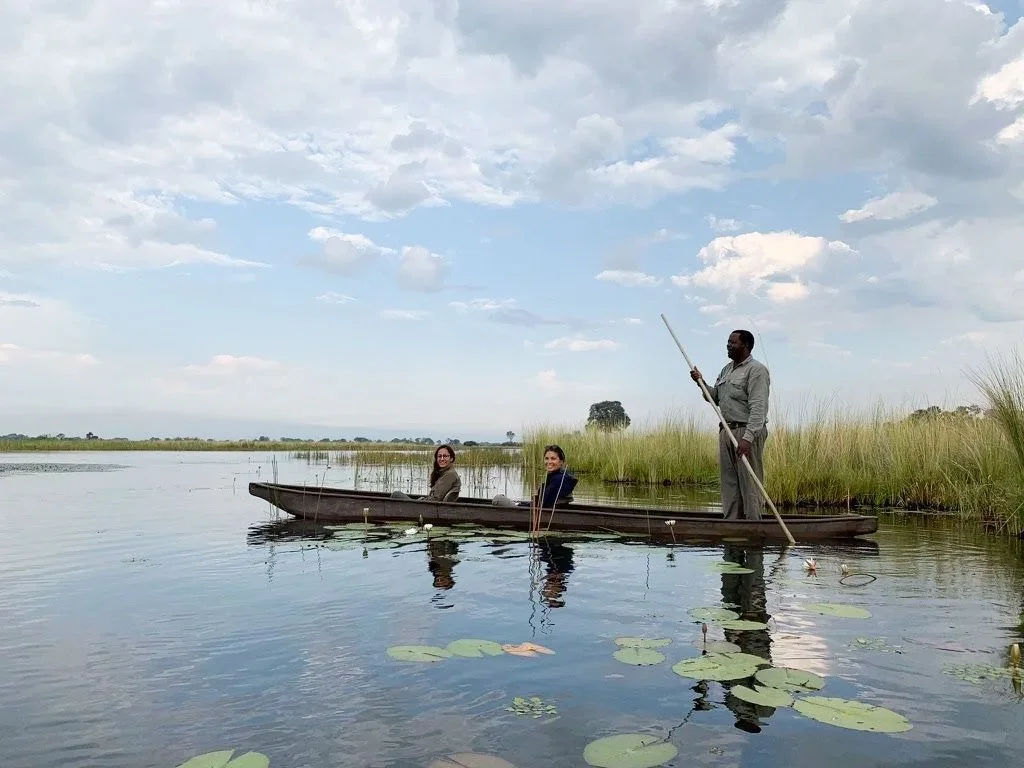
Wet camps are surrounded by permanent water. Activities here are water-based — and the star of the show is the mokoro, a traditional dugout canoe poled silently through narrow channels. You won't hear an engine. Just birdsong, the gentle swish of reeds, and the occasional splash as red lechwe leap across the shallows. It's peaceful, intimate, and wildly beautiful. Coming from the East African Safari world and used to bumpy game drives, this was totally enchanting - a truly immersive way to experience your surroundings.

Dry camps sit on islands within the Delta and deliver classic game drives across open savannah — elegant giraffes, stealthy leopards in leadwood trees, and if you're lucky, African wild dogs. The wildlife here is exceptional and the pace of a traditional game drive feels very different from the stillness of a mokoro.

The best part? Many of our favourite camps offer both experiences, so you don't have to choose.

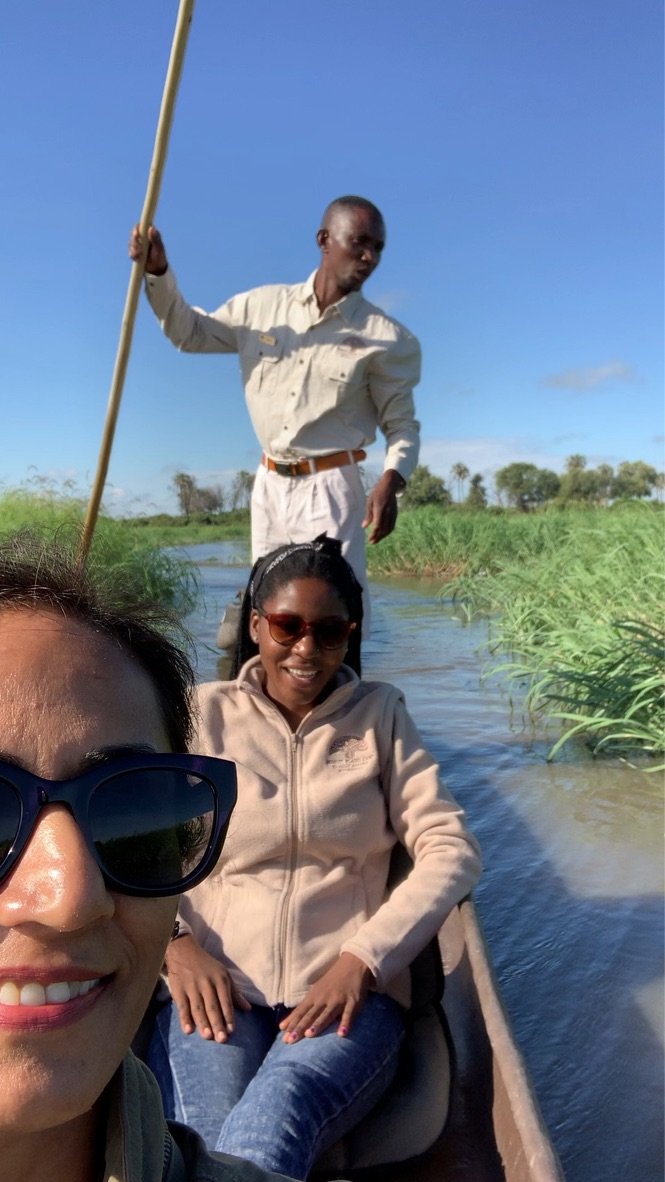
Mokoro Rides through the Delta - gliding through the peaceful channels, loving life!

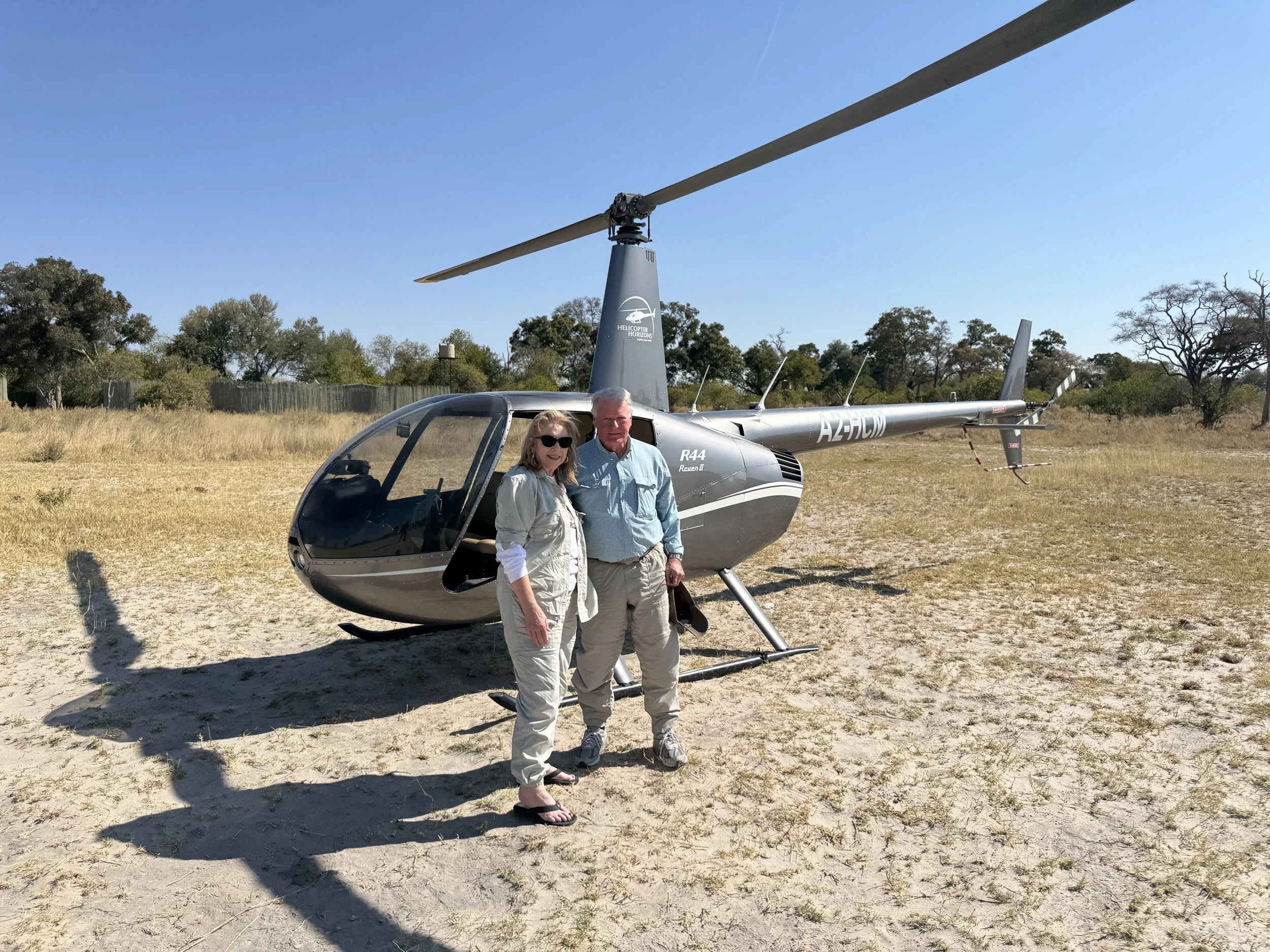
Our lovely guests Dr Hendricks & Vicki enjoyed a Heli ride over the Delta whilst staying at Kiri Camp in Khwai Concession.

When to visit the Delta

May to September is the golden window. This is when the floodwaters are at their peak — channels are high, mokoro rides are at their best, and the concentration of wildlife around the water is extraordinary. Hippos peek from the shallows. Elephants gather at newly-filled pools. Over 400 bird species fill the air.

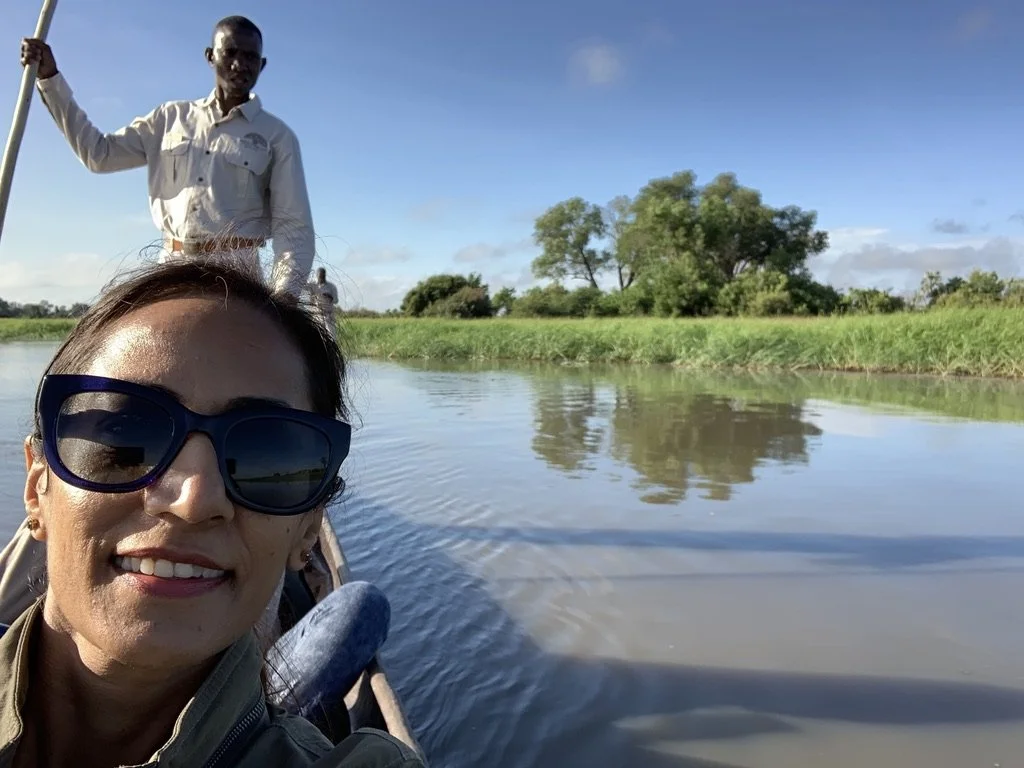
Can't travel between May and September? Don't wait. I was in the Delta in February — channels lower, yes, but the wildlife is still there. That's me in the photo above, on a mokoro in February, having just seen leopard, lion, wild dogs, and a sitatunga in one day. The animals don't take the dry season off, and neither should you.

One thing worth noting: October and November can be extremely hot in Botswana before the rains arrive. Not impossible, but something to factor in.

The cherry on top: A helicopter flight over the Delta is something our guests consistently say is one of the most breathtaking things they've ever done. Seeing the scale of the channels, islands and floodplains from above - with wildlife moving through it all below you - completely changes how you understand this landscape.

“It produced a wonderful overview of the Okavango Delta and an understanding of how abundant the wildlife is there. We must have flown over literally 400 elephants during the flight.” Our JTA Guests on their Helicopter Ride over the Delta.


Chobe National Park — where the elephants rule

If the Delta is about intimacy and water, Chobe is about scale and abundance. Home to the largest elephant population on earth — over 130,000 elephants — Chobe delivers game viewing that is genuinely hard to believe until you're in it. Herds of hundreds moving through the floodplains. Lions on the bank. Buffalo, sable, roan antelope. And boat Safaris on the Chobe River that put you right at eye level with it all.

Chobe is a great place to combine a river Safari with a land Safari — the two activities complement each other beautifully and give you completely different perspectives on the same landscape.

Best time: Year-round, but the dry season (May to October) brings the most dramatic game viewing as wildlife concentrates along the river.

Safari Tip: Chobe National Park can also be visited on a day trip from Livingstone if you are visiting Victoria Falls in Zambia.


The Kalahari — Botswana's best-kept secret

Most guests come to Botswana for the Delta and leave without experiencing the Kalahari. The semi-arid desert of the Central Kalahari Game Reserve is one of the largest protected areas in the world, and it offers a completely different Safari experience: open, ancient, and hauntingly beautiful.

The black-maned Kalahari lion is the star here, along with massive gemsbok, springbok, cheetah, and brown hyena. The Makgadikgadi Salt Pans — white, utterly vast — sit on the Kalahari's edge and offer one of the most otherworldly landscapes in Africa. In the summer months (November to April), the pans fill with water and attract huge flocks of flamingos.

For guests looking to add something genuinely unexpected to their Okavango Delta Safari, the Kalahari is an incredible way to experience Botswana’s two extremes.

Practical notes for planning

Getting there: Most international guests fly into Maun (for the Delta) or Kasane (for Chobe) via Johannesburg. Internal bush flights between camps are a standard part of any multi-camp itinerary and add to the adventure. 

How long to go for: We recommend a minimum of seven nights in Botswana to do it justice. Ten to twelve nights allows you to move properly between areas without rushing.

Budget: Botswana sits at the premium end of the Safari market — the low-volumm  tourism model means camps are intentionally small and exclusive, and that comes at a price. We're always transparent with our guests about budget from the first conversation. The quality of what you get in return is genuinely exceptional. Botswana Safaris typically start at approximately $1,200 per person, per night.

Best overall season: May to October for peak game viewing and the best Delta water levels. November to April for lower rates, fewer guests, lush green landscapes, and the flamingos on the pans.

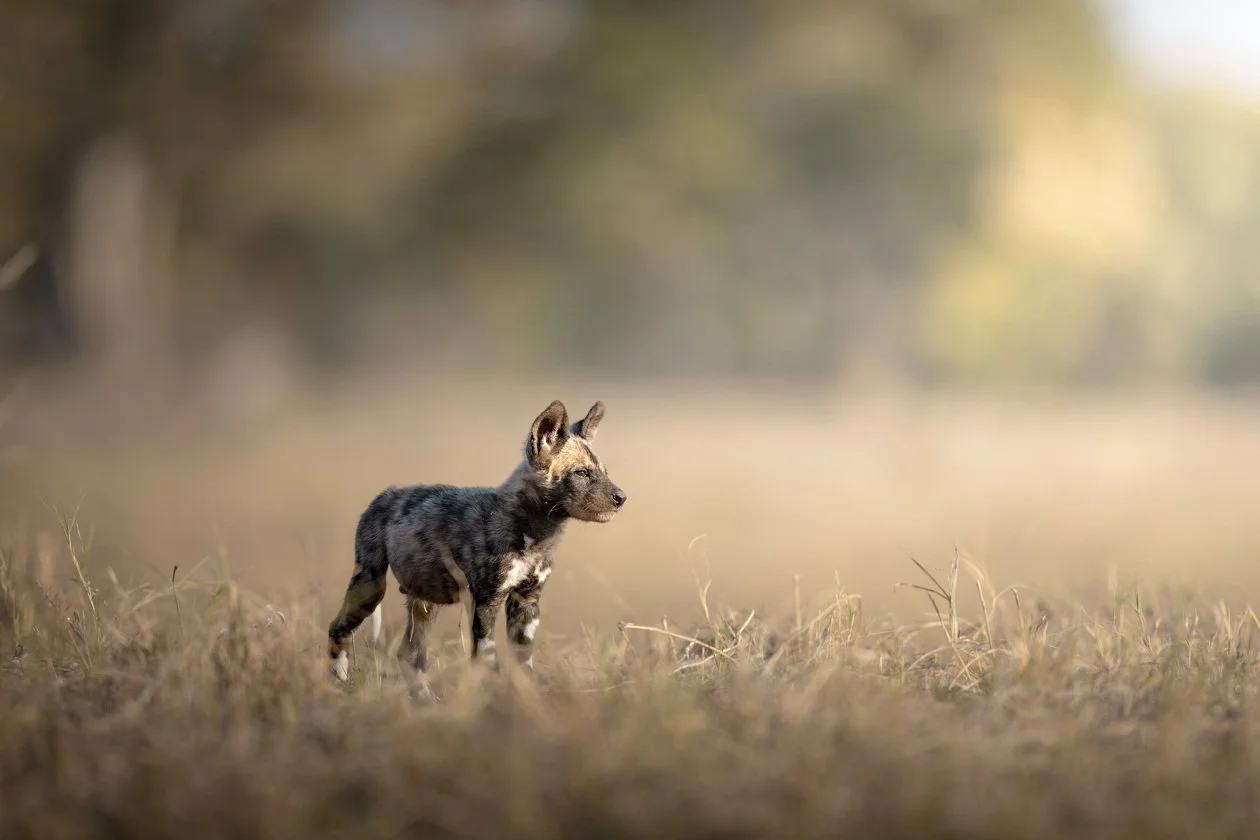
Wild dog pup in the Savute Region of Chobe, photo from our partners at Desert & Delta

Our favourite camps and areas

We're very deliberate about the camps we recommend. Over the years we've tried and tested across all the key areas, and these are the places we come back to again and again. Our list of favorite places is always evolving and growing.

In the Okavango Delta: We love the Kwando circuit of camps for their exceptional guiding and beautiful positions, and the Natural Selection camps for guests looking for something more intimate and design-led. Khwai Private Reserve — on the eastern edge of the Delta — is fantastic for dry land game viewing combined with the atmosphere of the Delta, and consistently delivers wild dog and leopard sightings.

In Chobe: Chobe-area camps that combine river Safaris with land game drives are our go-to. The quality of the boat Safari experience here is something we always highlight to guests.

In the Kalahari: Kalahari Plains Camp by Natural Selection is one of our favourites — remote, beautifully designed, and the gateway to some of the most extraordinary desert wildlife encounters we've seen.

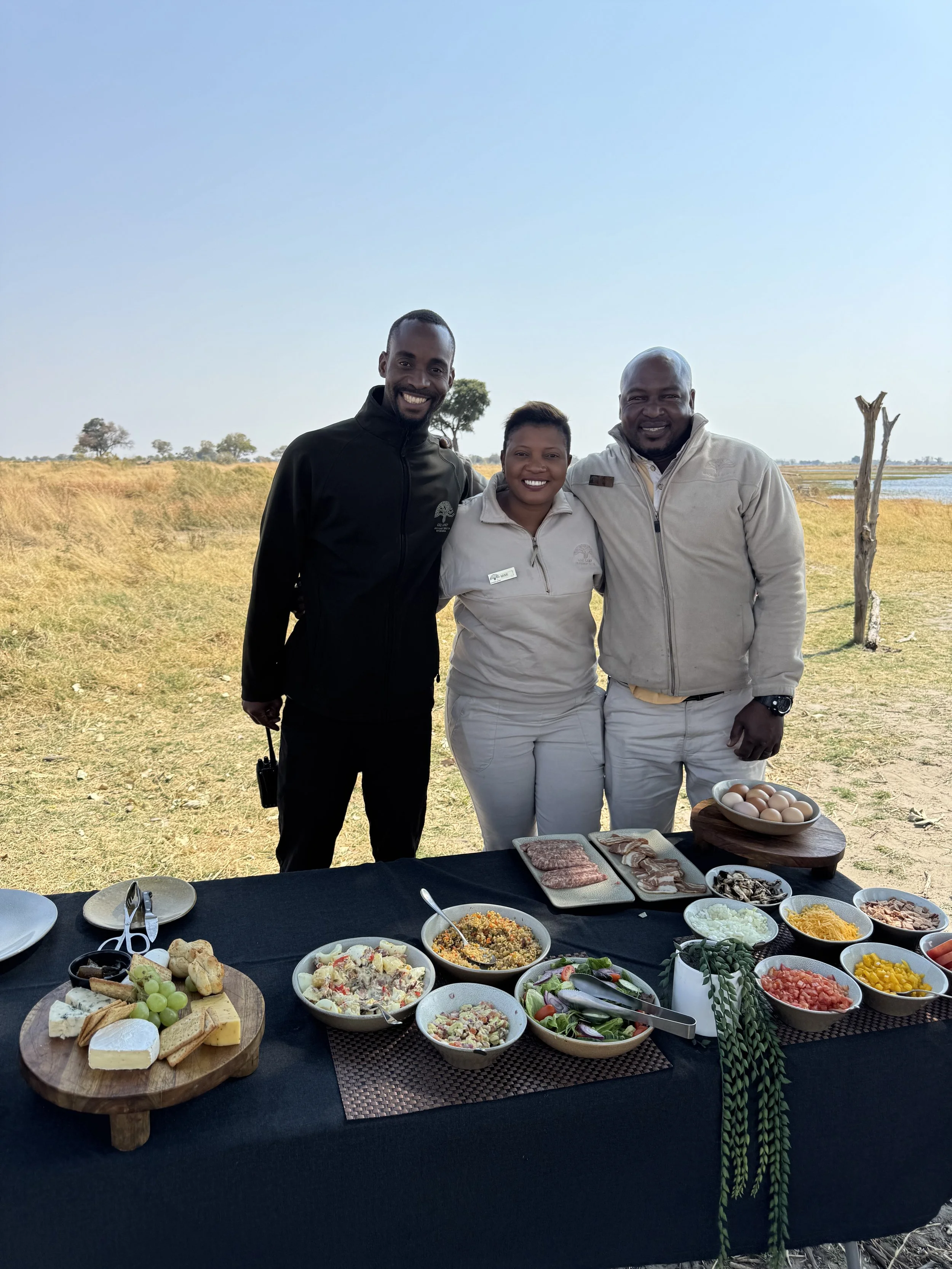
Some of the wonderful team at Kiri Camp from our Journey to Africa guests Botswana Safari. They loved Kiri Camp - the people, place and little touches!

Ready to start planning?

Botswana has a way of getting under your skin. Guests who go once almost always come back — often bringing friends or family the second time, wanting to share something they can't quite put into words.

If you're ready to start thinking about your Botswana Safari, we'd love to hear from you. Tell us when you're thinking of going, who you're travelling with, and what kind of experience you're after — and we'll start building something extraordinary for you.

Start planning your Botswana Safari

Mefi & Georgie

Why Botswana For Your Safari!

Leopard from my time in Khwai Private Reserve.

There’s something about Botswana that just takes hold of your soul. 

Maybe it’s the quiet glide of a mokoro (canoe) through golden reeds of the Okavango Delta channels. Or the sudden thrill as lions emerge from the brush. Or maybe it’s that feeling you get when you’re sipping coffee at sunrise with nothing (absolutely nothing!!) in sight but floodplains bathed in morning light. 

Whatever it is... Botswana is calling. And I’ve been answering! So many of my guests are choosing this incredible country for their Safari – and I couldn’t be more thrilled. 

Let me tell you why. 

The magic of the Okavango Delta 

The Okavango Delta is one of those places you truly have to experience to believe. A UNESCO World Heritage Site, this inland delta breathes life into everything around it – seasonal floodwaters transform dry plains into lush wetlands, creating one of Africa's most dynamic wildlife habitats. 

Here’s where the magic lies: depending on where you stay within the Delta, your experience shifts dramatically based on whether you're in a “wet” camp or a “dry” camp. 

  • In wet camps (camps surrounded by permanent water), water-based activities take center stage, such as mokoro rides (Botswana’s version of a canoe). These traditional dugout canoes drift silently through narrow water channels guided by expert polers – it’s peaceful, intimate, and wildly beautiful. You won’t hear an engine here… just birdsong and splashes as red lechwe leap across shallows. 

  • Dry camps bring classic game drives across open savannahs teeming with wildlife, from elegant giraffes to stealthy leopards perched in leadwood trees. And if you’re lucky? African wild dogs might make an appearance, too. 

Best part? Many camps offer both types of experiences… so you don’t have to choose! 

On my evening game drive from Machaba Camp.

Wildlife encounters that stay with you 

Botswana delivers some serious ‘wow’ moments when it comes to wildlife. We’re talking dreamy leopards and lions, a highly likely wild dog sightings plus rare species like the sitatunga antelope (you’ll only find them here), Pel’s fishing owl (a birder’s dream!), and even pangolins if you’re extremely lucky. 

And then there are elephants – the herds here feel endless sometimes. Especially around Chobe or Khwai, where they gather by the hundreds during dry season.  

Captured him from resting, getting ready to hunt [above], to hunt, to eating the whole impala. Video if you care to see.

I was watching these wild dogs play while a leopard couple was close by. Pure magic.

These are a few of my favorite camps.

My clients have had so many special moments at these properties – they each offer something special while staying true to what makes Botswana stand out: untamed beauty + thoughtful hospitality + meaningful community impact. 

Machaba Safaris.

We like:
- Gomoti Camp, set along the Gomoti River in Khwai Conservancy.
- Machaba Camp, by Khwai River, overlooking Moremi Game Reserve.
- Kiri Camp, overlooking Kiri River in the delta.
All of them feels like stepping straight into nature with style!

The tents overlook waterways where elephants often wander by while you’re enjoying breakfast or lounging poolside (yes please!). It’s 100% solar-powered, too. A huge win for sustainability lovers like me. 

  • Great mix of land AND seasonal water activities.

  • Private concession = fewer vehicles = better sightings 

  • Rustic-chic design that’s all about blending with nature 

Natural Selection Camps.

We like:
- Sable Alley and Tuludi Camps, set in floodplains of Khwai Private Reserve
- North Island in the northern Okavango Delta, its’own private paradise  tucked away among islands and lagoons

Every tent is surrounded by ancient trees with views over shimmering channels. You’ll fall asleep to frogs chirping and wake up with hippos grunting nearby! 

  • Best done three ways: land safaris + boat rides

  • Phenomenal birdlife 

  • Conservation-focused through local youth development programs 

Pro tip? If budget allows, treat yourself to a helicopter ride over the Delta from a few of their camps – it completely changes how you see this wild mosaic below. 

African Bush Camp’s Khwai Leadwood  

This one’s perfect for families or anyone who wants front-row access to everything Moremi has to offer without being inside park boundaries (translation: more flexible activities!). It sits right along the Khwai River where animals gather constantly – you won’t even need binoculars half the time. 

  • Mokoro rides guided by locals = cultural connection + serenity 

  • Gorgeous rooms & warm service 

  • Ngwana Club keeps younger guests engaged while adults unwind 

And yes, the outdoor bath under starlight at their honeymoon suite? Unreal! 

Mokoro riding!

So, when should you go? 

You literally can’t go wrong. Dry season runs from May–October, which is peak game viewing time as animals congregate around permanent water sources like rivers and lagoons. But don’t rule out green season either! November–March brings lush landscapes, dramatic skies… and lower rates.  

I always help my guests match their travel dates with exactly what they’re hoping for, whether that’s predator action, birding bliss, or simply soaking up scenery few will ever see firsthand. 

If you’ve been dreaming about an African Safari that's immersive yet intimate… raw yet refined… adventurous yet deeply personal, I would love nothing more than to craft your dream journey through wild Botswana together.  

Let me show you why travelers keep coming back again…and again…and again… 

Ready when you are!

Africa from the air – Adventures that take you higher

There’s something unforgettable about standing in the middle of the Serengeti National Park, Tanzania or Masai Mara, Kenya as wildebeest thunder past or watching hippos laze in the Zambezi River, Zambia as your guide whispers stories of the bush. But if you want an entirely different view – one that will take your breath away and stay with you forever – look up. 

And then? Take off. 

Mighty Zambezi River as I was leaving Lower Zambezi National Park, Zambia.

Exploring Africa from the air is about seeing familiar landscapes from an entirely new angle. Whether you’re floating in a hot air balloon over endless plains, flying low over the tangled channels of the Okavango Delta in Botswana, or paragliding along the dramatic cliffs of Victoria Falls, Zambia from above is pure magic. 

Here’s how to take your Safari to new heights (literally!). 

Hot air balloon Safaris: sunrise and silence 

With my daughter on our Spring Break Safari 2022 in Southern Serengeti, Tanzania with Serengeti Balloon Safari.

One of my absolute favorite Safari moments is floating peacefully in a hot air balloon above the golden grasses of the Serengeti or Masai Mara. Everything is so still… and the world is waking up beneath you. Herds moving gently below, giraffes on a journey, and elephants casting long shadows across the plains. You never know what you will see when up in the sky.

You’ll take off just before sunrise, and with any luck, you’ll catch that first golden light painting the land in warm amber hues. When I say it’s magical, I really mean it. 

Hot air balloon Safaris are offered in several places, including the Tarangire and Ruaha National Park, Tanzania. It’s always a smooth early morning experience followed by a bush breakfast and bubbly under a flat-topped acacia.  

Heli flips & light aircraft: Into the wild we go 

Via Helicopter Horizons

Flying into remote Safari parks is part of the adventure! There’s nothing quite like landing on a makeshift bush airstrip while your pilot radios a quick message: “We may need to circle once – there’s a zebra on the runway.” (Yes, it happens. Often. And trust me, it never gets old.) 

From the air, you’ll see the land unfold: verdant wetlands, deep escarpments, glittering rivers, and even herds beneath you that you wouldn’t spot from the ground. The first time I flew over the Okavango Delta in a four seater plane, I was stunned by the sheer geometry of it. The way water, reeds, and tracks form a natural patchwork quilt, stirred by the movement of elephants, buffalo, and hippos below. 

Want an even more heart-thumping experience? Opt for a low-altitude helicopter ride over the Okavango Delta, the Zambezi River when or through the dramatic red canyons of Namibia. You’ll feel every curve, every cliff. It’s wild freedom in every sense. 

Daredevils welcome: Skydives & paraglides 

Microflight via Livingstone’s Adventure, Victoria Falls, Zambia

For my thrill-seekers, Africa is a playground waiting to be experienced upside down, inside out, and freefalling. 

Skydiving over the Namib Desert? The contrast of the bright sky and red dunes is nothing short of cinematic. Or take a leap over Lake Victoria and watch its vastness stretch well beyond imagination. 

Prefer something slightly less vertical? Paragliding over Zambia and Zimbabwe’s Victoria Falls lets you soar like a bird across one of the most geologically impressive landscapes on Earth. Thermals carry you over escarpments, lakes, and forests – it’s peaceful... and a lot more accessible than people realize! 

Why flying in Africa feels so different

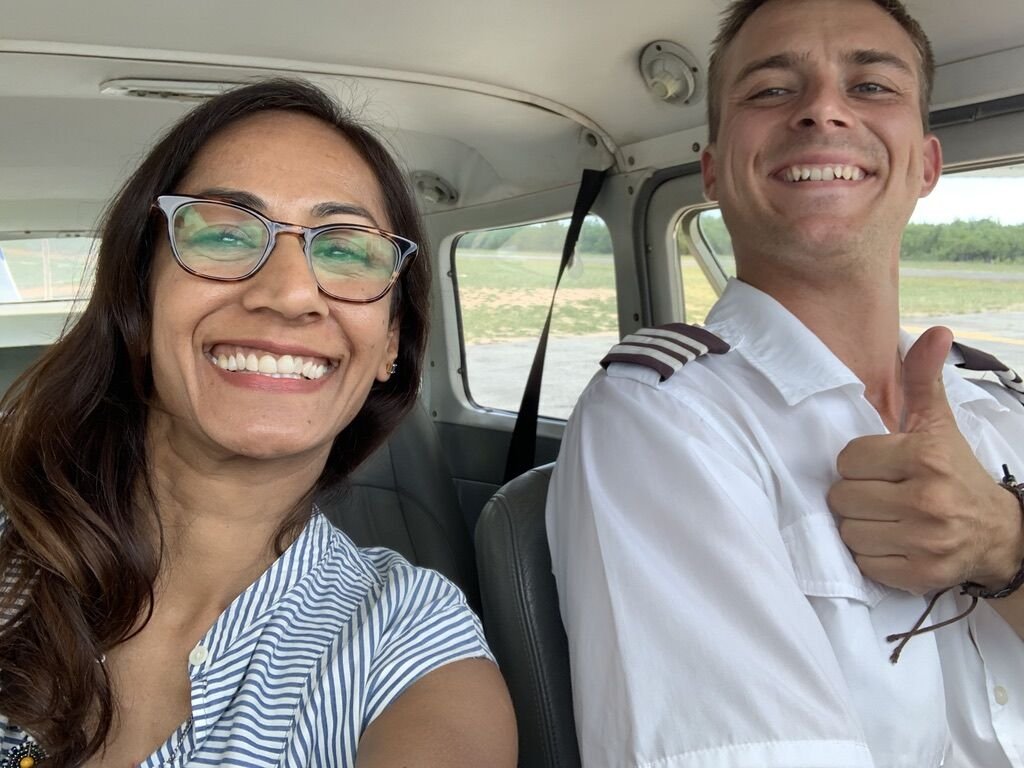
On my way to Mala Mala Game Reserve in South Africa

Here’s something I love about air travel in Africa – it’s never just “a flight.” It’s a story. A moment. Maybe it starts with the car gently herding giraffes off the runway. Or it’s your pilot who’s been flying for 30 years and has tales to share that make your jaw drop. Or maybe it’s the fact that your ‘airport’ is a grassy clearing with no terminal in sight… just zebras hanging out near your luggage. 

These little moments? They give your Safari an edge. A touch of magic. A different kind of freedom. 

If you’re dreaming of Africa, don’t just think land cruiser and beautiful places-to-stay (though you know I love those, too). Let’s add the sky to your story. 

Up, up… and Safari on. 

Let. Us. Climb. Kilimanjaro

If you have ever dreamed of hiking on the highest mountain in Africa or standing on the roof, watching the sun rise over the world below you, feeling like you can take on anything… then this one’s for you.

Climbing Kilimanjaro is a hike. A journey. The journey is its own reward and no matter how far you ascend, just being on this iconic mountain, at any level, is triumph enough. The kind of adventure you tell your grandkids about, the kind that changes you in ways you wouldn’t expect.

And the best part? You don’t need to be a mountaineer. No ropes, no technical climbing. Just grit, determination, and a love for adventure.

It’s hard. But oh, it’s worth it.
And after Kili? A Safari of course. Nothing better then to rest your tired feet from the comfort of your Safari vehicle or or your beautiful place-to-stay. Sit back and enjoy the wildlife … at leisure.

Let’s jump into everything you need to know about climbing Kili – routes, prep, what to expect, and YES, how you can still get a taste of it if a full climb sounds a bit too wild for you.

Why Kilimanjaro?

It’s the highest free-standing mountain in the world towering at 19,341 feet. And while it’s not a technical climb, it is a mental and physical test of endurance.

The altitude is tough. The summit push is BRUTAL. You’ll probably ask yourself, “Why am I doing this?!” at least 10 times. You will want to rush, yet the phrase ‘pole pole’ [slowly slowly in Swahili] will ring in your ear.

But then? You watch the sun break over the clouds. You take those final wobbly steps to Uhuru Peak. And suddenly, nothing else matters.

Seriously. It will be one of the best things you ever do.

Which route should you pick?

Not all Kilimanjaro climbs are the same! Some are easier; some are tougher. Some give you more time to acclimate (which is a big deal because altitude is the #1 thing that makes people turn back).

Here’s a guideline:

Machame Route (“Whiskey Route”):

- Why: Incredible scenery, high success rates (if you pace yourself!)
- 6–7 days – steep but stunning
- Verdict: If you love adventure and don’t mind a challenge, this is the route for you.

Rongai Route:

- Why: Climbers wanting fewer crowds and a drier route.
- 6–7 days. Dramatic scenery-wise with Mawenzi tarn - a solid choice.
- Verdict: If you want a remote, peaceful climb, this is a winner.

Lemosho Route:

- Why: A slow, scenic, and steady climb (and better acclimatization).
- 7–10 days – and one of the most beautiful routes as per our partners.
- Verdict: If you’ve got the time, this is one of our Kili partner’s favorites.

Marangu Route (“Coca-Cola Route”):

- Why: Those who really want hut accommodations instead of tents.
- 5–6 days – less scenic, but still Kilimanjaro!
- Verdict: Shorter but if you want a quicker climb, it’s a great option!

Shira Route for a one day hike:

- Why: A great day hike from Arusha.
- 1 day – absolutely spectacular day to get a feel of Kilimanjaro.
- Verdict: A great day to experience the feel of Kilimanjaro.

No matter which route you choose, one thing is non-negotiable:

Take it slowwww!
Altitude sickness doesn’t care how fit you are. ‘Pole pole,’ as the saying goes… slowly, slowly.

How fit do you need to be?

You don’t need to be an Olympic athlete. But you do need to be prepared.

  • Endurance is key. You’ll be hiking up to 6–8 hours a day, with summit night pushing you 8+ hours straight up, in the freezing cold.

  • Work on conditioning your legs into legs of steel! Hill training, lunges, and squats will make your hike way easier.

  • Again, I say it: altitude can be a beast. Doesn’t matter how fit you are – your body has to adjust. Come a little early and acclimatize in the base town of Moshi.

  • Train with a backpack! You’ll be carrying a daypack (porters carry the heavy stuff), but you’ll still need to get used to weight on your back.

What to expect on summit night?

It’s hard.
Like… really hard.

You wake up at midnight. It’s freezing. It’s dark. You put on every layer you own and start walking straight up. It’s a slow, grueling, mentally exhausting climb.

But then… the sun rises. And you realize you’re standing above the clouds, watching Africa wake up. And suddenly? The cold, the exhaustion, the burning legs, the why-am-I-doing-this feeling… all disappears.

Because you did it.

What if you don’t have time for the full climb?

One of Kili’s best-kept secrets? A one-day Kilimanjaro climb is a thing!

Yep. You can hike Kilimanjaro for a day and still get that feeling of being on this mighty mountain.

The best option? Shira Route from Arusha.
Hike through savannah, spot colobus monkeys, breathe in that fresh Kilimanjaro air… and be back down in time for a warm shower and a celebratory drink.

Perfect for those short on time or just wanting a taste of the experience!

The best way to celebrate? Safari time!

Safari is the ultimate Kilimanjaro recovery. After this huge achievement, you’ll want to:

- A proper bed in a non-flappy tent room. We have many places-to-stay to chose.
- Something comfy for your sore legs .. in coming a Safari vehicle.
- View an array of wildlife … you wouldn’t want to spot one up close on Kilimanjaro.

Let the magic of Safari begin.

Let’s make it happen.

Kilimanjaro is calling. Whether you’re all in for the full summit challenge or just want to dip your toes in for a day hike, this mountain is waiting for you.

And I’m here to make it happen.

Let’s talk Kilimanjaro. Let’s talk Safari.

The Great Wildebeest Migration in Tanzania and Kenya

One of the biggest draws to the wildlife-rich Serengeti National Park in Northern Tanzania and the Masai Mara in Kenya is the wildebeest and zebra migration. The 1.5 million wildebeests and 200,000 zebra, and their many herbivore and carnivore co-dependents, are constantly roaming this expansive area - The Great Migration isn't a once-off annual event. It's constant movement as the herd goes in search of fresh water and food.

A never-ending cycle.  

The phenomenon is one of the Natural Wonders of the World and often called the 'Greatest Show on Earth.' It's an epic journey (approximately 250,000 wildebeest and 30,000 zebra die every year due to predators, drowning, thirst, hunger, and exhaustion!) that you simply have to witness firsthand... no words could ever do it justice! 

They will feast on the nutritious mineral-rich grass of the Southern Serengeti during birthing time (and with plenty of calves, the big cats, like lions, leopards, cheetahs, and other predators have easy targets.) The herd sustains itself on the long grass of the Northern Serengeti and the Masai Mara after rutting in Western Serengeti, and they pass through Central and Eastern Serengeti/Loliondo area when heading back south. As their movement continues, you may be lucky enough to witness the iconic Grumeti River crossing in the Western Serengeti and the similarly dramatic Mara River crossing in the Northern Serengeti. That's bonus! 

Southern Serengeti

Your map to the wildlife's journey:

November: On the move  

During this time, the wildebeest and zebra are heading to the south of the Serengeti from the north. They're moving down via the east of the Serengeti and the concessions. If on Safari, it's best to hedge your bets and stay in two regions of the Serengeti to boost your chances of finding the herd on their trek.

DecembeR to March: The calving season 

The beginning of the year is the herd's birthing season, where around 8,000 new calves are born every day between late January and early February. The place to be is at a camp in the Southern Serengeti, Ngorongoro Conservation Area, to private Maswa Game Reserve. This is a good time to enjoy some thrilling predator action as they stalk, hunt, and prey on their easy targets.  

April to May: The rainy season 

The long rainy season sees showers lasting a few hours. It’s also rutting (mating) time again so expect some interesting behaviour. If you don’t mind being adventurous, this is a great opportunity to visit and get some amazing deals on places-we-stay. The Central Serengeti, through to the Western corridor are the best places to be.

June to July: The green season

June is green after the rains, making this one of the most beautiful times of the year to visit - especially if you love wildflowers. The hundreds of thousands of wildebeest and zebra are roaming from Central to Western Serengeti on their way towards the Masai Mara. During this time, the herds may be crossing the Grumeti River to get to the Northern Serengeti or may already be in this area. The Grumeti River is home to large crocodiles who lie in wait for their tasty snack. Areas outside western Serengeti are also prime viewing spots. 

August to October: The Mara River drama  

The herds of wildebeest and zebra enter the long, lush grass of the Masai Mara and the Northern Serengeti come August – which is also when those ultra-dramatic Mara River crossings take place. They stay in this region for a few months enjoying vegetation that the long rains of April May brought about (with the short rains in late October ensuring the grass remains abundant.) The herds are going back and forth between Tanzania and Kenya and increasing the odds of seeing a lovely Mara River crossing. 

Central Serengeti

Northern Serengeti

The right place at the right time! 

Spotting these incredible African animals on the move is all about being in the right place at the right time. Let me help get you a front-row seat to this wildlife spectacle, where you can admire every detail of the Greatest Show on Earth!  

Let’s chat about your Journey to Africa!

Gift Guide for the Safari Goer.

Need some ideas of what to get yourself or your loved one?
If you are going on a Safari or are a Safari enthusiast, here are some ideas that I can personally vouch for. 

Seeking Information - my personal favorites:

  • Love, Life, and Elephants: An African Love Story by Daphne Sheldrick.
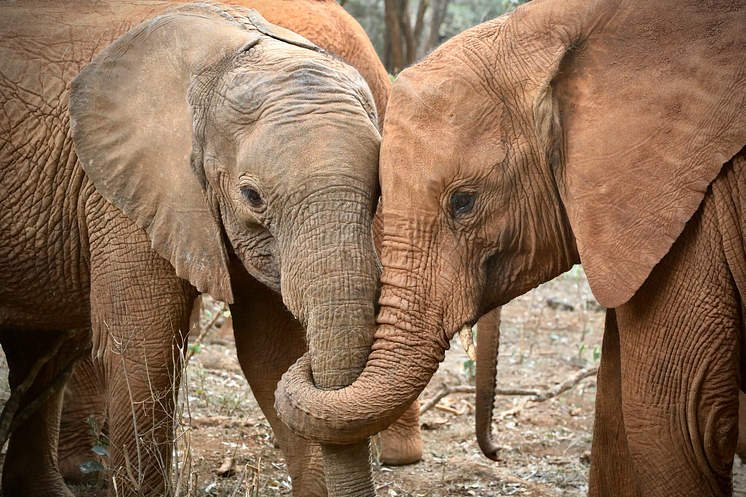
    Dame Daphne Sheldrick is an icon. She has done amazing work for the orphaned elephants in Kenya. We love taking our guests to the David Sheldrick Wildlife Trust in Nairobi, Kenya were you can adopt and pet an elephant. You can read about her ‘why’ in this book.

  • The Elephant Whisperer - by Lawrence Anthony.
    What a story about how deep one can go because they love an animal. Anthony was one of those people for the elephants in South Africa. You will have a chuckle as well reading about how smart those elephants are as well.

  • Beat About The Bush by Trevor Carnaby.
    This field guide tells you a story about the wildlife and birds. Things like 'do elephants have good memories?' to 'why do lions have manes?'. Fun Facts. I reference this book often when I am trying to learn about an animal. I also gave this book as a gift to my daughter’s friend who wants to be a vet and loves to share information about animals.

  • The Birds of East Africa by Terry Stevenson.
    Give birds a chance. Once you start paying attention to birds, you will be hooked. Coo Coo. I don’t take this book on Safari because of the weight of this book. When I am back and reviewing my bird pictures, I use this book to identify.

    Tip - I never seem to remember bird names. I write them down on my Notes App [I have an IPhone] or my notebook when the Safari guide tells me the names or shows me their bird book. When I am sorting my pictures at home, it becomes a fun game to try to match the picture and the bird using this guide.

  • The Overstory by Richard Powers.
    Nothing to do with Safari but if you love nature, this one is a good book to read. You will not look at trees the same way. Richard Powers is Pulitzer Prized author living in the Smokey Mountain in the US - another gorgeous area in this lovely planet.

  • Brush-Tail Games
    Be a penguin scientist! Yes, seriously. This board game will delight nature lovers of every age. Perfect for those who have seen a penguin on their Safari in South Africa or are planning on going to see Penguins.

Photography:
My favorite hobby.  I have moved on from being a hobbyist to amateur, ahem, and one of my favorite gifts to myself has been my camera.

If you or your partner are looking into buying a camera and are new to the camera game, I would recommend:

  • a Canon T7, a good starter DSLR camera. I had a T3 when I started and I still use pictures from that camera.

  • If you know you are going to use your camera often, get my current crop body Canon 80D - not a full frame camera but one that I can use outside of Safari. After many years of borrowing from Photo Rental Source [ummh, could have paid for the lens with all the borrowing I did], I finally bought the Canon 70-300 mm lens. Not too heavy for me and gives me the reach I need. A lot of my photography friends recommended the Canon 100-400 mm lens. This may be a good lens to borrow - see my notes below.

  • Want the mother-load camera? Then go all out for the Canon 5DMarkIII. If you are a pro- you know about this camera already.

  • I know many of my professional Safari guide friends use Sony. If I was looking at a Sony for my future Safari, this Sony AR111 is what I would be getting. I would borrow a telephoto lens.

  • iPhones are also getting better and better and sometimes just easier and quicker to use. I saw a few of my guests getting this wide angle and macro kit to take on Safari and use in their day-to-day.

If you want to do a good point and shoot, my client Natalie got the Canon Powershot. My Safari guide in Congo, Lucy recommends Sony RX 10 IV. She has some great photographs and videos with this compact camera from her Safaris all over Africa.

The other option is renting camera body and lens. Photo Rental Source is my go to place in Houston and they ship nationwide. B&H Photo have used lens that would also work or call them to get camera ideas. They are fantastic and will guide you with the hundreds of options out there.

Binoculars:
After a day or two on a game drive, everyone gets into the searching-mode for wildlife and birds with hawk-eyed Safari guides. A professional guide / guide trainer recommended these Vortex binoculars to me. The key to good binoculars he said, to simplify the complicated science behind the machine, is 10x42 and good prism glass. I have had these for a few years and a few of my Safari guide friends also use these so I know I am in good company.

Tech Tool to consider:

  • The Anker Battery for my IPhone - I always take this with me. Times when I have been grateful I have had it is when I am on planes. You need to have your phone for boarding pass, etc and a low battery for me is stressful. When the room does not have a charging station close to the bed. My IPhone is always charged this way for photos, music listening for the room, etc.

David Sheldrick Wildlife Trust

Organizations we Trust:
These are my personal favorites because I can vouch that your gift will be put to good use. If you are going on Safari, we can arrange a visit or meeting. If you have been to these places or met our contacts on your Safari, hope you agree. 

  • David Sheldrick Wildlife Trust - they are amazing. From anti-poaching to caring for young elephants; you can donate or foster one or more elephants. My elephant is Ndoto. 

  • Carbon Tanzania - if you go on a Safari with us, you are already contributing to this great organization because all of our partners on the ground [a requirement for us to use them] offset carbon footprint with them. We can always do more. 

  • Rift Valley Children's Home - we stop every time we go to Ngorongoro and continue to be impressed with how happy, loved and smart the kids are here. Kudos to a great team lead by Mama India and Baba Peter. 

  • Honeyguide Foundation - we know Damian Bell and have seen him in action with ranger training. They protect the precious wildlife from human-wildlife conflict - a big issue - to poaching related matter. Wildlife is threatened from all sides - we must do all we can to help save so many species from extinction. 

  • Big Life Foundation - goodness they have a task. They take care of a large areas in Kenya but also partner with other areas in Tanzania. From anti-poaching to providing water during drought to veterinarian work, etc. They work with David Sheldrick Wildlife Trust when dealing with elephants they find orphaned around Kenya.

Ethical Shopping:
If you are into sustainable fashion, you will love that when you purchase items from these selected sellers. You are supporting females, like the Maasai ladies in the villages in Northern Tanzania or local artisans who can continue to support their families through your purchase.

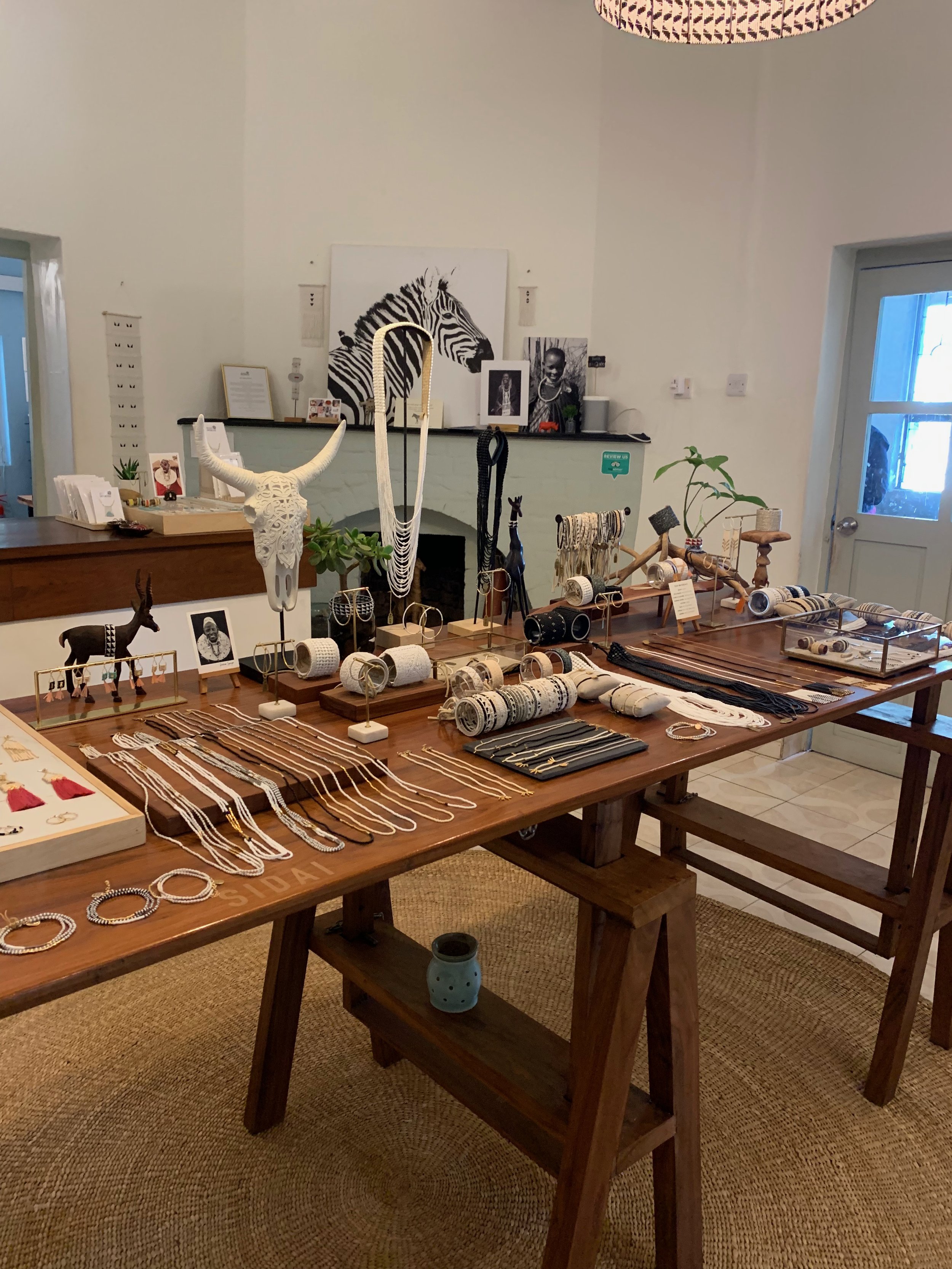
  • Sidai Designs is a company helping the Maasai ladies. Their jewelry is sustainable and modern enough to wear on a daily bases. I love my few pieces that I have from them. If you are in Arusha, Tanzania, we can arrange for you to spend time with the Maasai mamas.

  • Adele Dejak. I first saw my colleague Brook wear her rings many moons ago and fell in love with them. I spotted them in South Africa at Sabi Sabi Lodge but wanted to wait until I got to Nairobi, Kenya to buy my beloved pieces from their original store and I did! These three rings are [I can use them as self-defence if needed I think] my most worn items but they have so many other cool pieces. Oh, and in Dec 2022, she was in Senegal dressing the models from Chanel for their runway walk. Pretty cool Adele!

Clothing:
When on Safari, you want to be comfortable. There is really no dress code, but, if you want to ‘blend -in’ a bit, we recommend wear clothing that has SPF, dry fast should there by a light shower or so, and colors that mix in with nature.

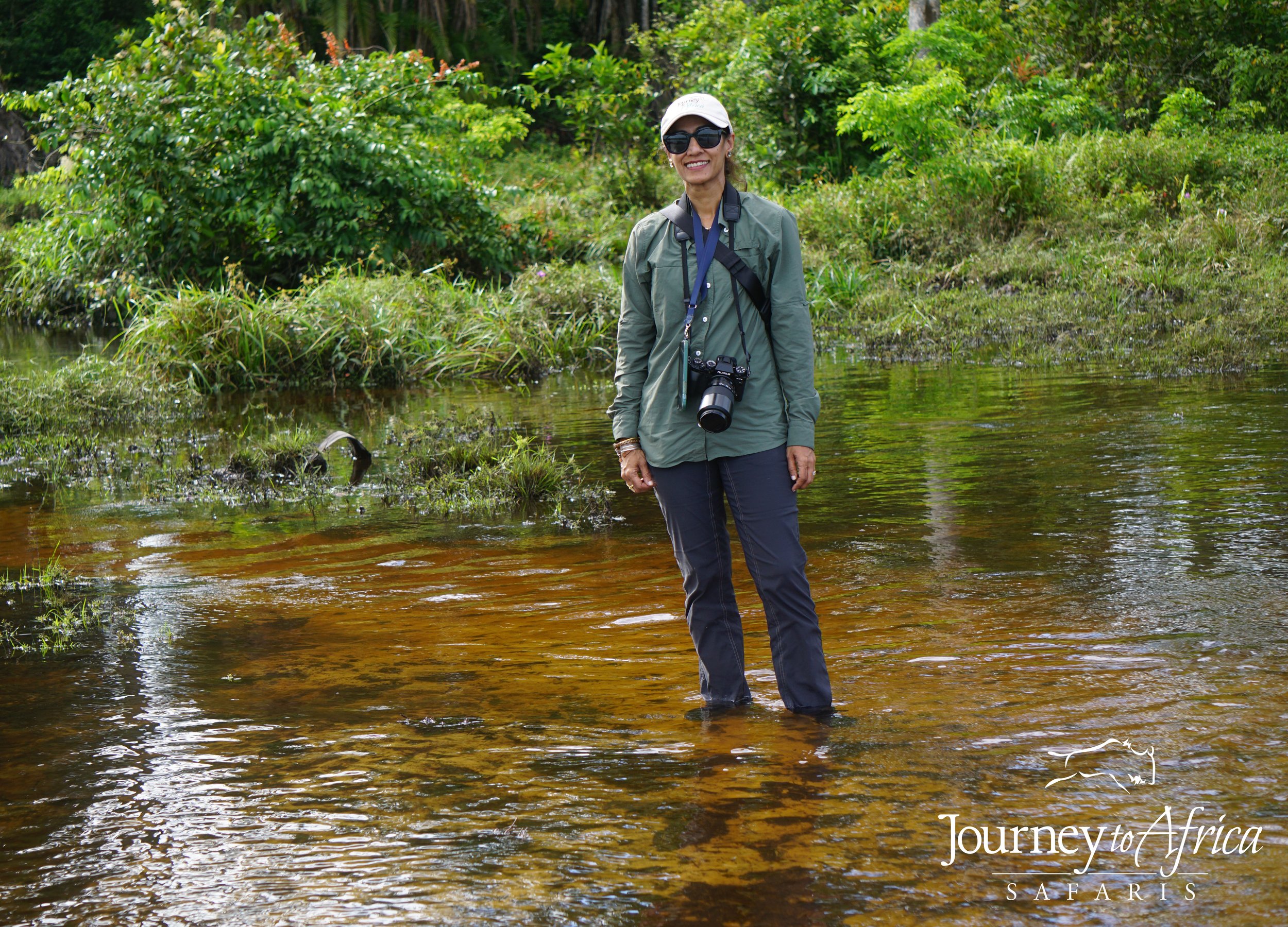
  • When I was in The Republic of Congo, I took this Amazon Shirt [similar if sold out] with me and surprising, it was my most worn shirt. Now for my Safaris in Eastern and Southern Africa, I have not always taken my own advice [our packing list guide] and worn black and blue. But in The Republic of Congo - that was a no-go. The tse-tse flies there are extra nasty especially on the river so this shirt was my most worn shirt on the Safari, on repeat too, after many sweaty walks and you know, the people around me were not complaining of foul odor. :)

  • Comfortable pants are a must. From game driving all day, walking in them - from knee deep to chimp trekking to light stroll, having the stretch to get in the Safari vehicle, quick drying from the sprinkle, etc. I am sure you have those pants in the closet. However, if you are looking for my recommendation, I have had Kuhl brand pants that I have been wearing for the past six’ish years and they have been with me on multiple Safaris. [Similar Kuhl Pants or these one from Baleaf are also good as per a few guests of mine and my daughter]. For men, my husband and son wear these one.

    Get good ones because the Safari bug is real - as in - you will go on multiple Safaris I promise. Purchase ones you like so you can re-wear.

We hope you found something useful for you or your Safari partner, loved one. Need more ideas? Reach out to us and we can brain storm a bit more.

Updated on May 2026.

Why Safaris are great for Solo Travelers

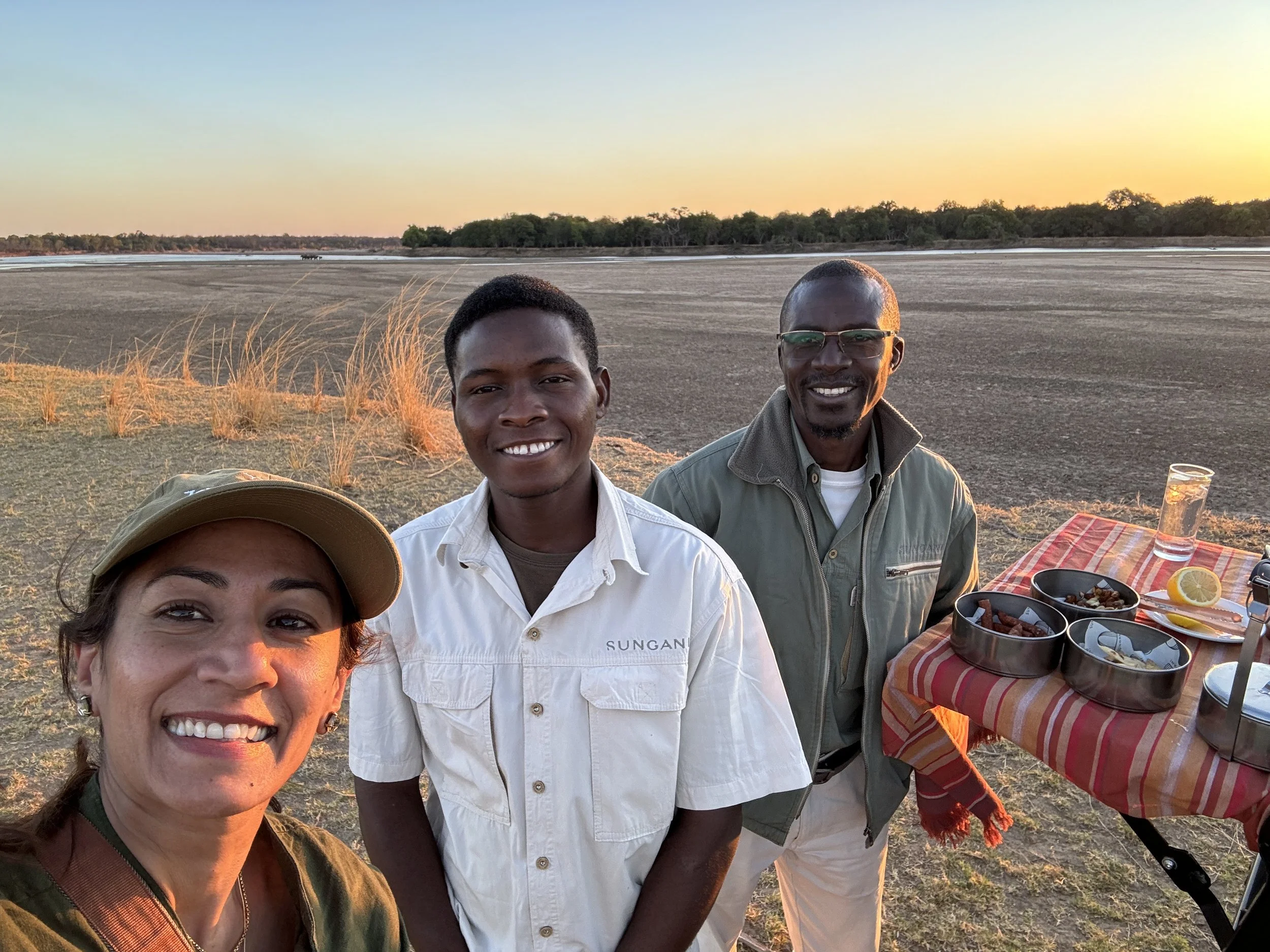
A happy, solo travelling Mefi in the South Luangwa, Zambia with Sandy at Sungani Lodge.

Safaris are often associated with honeymoons, family trips or couples. But I’m here to tell you that going on Safari solo is just as amazing. I have often been on solo Safaris to go check out the places we recommend and destinations for Journey to Africa Safaris and they have been some of my most treasured trips!

Here are the reasons why.
Tips and tricks to planning a Solo Safari.

Your Safari Guides will become your lifelong friends!

Your Safari Guides will become your lifelong friends! With Gibson in Serengeti, Tanzania.

You won't be alone!
Although the idea of being on Safari by yourself conjures up images of you alone in the wilderness, in reality, Safari lodges—and particularly the ones I will send you to—are social and fun places. You will make friends with your guide, the camp staff, and other guests in your Safari vehicle (if you choose to share a vehicle for game drives). The camp managers and Safari guides are like hosts of a big home; they will welcome you, keep you entertained, and probably have a gin and tonic with you by the fire or join you for dinner sometimes!

Everything is organized for you.
Unlike other solo travel trips where you have to find your way around, decide where to go and what to do—which can get overwhelming—when you're on Safari, all of this is done for you! Sit back and enjoy as everything has been organized for you. From airport transfers to activities, everything will be arranged before your trip, so you'll be in safe, familiar hands throughout your entire Safari.

Alone time without feeling lonely.
Journey to Africa Safaris offer the perfect balance of peaceful solo moments and socializing at our places-to-stay. Your days are filled with shared adventures, and evenings wind down early with cozy gatherings around the campfire.

Travel Tips:

  • Book through Journey to Africa Safaris so that everything can be organized and I can send you to places and people I know and cherish. You will be well taken care off.

  • Go on Safari during lower season. This means cheaper prices for a solo traveller and lower visitor numbers. Your Safari will feel even more personal and special.

  • Just take the plunge and book your Safari. Life’s too short to hesitate!

Mokoro riding in Botswana.